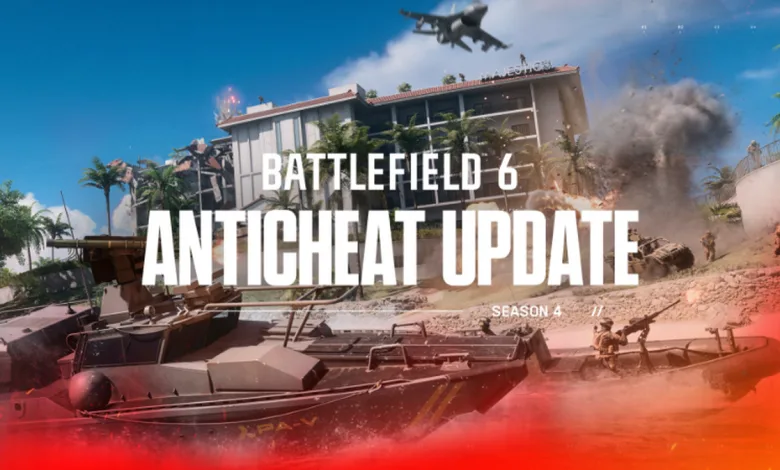
Battlefield 6 will tighten its anti-cheat rules for Season 4, with strict TPM 2.0 enforcement scheduled to begin on August 28. In its Season 4 anti-cheat update, Electronic Arts said it had worked with hardware manufacturers to resolve compatibility problems that previously led to relaxed requirements.
The change follows the conclusion of the first Ranked season in REDSEC. EA said competitive progression and higher stakes gave its anti-cheat team a clearer view of how cheating methods evolve, including activity aimed at gaining an advantage without relying on traditional aimbots or wallhacks.


TPM 2.0 enforcement will become stricter
EA said it will end the allowances that let some players bypass full TPM 2.0 compliance during Season 3. The publisher believes the earlier exceptions were being abused by players using hardware spoofing, third-party emulators, botting tools, or other forms of cheating.
According to EA, 98.76% of current players already use hardware that meets Battlefield 6’s enforced requirements. The remaining 1.24% includes a majority that EA associated with third-party emulation, spoofed compliance, botting, or cheating activity.
Players who still encounter TPM problems can use EA’s TPM 2.0 troubleshooting guide. HVCI and VBS requirements have been present since launch, but EA has not started enforcing them yet. The team is still considering whether those checks should apply to suspicious accounts, Ranked play, or official and sponsored tournaments.
More hardware and software can trigger launch warnings
Several products that were previously allowed are being reconsidered after becoming more common in cheating communities. EA said prohibited products will trigger a warning when players attempt to launch Battlefield 6.
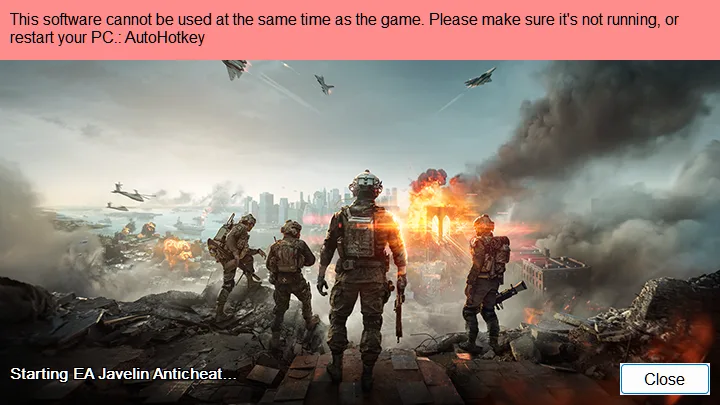
On the software side, the rules cover remapping tools that create virtual input devices to bypass anti-cheat checks, hide input automation, or provide functions such as recoil cancellation and turbo modes. EA also called out sound radars that show more than the type, direction, and loudness of an audio cue, automated equalizers that react to footsteps or other game events, adaptive crosshair overlays, and overlays that add artificial zoom or highlight targets.
Hardware restrictions include devices that give mouse and keyboard users unintended aim assist, products that script multiple inputs, modified gamepads with features such as macros or recoil assistance, and displays that remove or alter effects such as flashbangs, scopes, night vision, or character rendering. EA specifically named XIM, Cronus Zen, Strikepack, and Titan Two as examples of prohibited devices.
Accessibility remains a separate consideration. The Xbox Adaptive Controller, PlayStation Access Controller, and Steam Input are still supported and are not prohibited.
EA said a product’s name or advertised compatibility mode will not automatically make it acceptable. If disabling a product’s claimed compatibility mode causes the Battlefield 6 launcher to show a block warning, the tool is prohibited. The publisher also pointed to its explanation of the reWASD software block as an example of how a previously allowed remapping product can be reevaluated.
New in-game nudges will warn players before stronger action
Battlefield 6 is adding new moderation and anti-cheat notifications for behavior that falls short of an immediate major sanction. The messages will appear in places that do not interrupt active play, including the main menu and pre-game lobbies. During a match, they will only appear while a player is dead and waiting for the respawn timer.
Examples under evaluation include repeatedly entering normally inaccessible areas such as spaces beneath the map or inside objects, manipulating matchmaking to enable stream sniping or collusion in Ranked play, and abusing exploits beyond reasonable fun. The system may also warn about disruptive audio played through voice chat, along with messages that would violate EA’s Positive Play Charter if reported.
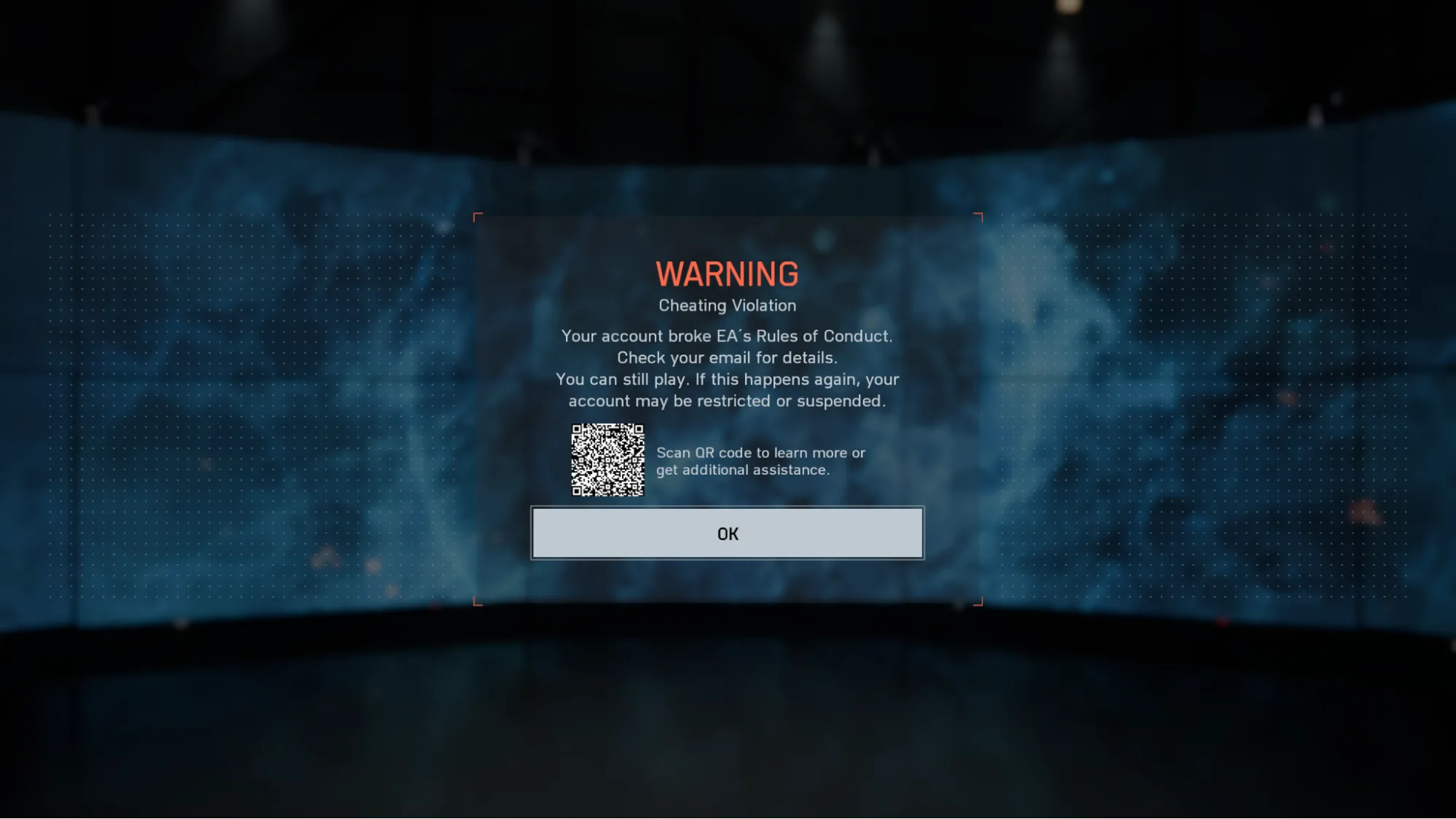
These nudges are meant to give players a chance to stop the behavior before it leads to a stronger warning or sanction. They are not a replacement for the formal enforcement process.
MIR will filter long-term false positives
EA is also changing how it calculates the Match Infection Rate, or MIR. The metric estimates the percentage of matches affected by at least one suspected cheater, using player reports alongside hundreds of other anti-cheat signals. It does not only count accounts that have already received a ban.
Recent data showed that legitimate players were pushing MIR upward, particularly highly skilled players and vehicle specialists who received large numbers of reports. The adjustment follows a period in which the rate climbed to 6.59% in June, as detailed in our Battlefield 6 June cheating-rate breakdown.
Under the revised definition, a player can be removed from the MIR pool when reports remain the only warning sign over a long period, the account repeatedly passes manual review, and no other anti-cheat signal is triggered. Any additional detection or suspicious signal immediately puts that player back into the calculation.
EA said the change should prevent long-running reports against legitimate vehicle crews and Little Bird pilots from distorting the number. Some of those players can record more than 100 kills legitimately, while actual cheaters usually trigger other detections and are banned during their first few matches or hours.
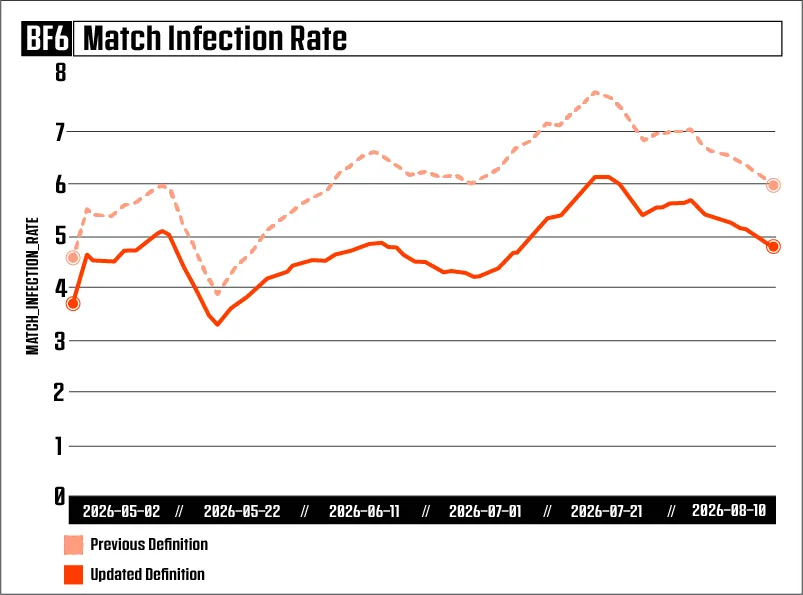
Player reports will still help direct investigations, but EA stressed that reports alone are not enough to sanction an account. The revised chart compares the previous and updated definitions across the past few months.
CPU stability work addresses crash reports
EA also linked a recent rise in client crashes to conflicts between CPU microcode, a Windows Insider update, and the Javelin anti-cheat software. The team worked with Microsoft and Intel on the issue and recommended that players install the latest available microcode and Windows updates.
The Javelin Launcher error messages are also being revised to provide clearer explanations. EA is updating its PC Javelin anti-cheat troubleshooting guide as part of that work.
BF_SledgeHammer asks players to use formal reports
EA’s BF_SledgeHammer account has been handling player questions and direct messages, but the team said those social interactions cannot replace official support channels. In-game reports remain especially useful because they activate additional telemetry for investigations, while appeals and formal reports help keep cases tracked through the proper process.
Season 4’s changes target both obvious cheats and gray-area tools, while HVCI and VBS enforcement remain under review. Share your thoughts in the comments, and follow us on X, Bluesky, YouTube, Instagram, Steam, and Telegram.
Battlefield 6
Developed by EA Digital Illusions CE

The ultimate all-out warfare experience. In a war of tanks, fighter jets, and massive combat arsenals, your squad is the deadliest weapon.
- Genre Shooter
- Platforms Xbox Series X|S, PC (Microsoft Windows), PlayStation 5
- Perspective First person, Bird view / Isometric
- Modes Single player, Multiplayer
- Release October 10, 2025
- Publisher Electronic Arts
-
Age Rating