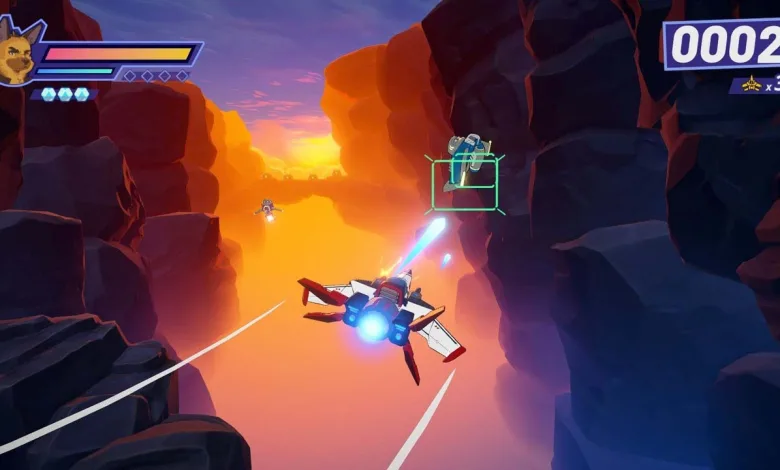
Chuhai Labs has explained how Wild Blue Skies will bring 1990s on-rails shooter design to Xbox Series X|S and Xbox on PC when it launches August 13. In the studio’s Xbox Wire breakdown, the team outlined how view distance, flight controls, mission pacing, visual design, and character work all support the game’s arcade-style cockpit feel.
The project comes from developers with a clear affection for classic on-rails shooters. Studio director Giles Goddard’s interest in the genre helped guide the team at Chuhai Labs, which wanted to capture the tension of chasing high scores without simply copying older games.


Shorter sightlines keep the action focused
One of the team’s early discoveries involved the distance players could see across each stage. Long sightlines made enemies appear to arrive without warning and allowed players to fire at targets well before they became an immediate threat. Reducing that distance brought attention back to the next few seconds of the flight.
The change also gave enemy appearances a more natural rhythm. Instead of scanning a huge area for distant targets, players need to stay focused on the hazards, attacks, and opponents directly in front of the aircraft. Chuhai Labs used that constraint as a deliberate part of the game’s design rather than treating it as a limitation to overcome.
The flight model rewards precise movement
Camera placement and controls received attention from the beginning. The aircraft needed to feel responsive without blocking the scenery or incoming threats, so the team tuned its position within the frame and used a dithering technique on the plane to keep the cockpit view readable.
Movement options are designed to work both as basic tools and as ways to improve with practice. A well-timed dodge roll can deflect enemy fire, turning an evasive move into an attack opportunity. During free-flight missions, braking can pull the aircraft through a 180-degree turn, giving players a way to get behind enemies that are in pursuit.
That approach gives each mechanic a simple starting point while leaving room for players to build better timing and control. The result is a flight system that can be understood quickly but still rewards repeated runs.
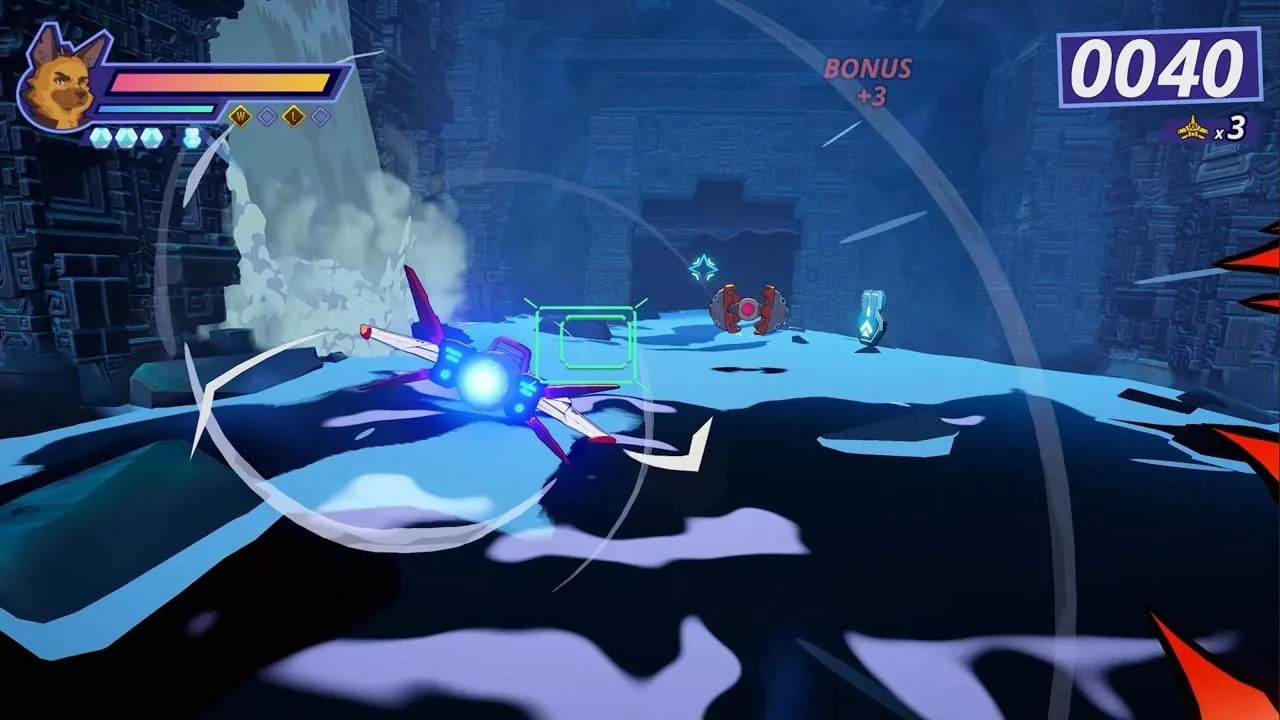
Every mission begins with the world around it
Chuhai Labs built the setting before laying out individual missions. The team first developed environments and a broad world map, then used each location as the foundation for a mission pitch and its story beats.
From there, levels were divided into sections and set pieces. The developers first placed rough geometry, placeholder encounters, and temporary dialogue before testing the flow. Art, sound, enemy behavior, and final dialogue came later, after the pacing of each stage had been tested and adjusted.
That pacing is especially important in an on-rails shooter because the aircraft is always moving forward. Quiet stretches need to leave room for the next enemy wave, hazard, or major encounter to land properly. Branching routes, hidden paths, medals, and a score system give players reasons to return after finishing a mission.
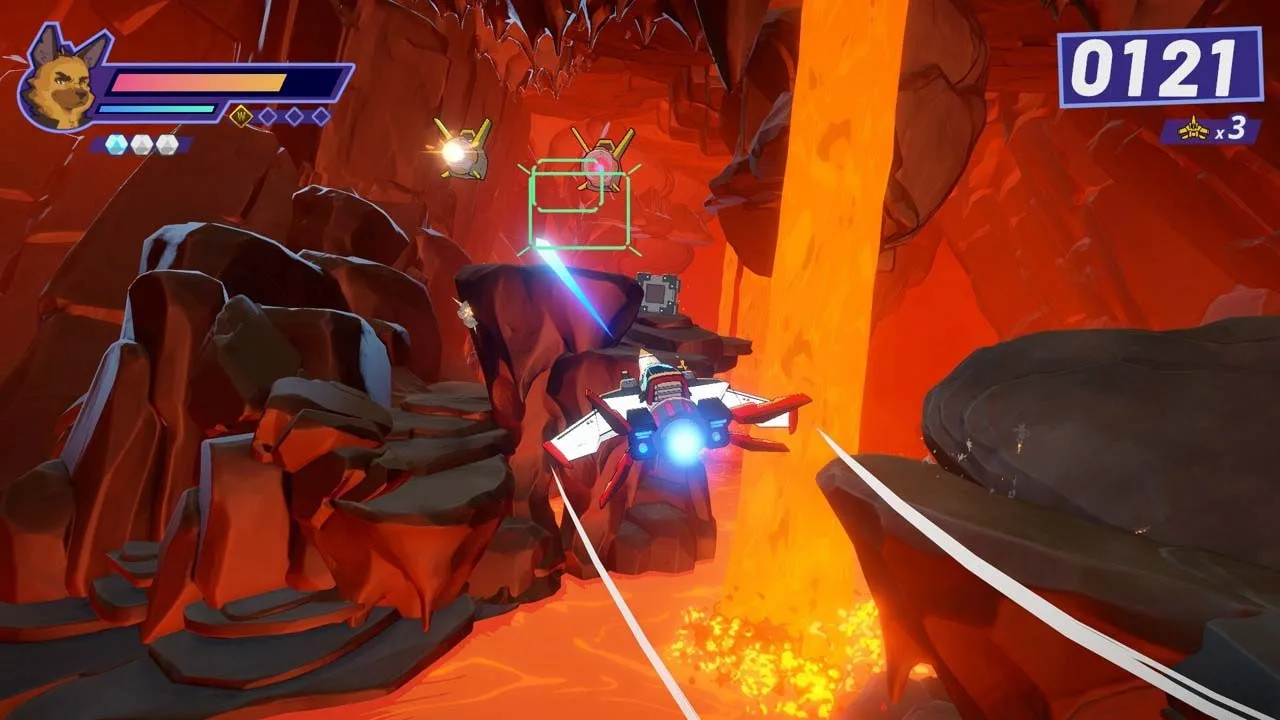
A Saturday-morning look surrounds the Blue Bombers
The visual direction draws from classic Japanese animated films, including the work associated with Studio Ghibli. Characters, aircraft, and enemies use outlined cel shading, while the environments rely on softer treatment of light, shadow, and fog. The interface uses clean shapes so important information can be read without taking attention away from the flight.
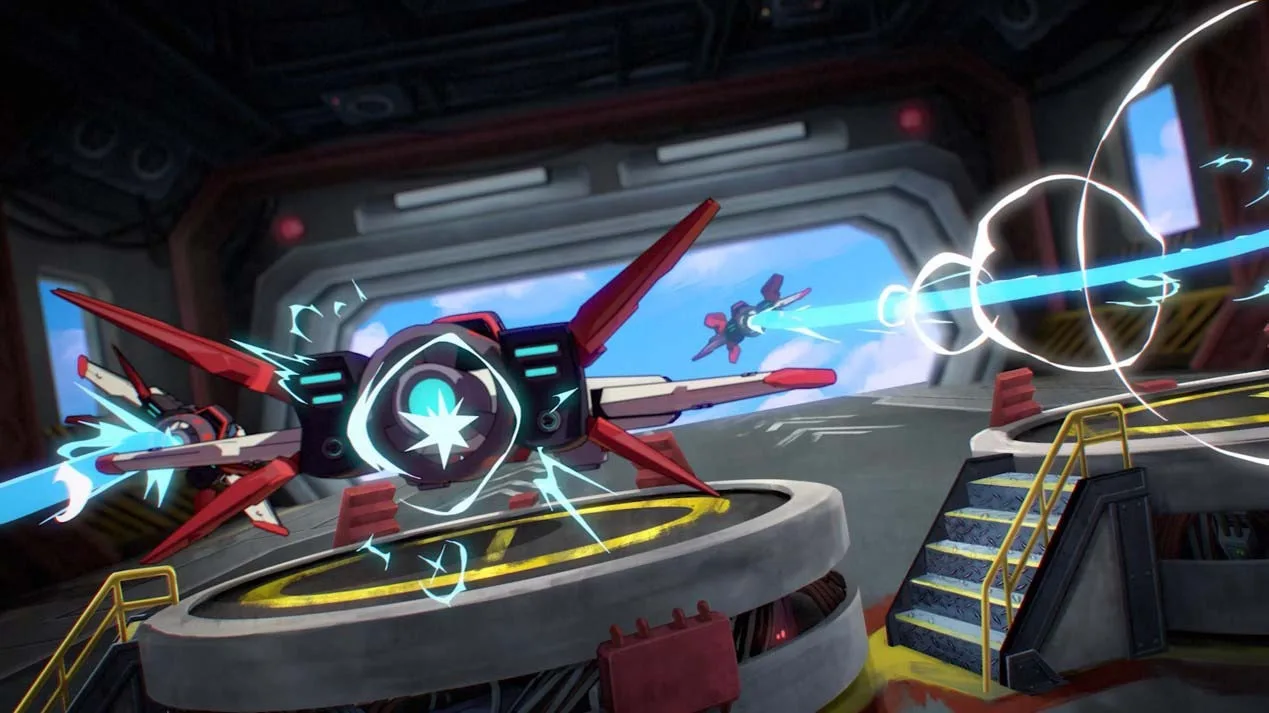
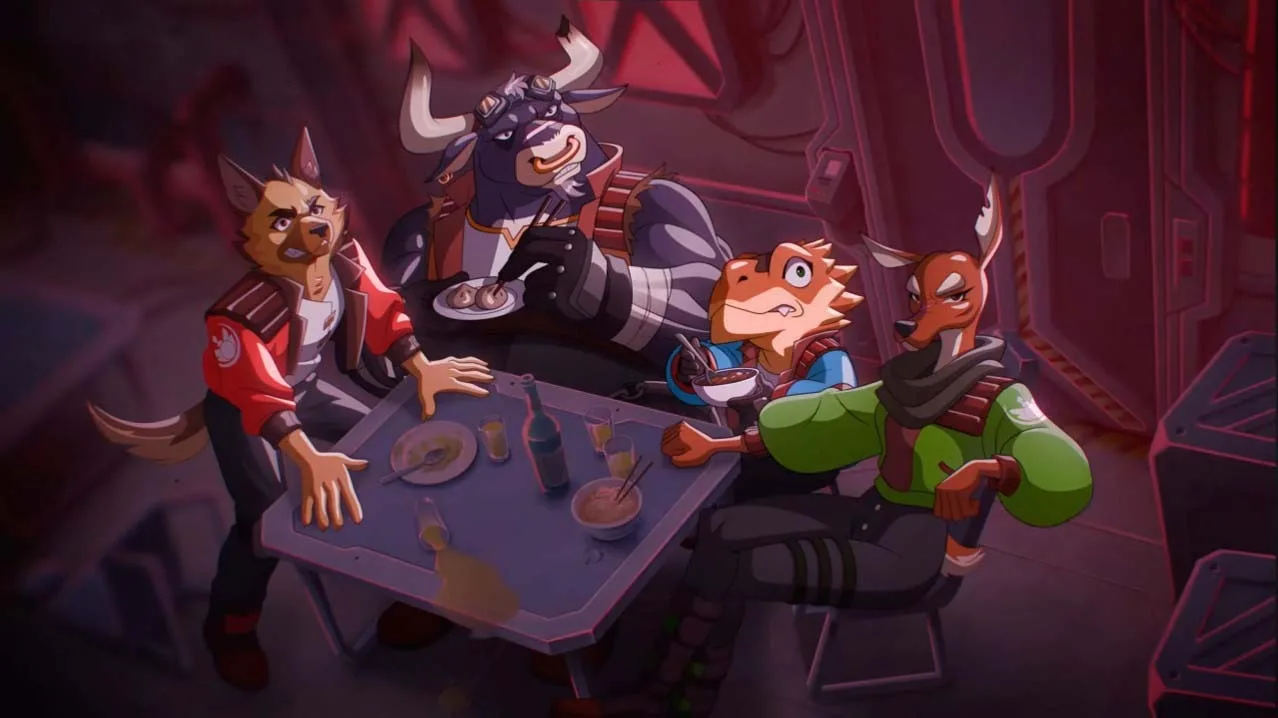
The Blue Bombers were designed to match that Saturday-morning cartoon tone. Bowie, Thorne, Chuck, and Roe each have strong personalities, banter, and their own place in the squad. Their names are Bowie Stray, Thorne, Chuck Barbacoa, and Roe Whitetail.
Jonah Scott voices Bowie Stray, while Suzie Yeung plays Roe Whitetail. Edward Bosco provides the voice of Chuck Barbacoa, and Daman Mills voices Thorne. The cast’s other credits include Beastars, High-Rise Invasion, Final Fantasy VII Remake, Chainsaw Man, Overlord, Genshin Impact, Dragon Ball Super, and Honkai: Star Rail.
When Wild Blue Skies launches on August 13, players will be able to fly across oceans, desert ridges, and dangerous caves while fighting Grimclaw’s forces. Xbox Play Anywhere support will carry mission progress and achievements between Xbox Series X|S and Xbox on PC.
Share your thoughts on Wild Blue Skies in the comments, and follow along on X, Bluesky, YouTube, Instagram, Steam, and Telegram.