Nvidia’s first in-house CPU has landed in benchmark charts, and the result looks strong on paper. The catch is that Nvidia controlled which workloads could be tested, so the numbers come with a very specific frame around them.
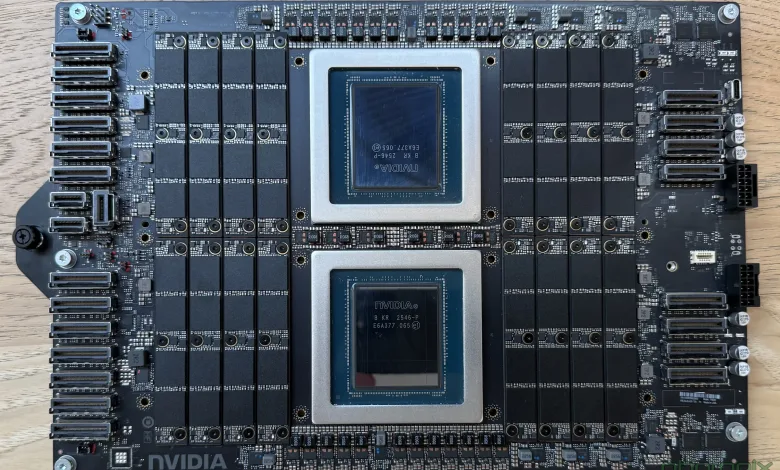
The chip in question is Vera, part of Nvidia’s upcoming Vera Rubin AI platform. Vera uses an Olympus CPU core built by Nvidia in-house for the Arm instruction set, which makes it different from earlier Nvidia CPUs such as Grace, whose cores came from Arm itself.

According to Phoronix, the test list focused on code compilation, Python, OpenJDK Java workloads, AV1, and 7-Zip. That mix is not geared toward gaming, but it did give Vera a chance to show what it can do in a server-style environment.
The results were hard to ignore. Nvidia’s 88-core chip, which supports 176 software threads, reportedly ran neck and neck with AMD’s Epyc server parts in video encoding and pushed past Intel Xeon in the same set of tests. In 7-Zip, Vera’s per-core performance was said to be close to 20% better than any x86 CPU in the comparison.
In Phoronix’s geomean of the results, Vera beat AMD’s top Epyc chip by about 10% and outpaced Intel’s flagship Xeon by more than 50%. Phoronix also said Vera clearly had the edge over most Arm server chips, including parts from Ampere Computing and custom Arm silicon used by public cloud providers, though it did not publish figures for those comparisons.
What that means for PC gaming is still murky. Nvidia’s upcoming N1x chip for PCs is believed to use Arm-designed cores rather than Olympus, so Vera may not map directly to the consumer side. Even so, if Nvidia keeps building out its own Arm CPU work, this first result suggests the company has more than a side project on its hands.
Share your thoughts in the comments, and follow us on X, Bluesky, YouTube, Instagram.