Final Fantasy 7 Nearly Began as a New York Detective Story
A discarded detective plot, a shift from Super Nintendo prototypes to PlayStation, and changing character plans show how far the 1997 RPG moved from its first drafts.

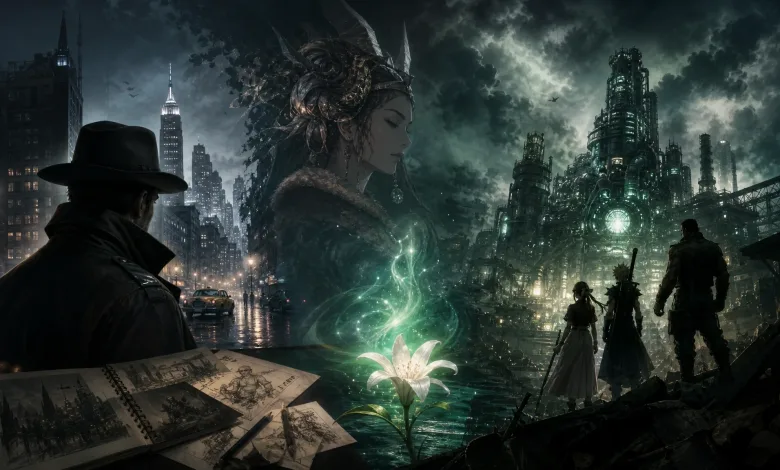
Before Cloud and AVALANCHE took center stage, Final Fantasy 7 had a very different lead. An early Hironobu Sakaguchi draft followed Joe, an impassioned New York detective, while the resistance against Shinra remained in the background. As the game developed from 1994 to 1997, that premise gave way to the story players know, and some discarded ideas found new homes elsewhere.
The early concept’s detective thread later fed into Parasite Eve, while its sorceress was repurposed as Edea Kramer in Final Fantasy 8. The change was more than a new setting or cast. Sakaguchi’s original direction was grounded in a realistic world and centered on eco-terrorism, but a 1995 sarin gas attack on Tokyo’s subway, which killed 14 people, prompted him to rethink how the story might portray violence. The setting moved toward cyberpunk instead.
From Super Nintendo prototypes to PlayStation
The game’s hardware changed along with its story. Early prototypes were made for Super Nintendo hardware, but Square Enix wanted the storage capacity of CD-ROMs for a project of this scale. A dispute over Nintendo 64 cartridge capacity helped push the company toward Sony’s PlayStation, which used CDs.
Accounts of Square’s split with Nintendo have differed. Sakaguchi remembered the break as amicable, while some Square Enix staff described a much harsher parting. Either way, the platform decision gave the team more room for the game’s cinematic ambitions. Square Enix used CG tools including PowerAnimator and Softimage 3D, software also used on films such as Jurassic Park and Terminator 2. The production grew to more than 100 people, and its budget peaked at roughly $80 million, making it the most expensive game of its time.
Character relationships changed with the story
Tetsuya Nomura’s early designs and story ideas shifted too. Cloud was first drawn with slicked-back black hair, a look later given to Zack Fair, the last character Nomura designed for the game. Aerith was initially imagined as Sephiroth’s sister, then as his lover. Both ideas were dropped, and Zack instead became her former boyfriend.
Aerith’s death also nearly had much more company. Nojima wrote the scene, but the team considered killing off the full party before settling on leaving three characters alive, then ultimately sparing everyone except Aerith. Nomura argued that killing several party members would blunt the force of her death. The final choice let the loss remain central without turning it into a mass casualty.
The Lifestream and a long-running origin story
A familiar story about Final Fantasy 7 ties Aerith’s death to Sakaguchi losing his mother. The dates complicate that version: his mother died in 1988, during production of Final Fantasy 3, years before work on Final Fantasy 7 began. Sakaguchi shaped the Lifestream and much of the material around it, while Nomura proposed Aerith’s death. The game’s ideas about death, memory, and returning to the planet may reflect Sakaguchi’s loss, but that connection is an interpretation, not a confirmed account of what inspired each story choice.
Which discarded Final Fantasy 7 idea would you most like to see developed further? For more stories about how early concepts become finished games, stay connected through X, Bluesky, YouTube, Instagram, Steam, and Telegram.