Fable is building most of its combat around pressure from several enemies at once, rather than a string of isolated duels. Playground Games brought a quest demo and a hands-on combat build to Gamescom, with the latter showing how crossbows, spells, enemy weaknesses, and movement are meant to work together.
Ralph Fulton, Playground Games’ general manager and Fable director, discussed the approach in the latest Official XBOX Podcast episode recorded in Cologne, Germany. He described one-to-many encounters as a core combat principle. Fights against a single large creature or another hero will still appear, but those battles are being treated as special set pieces rather than the usual encounter format.


Fable’s combat asks players to prioritize targets
The closed-door combat demo took place in the mine quest Mud and Death, where groups of Hollow Folk and wraiths grew larger as players moved deeper into the area. Wraiths could power up from a distance, giving players a reason to interrupt them with crossbow bolts before dealing with the rest of the group. Armored Hollow Folk also changed the usual attack pattern by blocking access to weak spots that worked against other enemies.
Spellcasting adds another layer to those encounters. Charged spells can take different forms, and combining them with other abilities creates more options during a fight. Fulton gave the example of lifting enemies into the air before striking them with a Lightning Spell. The controls are approachable at first, but the number of possible combinations gives more experienced players room to build their own attack plans.
That flexibility is intentional. Players can mix melee weapons, ranged attacks, and magic instead of following one required combat route. The result should make target selection part of nearly every larger fight, especially when enemy groups include different abilities that support one another.
Bowerstone is built as a city, not a backdrop
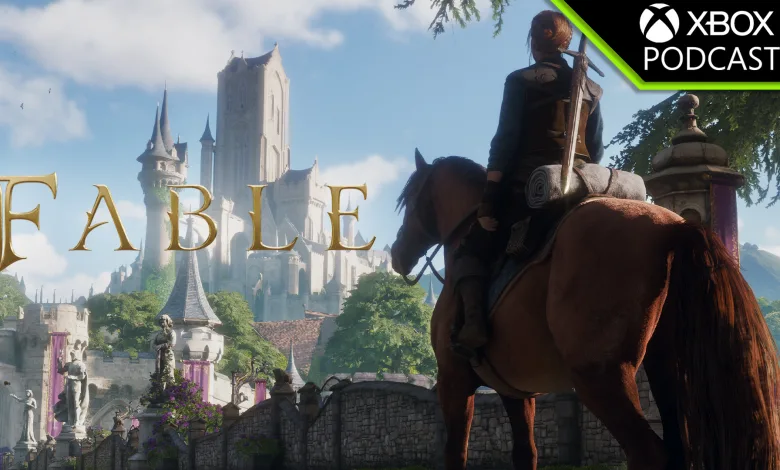
Combat was only one part of Playground Games’ Gamescom presentation. Bowerstone returns as a dense, vertical city filled with homes, shops, businesses, and NPCs. Every building can be entered, whether the player owns it, visits it as a customer, or breaks in to steal from it.
Interiors are individually dressed to reflect the people who live there and their place in the city. Players can also work toward owning property, with districts such as the wealthy Warminster area offering a different kind of home from the more modest neighborhoods below it. The city is designed to support several types of player behavior instead of serving as a backdrop between quests.
Small decisions follow the same philosophy. In one example, the player can give Humphrey the Golden a drink or throw it at him. Choosing the second option produces an immediate negative reputation reaction, but it does not alter the character’s long-term relationship with the player. The moment is there to support roleplay, while larger decisions can carry wider consequences.
Fable is scheduled to launch on February 23, 2027. Until then, Playground Games is using public quest footage and hands-on combat sessions to show how Albion’s combat, cities, and choices fit together.
Which part of Fable’s Gamescom showing interests you most? Share your thoughts in the comments, and follow us on X, Bluesky, YouTube, Instagram, Steam, and Telegram.
Fable
Developed by Playground Games

Become the Hero you want to be in an immersive open-world action-RPG where each choice shapes your journey, reputation is everything, and fairytale endings are never guaranteed.
- Genre Role-playing (RPG), Adventure
- Platforms Xbox Series X|S, PC (Microsoft Windows), PlayStation 5
- Perspective Third person
- Modes Single player
- Release February 23, 2027
- Publisher Xbox Game Studios
-
Age Rating