Steam player counts are not a game’s report card. John Buckley, the Palworld liaison and Pocketpair publishing lead, says public discussions around concurrent users often make games look healthier or weaker than they really are, especially when those games have audiences beyond PC.
During a GamesRadar interview at Gamescom 2026, Buckley revisited Palworld’s move from 2.1 million concurrent users to 500,000. Some of the loudest reactions treated that fall as proof of an historic collapse. Buckley saw the remaining half-million players differently, since that figure still represented an enormous audience playing at the same moment.


Concurrent users only show one moment
Steam has become an easy measuring stick because it is the leading PC gaming platform with publicly available live player data. Other platforms do not offer the same level of access, so Steam numbers often become the default way to judge a game’s popularity, even when the game is available elsewhere.
Concurrent users, or CCU, are a snapshot. A change from 500,000 players at one check to 400,000 at another does not prove that 100,000 people stopped playing. Players can log in and out during both measurements, which means the figures describe activity at specific moments rather than the total number of people who played during the day.
Buckley believes daily active users, or DAU, would provide a more useful view. He gave the example of a game with 1,000 CCU potentially reaching 20,000 DAU. Those numbers measure different things, and treating them as interchangeable can make normal player patterns look like a crisis.
Steam activity can also rise or fall for many reasons that have little to do with a game’s quality. Sales, update timing, server downtime, time zones, and replayability can all affect the number visible at a given moment. Players outside PC are missing from the count as well. Sony has also begun testing a small PS5 activity widget, but that limited view still does not open up the same level of information available through Steam.
Marathon is one example of the pressure
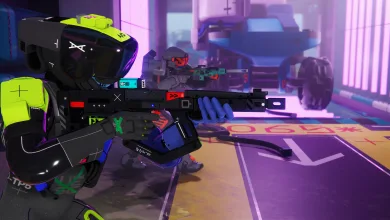
Buckley pointed to Marathon as one of the games currently being judged through that narrow lens. The situation can look different when the timing behind a number is included. After Bungie launched the Vault Breaker PvE mode on July 21, Marathon reached 14,809 concurrent Steam players shortly afterward, about three times its activity at similar points during the previous week, as coverage of Marathon’s PvE experiment documented.
Even with that context, Buckley expects Palworld to face the same treatment if its Steam count later falls below 100,000. “Poor Marathon and stuff are getting dragged through the mud with this right now, and I’m sure our day’s coming a few weeks from now,” he said. His point was not that Steam data has no use, but that one concurrent figure cannot describe a game’s entire audience or its long-term health.
Do Steam counts affect how you judge a game, or would daily active users give you a better sense of its audience? Share your thoughts in the comments, and follow us on X, Bluesky, YouTube, Instagram, Steam, and Telegram.
Palworld
Developed by PocketPair

Palworld is a multiplayer open-world survival game that combines creature-collecting with crafting, base-building, and combat. Set on the Palpagos Islands, players capture and tame animal-like creatures called Pals, which can be used as mounts, combat partners, or workers at player-built bases. The game incorporates firearms and darker satirical elements into the monster-taming formula.
- Genre Shooter, Role-playing (RPG), Hack and slash/Beat 'em up, Adventure, Indie
- Platforms Xbox Series X|S, PC (Microsoft Windows), PlayStation 5, Mac, Xbox One
- Perspective Third person
- Modes Single player, Multiplayer, Co-operative, Massively Multiplayer Online (MMO)
- Release July 10, 2026
- Publisher PocketPair
-
Age Rating