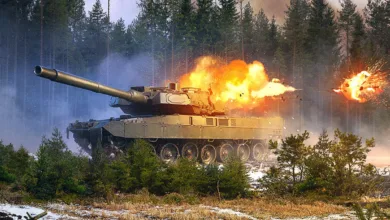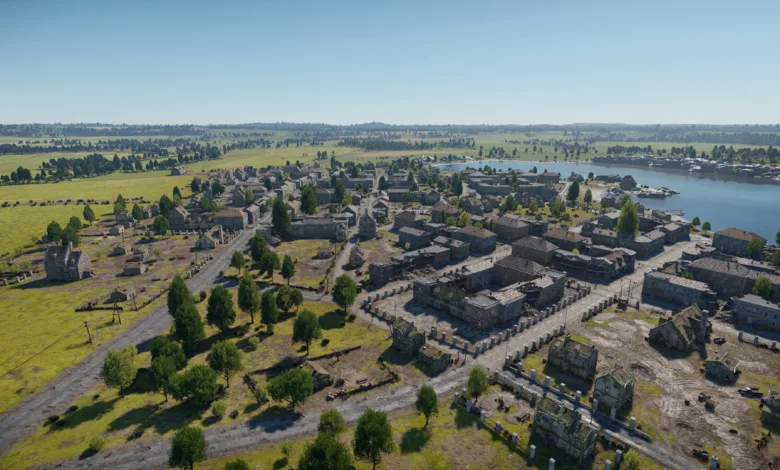
War Thunder’s Eagle’s Shadow update, which went live Nov. 11, adds separate controls for object and vegetation draw distance, each with a maximum of 500%. Gaijin’s rendering breakdown on Steam also details longer-distance shadows and new reflection options, building on the update’s earlier exposure and reflection changes.
Software ray tracing extends shadows
Ground Battles now use software ray tracing to draw shadows from static objects such as buildings, walls and rocks. It does not require a graphics card with hardware ray tracing. The previous system could redraw large areas when a vehicle spawned, the sun shifted abruptly or replay speed changed, raising CPU load and causing flicker near the camera. The new system updates only the shadow pages affected by a change and limits how much work can happen in a frame. Gaijin says peak CPU load is several times lower, flicker is gone and static shadows reach farther.

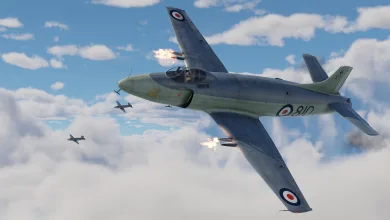
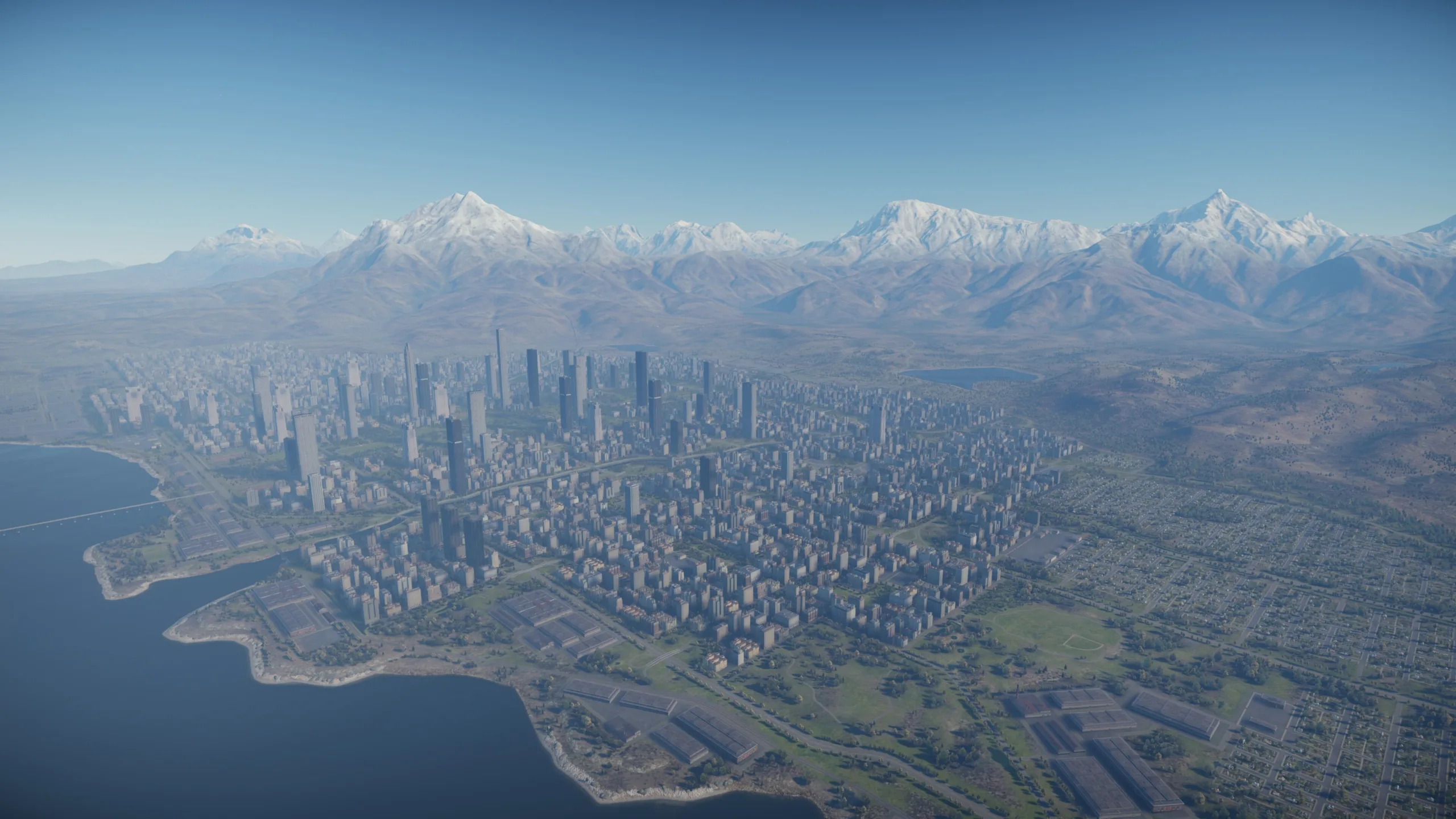
Air Battles also get software-ray-traced object shadows. Older shadow maps covered only a few hundred meters around an aircraft, leaving distant towns and airfields without shadows. The updated method casts rays against a compact copy of large scene objects, extending their shadows to distant parts of the view and removing the visible transition that previously appeared around 300 meters from the camera. The feature, once limited to the Movie preset, now works at High settings and above, as well as on PlayStation 5 and Xbox Series X.
Object and vegetation ranges now have separate sliders
Previously, one slider controlled the draw distance for buildings and vegetation. Its maximum was marked as 350%, although the engine capped the range at 300%. Eagle’s Shadow replaces it with Tree range for trees, bushes and other vegetation, and Object range for buildings, houses, fences, walls and rocks. Both controls now reach 500%. Each also governs when detailed models switch to lower-detail versions.
Separating the settings lets ground-vehicle players prioritize distant buildings and other objects without spending resources on vegetation. For aircraft, tree culling now uses horizontal distance in cockpit view and free camera instead of measuring distance in three dimensions. Forests should keep a consistent radius at different altitudes rather than disappearing beneath a high-flying aircraft. The new controls inherit the old slider’s values, so splitting them does not change performance by itself. Horizontal tree culling has virtually no performance impact.
Higher reflections and revised light-source shadows
The Reflection quality slider now has five positions instead of three, with new High and Very High options. They give the screen-space reflection tracer two and four times as many steps, respectively, helping it resolve thin details such as railings, grilles and fences instead of replacing incomplete reflections with a blur. Medium previously used 32 steps, while the new levels offer 64 and 128. They are not enabled by default in any graphics preset, and the extra ray-tracing passes cost performance when switched on. Systems using hardware ray tracing see no change from these reflection options.
A separate change to direct lighting requires hardware ray tracing. It is available with a GeForce RTX card or equivalent on DirectX 12, or on PlayStation 5 Pro in a ray-traced mode. The new RTDL pass gives sunlight and local sources such as muzzle flashes and fires a shared soft-shadow filter. Each source has a defined size, so a cannon flash casts a broad shadow while a machine-gun flash produces a smaller, sharper one. Performance no longer depends on how many light sources appear at once, and shadows from a nearby object are sharper than those from a distant one.
Players without hardware ray tracing also get softer, steadier shadows from local lights, including hangar lamps and fires. Shadow softness now reflects the light source’s physical size rather than screen resolution, and the change addresses flicker in the premium hangar.
Which of these rendering changes would make the clearest difference in your battles? For more on Eagle’s Shadow’s visual updates, stay connected on X, Bluesky, YouTube, Instagram, Steam, and Telegram.
War Thunder
Developed by Gaijin Entertainment
War Thunder is a free-to-play vehicular combat MMO featuring aircraft, ground vehicles, and naval craft spanning from the early 20th century to the modern era. Players progress through technology trees across multiple nations, unlocking increasingly advanced military vehicles. The game offers three realism tiers for each vehicle type: arcade, realistic, and simulator modes. Originally developed as a flight simulator under the name "World of Planes," the game expanded to include tanks in 2014 and naval forces later, becoming a combined-arms experience. A mobile version was released in 2023.
- Genre Shooter, Simulator, Tactical
- Platforms Xbox Series X|S, PlayStation 4, Linux, PC (Microsoft Windows), PlayStation 5, Mac, Xbox One
- Perspective First person, Third person, Virtual Reality
- Modes Single player, Multiplayer, Co-operative, Massively Multiplayer Online (MMO)
- Release January 28, 2013
- Publisher Gaijin Entertainment
-
Age Rating