War Thunder’s Eagle’s Shadow Update Reworks Exposure and Reflections
Local tone mapping is limited to a one-stop adjustment, while updated shading accounts for ceilings, windows and the open sky.

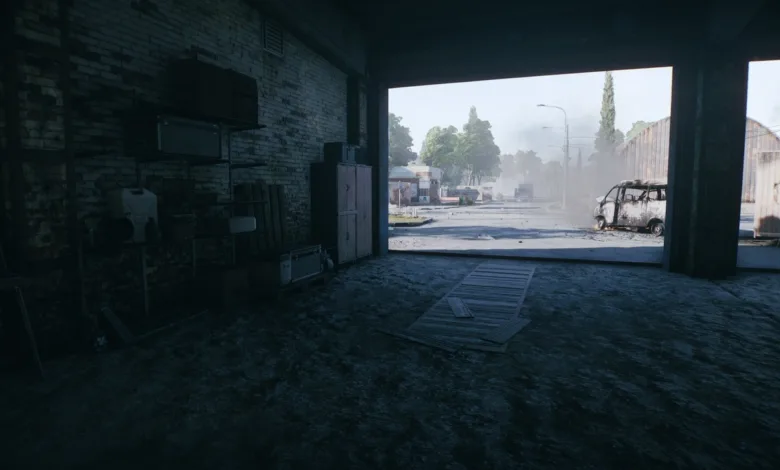
War Thunder’s Eagle’s Shadow update went live Nov. 11, and Gaijin has detailed another layer of its rendering overhaul. Exposure, ambient shading and reflections now respond more closely to the scene, including the tricky contrast between a dark hangar and the sunlit airfield outside.
Gaijin’s Steam rendering breakdown covers those changes alongside a retuned display curve. They build on earlier Eagle’s Shadow work involving tank coatings, aircraft vapor, ship-light reflections and clouds, detailed in the previous rendering preview.
Exposure and shading adapt to the scene
Previously, War Thunder applied one exposure value across the whole screen. Looking from a dark interior toward bright daylight could leave the interior nearly black or flatten the outdoor view. Local tone mapping now assesses brightness across different parts of the frame, gently lifting areas far darker than average and dialing back the brightest areas while keeping local contrast.
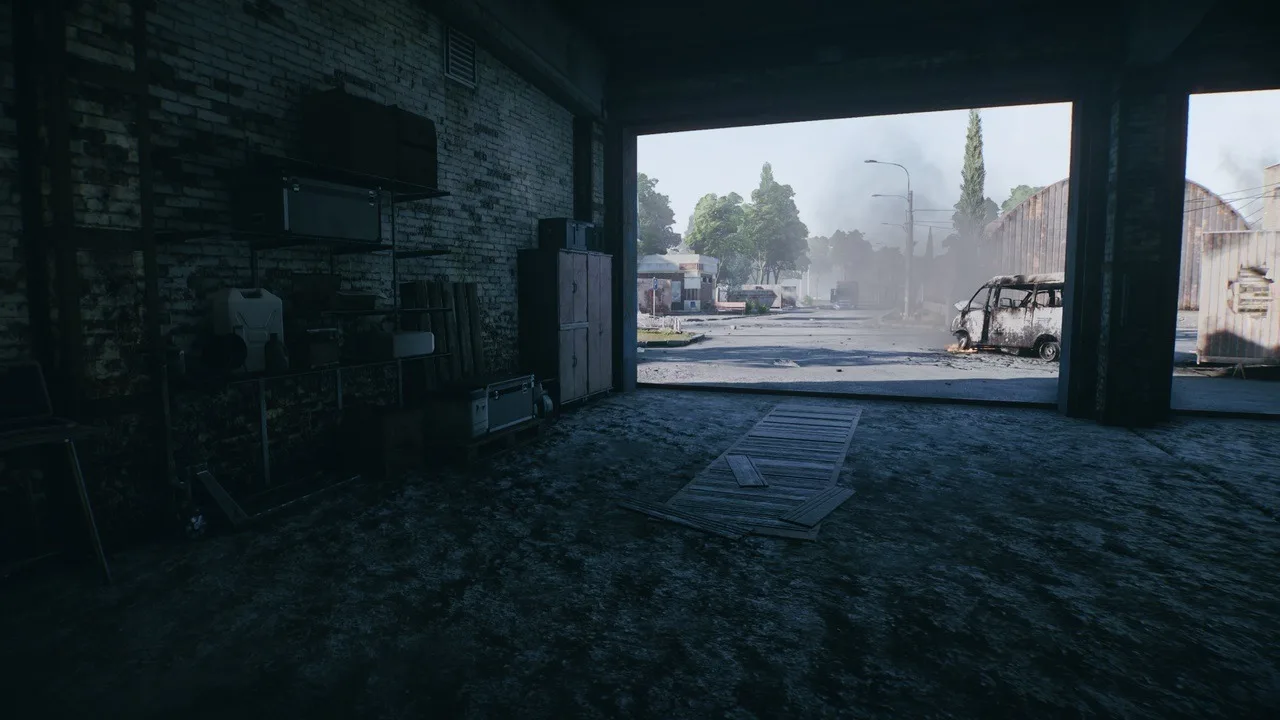
The adjustment is capped at one stop in either direction. Brightness changes are tracked from frame to frame and follow the camera and moving objects, so turning or crossing a bright area does not cause an abrupt exposure jump. The feature works with every anti-aliasing mode. It is enabled by default on the Max and Movie quality presets, while players using other presets can switch it on in the Render section of graphics settings.
Ambient occlusion, which darkens creases and corners where light has difficulty reaching, now accounts for whether the sky is blocked. Outdoors, sky shading is at full strength, while indoors it is softer. Rooms should appear darker beneath ceilings and brighter near windows.
Display and surface reflections get a new pass
A revised display curve adjusts standard dynamic range output across all graphics presets and platforms. It lifts the deepest shadows and low midtones slightly, adds a little contrast to upper midtones and keeps pure white unchanged. The change uses no extra system resources. HDR output is unaffected.
War Thunder’s bidirectional reflectance distribution function, or BRDF, now accounts for multiple light bounces on rough surfaces at acute angles. Rough metal and scratched paint had lost up to half their reflected light, so tank armor and aircraft surfaces should look brighter and more natural when viewed from a low angle. A separate reflection fix lets shadowed floors and roads reflect the sky and nearby walls instead of producing dull patches. Wet and snowy surfaces also receive corrected reflections, with virtually no performance cost.
Which rendering change do you think will be easiest to spot in a match? For more on Eagle’s Shadow’s visual updates, stay connected through X, Bluesky, YouTube, Instagram, Steam, and Telegram.
War Thunder
Developed by Gaijin Entertainment
War Thunder is a free-to-play vehicular combat MMO featuring aircraft, ground vehicles, and naval craft spanning from the early 20th century to the modern era. Players progress through technology trees across multiple nations, unlocking increasingly advanced military vehicles. The game offers three realism tiers for each vehicle type: arcade, realistic, and simulator modes. Originally developed as a flight simulator under the name "World of Planes," the game expanded to include tanks in 2014 and naval forces later, becoming a combined-arms experience. A mobile version was released in 2023.
- Genre Shooter, Simulator, Tactical
- Platforms Xbox Series X|S, PlayStation 4, Linux, PC (Microsoft Windows), PlayStation 5, Mac, Xbox One
- Perspective First person, Third person, Virtual Reality
- Modes Single player, Multiplayer, Co-operative, Massively Multiplayer Online (MMO)
- Release January 28, 2013
- Publisher Gaijin Entertainment
-
Age Rating