The Tetris Company Says It Had No Part in White House’s ‘Build the Wall’ Game
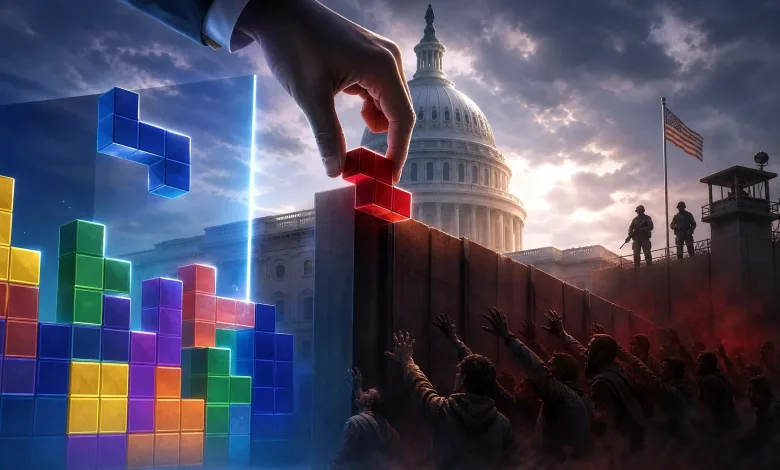
The game uses tetrominoes that never clear as zombies advance toward a wall beside a sign marked Southern Border.

The Tetris Company has distanced itself from the White House’s “Build the Wall,” a Tetris-like game included in the administration’s online arcade. The company said it had no involvement in creating the game and warned that it takes copyright infringement seriously.
In a statement shared on Instagram and its official account on September 4, The Tetris Company wrote, “At Tetris we believe in the power of connection and bringing people together, not dividing them. To our fans everywhere: we love you, we see you, and we’re grateful to have you in our community.”


The company followed that message with two direct clarifications. “P.S. The Tetris Company was not involved in the creation of ‘Build the Wall.'” It added, “P.P.S. We take copyright infringement very seriously.”
The White House game turns Tetris into a border-defense scenario
“Build the Wall” borrows the basic structure of Tetris, but its blocks do not disappear when players complete rows. Instead, players stack falling blocks as high as possible while the tetrominoes remain in place and zombies move toward a wall beside a sign marked “Southern Border.” The game’s stated goal is to stop “the coming horde” from crossing.
The presentation casts people approaching the border as enemies, turning a familiar puzzle format into an anti-immigration message rather than a game about clearing lines. The White House’s use of the Tetris formula makes the rights holder’s public separation from the project difficult to miss.
Other White House Arcade games target immigration and public health
Elsewhere in the Arcade, Flappy Bill reworks the Flappy Bird formula around a bald eagle flying down the National Mall. Supply Line asks players to sort school lunches under the “Make America Healthy Again” slogan.
Rio Run takes a Snake-style approach to immigration enforcement. Players patrol a river line and collect people represented by characters in orange jumpsuits, then receive a Game Over tally showing how many immigrants were “deported.”
The wider use of game imagery in government messaging has already drawn criticism from creators and rights holders, including over Pokémon, Halo, Call of Duty, and Grand Theft Auto material. Steve Downes, the voice of Halo’s Master Chief, demanded that his voice be removed from a White House video about the Iran War after it used a clip of the character saying he was “finishing this fight.” Halo co-creator Marus Lehto and chief designer Jaime Griesemer also condemned an ICE recruitment post that paired Halo imagery with a call to “destroy the Flood.”
The Pokémon Company separately said it had not given permission for the use of the Pokémon anime theme song in another Department of Homeland Security post about immigration enforcement. DHS previously told Alyssa Mercante that it would continue using recognizable games and other media to reach people with its messaging, naming Halo, Pokémon, and Lord of the Rings as examples.
What do you think of the White House’s use of game-inspired projects for political messaging? Share your thoughts in the comments, and follow us on X, Bluesky, YouTube, Instagram, Steam, and Telegram.