How to Join War Thunder’s Submarine Test and Track Targets
Tang-class and Type XXI submarines face surface ships and aircraft in Arcade and Realistic battles across four maps.

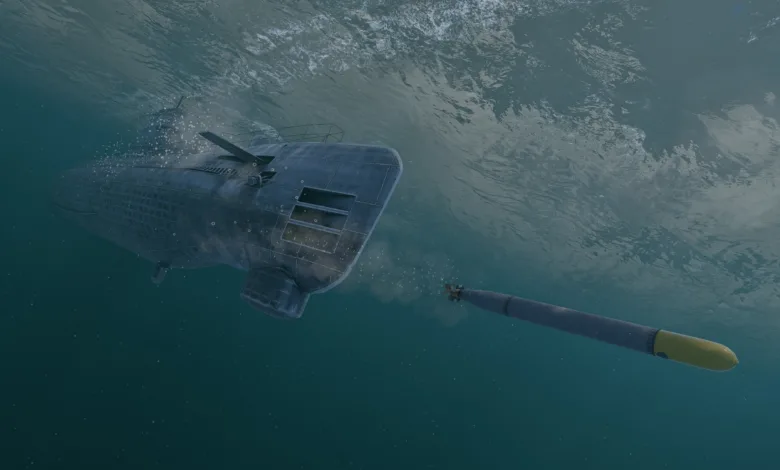
War Thunder’s submarine test runs from November 26 at 11:00 GMT through November 30 at 11:00 GMT. Diving can hide a submarine, but going below the thermocline also cuts off its ability to hear targets above, so effective attacks depend on balancing concealment with sound detection.
Open Events and Tournaments, then select Submarine Testing. Battles follow the rules for random naval battles in Arcade or Realistic mode. They take place on African Gulf, Palau islands, North port, and Japanese port, and players on all platforms can participate.

Know the submarines and their support
The U.S. side fields a Tang-class submarine with 26 torpedoes in total: six bow tubes and two stern tubes. Germany’s Type XXI carries 23 torpedoes in six bow tubes, along with 20 mm anti-aircraft autocannons in turrets.
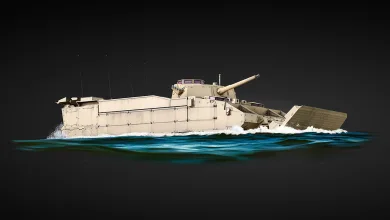
Surface ships and aircraft are part of the fights, too. U.S. forces include the cruisers USS Raleigh, the destroyer USS Fletcher, the frigate USS Dealey, and PT-103 motor torpedo boats. PBY-5A Catalina seaplanes carry new depth charges, with F6F-5 Hellcats providing air support. Germany fields the cruiser Emden, destroyer Z43, minelayer Drache, and S-38b motor torpedo boats, alongside Bf 109 F-2 fighters and He 111 H-16 bombers with new depth charges.
Listen before launching a torpedo
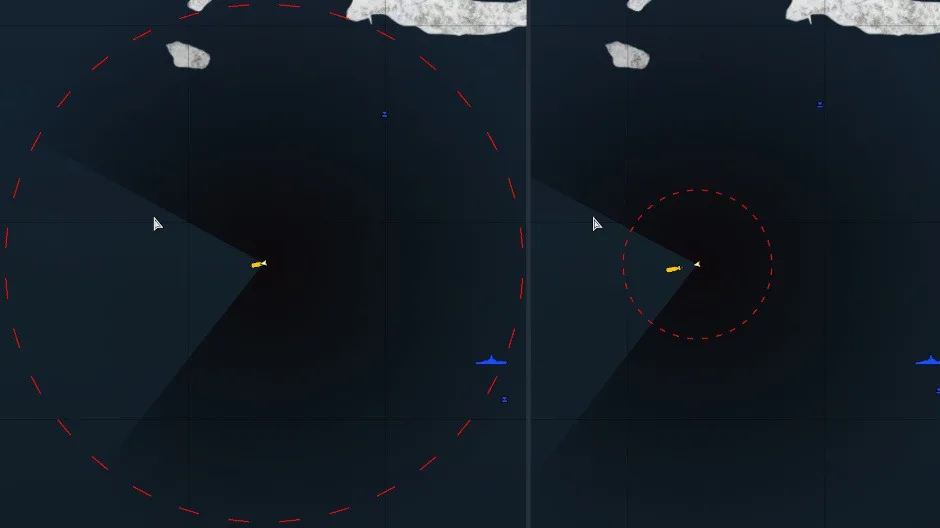
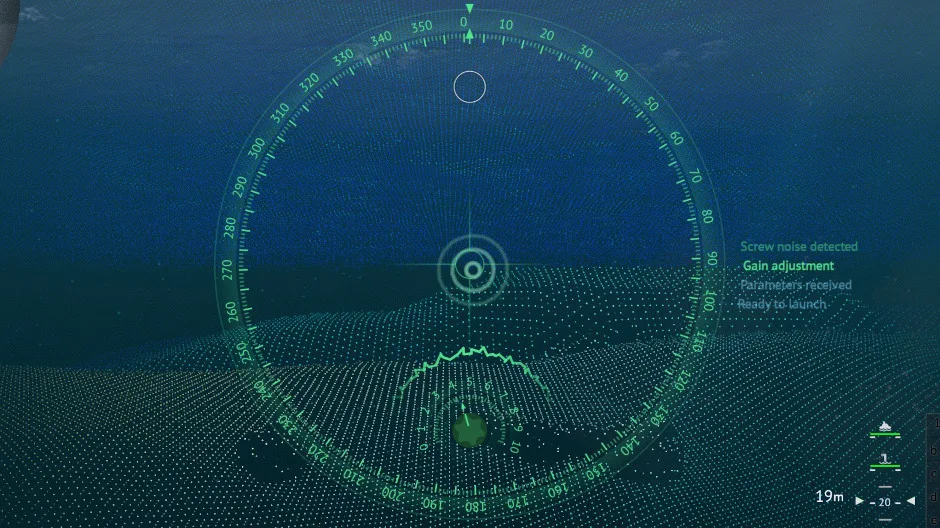
Both submarines have hydrophones, as do Emden and Z43. Hydrophones passively pick up noise from engines, propeller cavitation, and movement through the water. Torpedo launches are especially loud. On a submarine, reducing speed quiets the engines and propellers. A noise-propagation zone on the map shows where an average acoustic detection system could hear your boat.
To calculate a hydrophone firing solution, point the interface toward a detected noise source. Hold the fire button, using the left mouse button or the controller’s right trigger, and adjust the gain until the signal display above the knob distorts and turns green. Release the button, and the crew will calculate the lead angle for a torpedo attack. If torpedo sight solution usage is enabled on the action panel, the torpedo can adjust its course automatically when the target is within a specific sector.
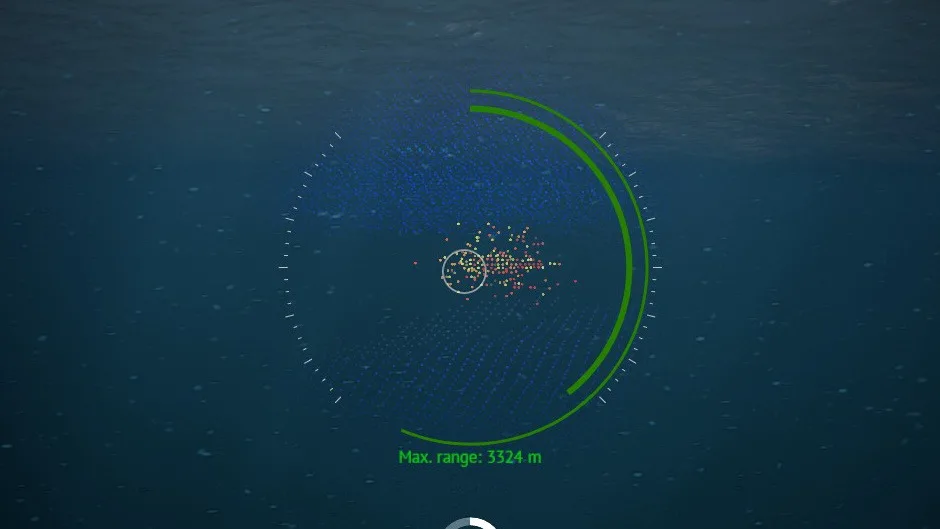
Active sonar works differently. Cruisers, destroyers, USS Dealey, and the sub-chaser Drache can send a signal through their field of view. Reflections reveal targets as red and yellow dots. Sonar can help locate a submarine, but hydrophones can detect its signal, so frequent pings also give away your position and intentions.
Use depth to break contact, then return to firing range
The thermocline sits at 40 meters. Below it, passive acoustic sensors and active sonar cannot detect a submarine, but the boat also cannot hear activity above the layer. Torpedoes can only be launched at depths of 20 meters or less. Use deeper water to break acoustic contact or reposition, then rise again when you need to listen and attack.
Gaijin describes the event as a preliminary test and asks players to send feedback and report bugs through its dedicated service.
How will you balance quiet running against the need to hear a target? Follow the test’s underwater detection mechanics and other naval changes on X, Bluesky, YouTube, Instagram, Steam, Telegram, and Facebook.
War Thunder
Developed by Gaijin Entertainment
War Thunder is a free-to-play vehicular combat MMO featuring aircraft, ground vehicles, and naval craft spanning from the early 20th century to the modern era. Players progress through technology trees across multiple nations, unlocking increasingly advanced military vehicles. The game offers three realism tiers for each vehicle type: arcade, realistic, and simulator modes. Originally developed as a flight simulator under the name "World of Planes," the game expanded to include tanks in 2014 and naval forces later, becoming a combined-arms experience. A mobile version was released in 2023.
- Genre Shooter, Simulator, Tactical
- Platforms Xbox Series X|S, PlayStation 4, Linux, PC (Microsoft Windows), PlayStation 5, Mac, Xbox One
- Perspective First person, Third person, Virtual Reality
- Modes Single player, Multiplayer, Co-operative, Massively Multiplayer Online (MMO)
- Release January 28, 2013
- Publisher Gaijin Entertainment
-
Age Rating