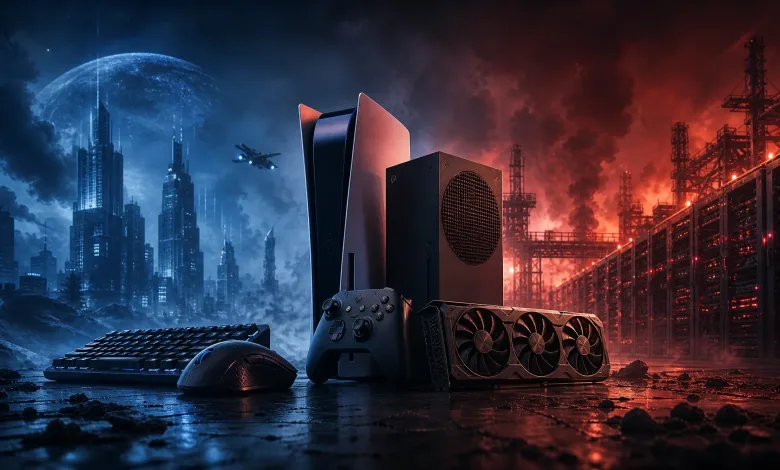
Gaming hardware prices in the United States climbed sharply during the first half of 2026. Circana games analyst Mat Piscatella reported that the average selling price for new gaming hardware rose from $452 in January to $525 in June, a 16% increase in six months.
The figures come as console and PC manufacturers face higher costs for memory and other components. Piscatella shared the pricing data in a post on Bluesky, describing the current console generation as the first to experience major price increases over its lifespan.


Back in January 2026, the average US selling price for a new unit of video game hardware was $452. By June that had risen to $525 (a 16% increase).Will be interesting to check back in a few months and see where this year ends up.Source: Circana Retail Tracking Service
— Mat Piscatella (@matpiscatella.bsky.social) 2026-08-03T15:13:15.033Z
AI demand is tightening the memory market
Artificial intelligence data centers are placing heavy demand on RAM and other chips, leaving less supply for consumer electronics. Samsung expects that pressure to continue through 2027, with shortages potentially lasting until at least 2028, according to TechCrunch’s report on the company’s forecast.
Samsung accounts for about one-third of the memory market. Its outlook is based on medium- and long-term demand forecasts from major AI companies, which are buying large quantities of memory for data-center hardware. That demand is making it harder for gaming hardware makers and other consumer electronics companies to avoid higher component costs.
The squeeze is already showing up in consumer pricing. Recent Xbox price increases in Europe have pushed the cost of several Series S and Series X models well above their original launch prices. Nintendo and other hardware makers have also warned customers about higher prices tied to changing market conditions.
Samsung is benefiting from server demand
Samsung’s own financial results show why the company expects the pressure to remain. In its second-quarter 2026 report, Samsung said its memory business delivered “record-breaking quarterly earnings” alongside a “record-high server revenue mix.” Strong server sales more than offset weaker demand from consumers.
The company also described the quarter as part of a “continued industry-wide upward price trend.” For people planning a console, PC, or upgrade, that means the cost of waiting may not always be lower if memory and chip supply remains tight.
Share your thoughts on rising gaming hardware prices in the comments, and follow us on X, Bluesky, YouTube, and Instagram.