Delta Force Details Its Six-Month Push Against Cheating
The G.T.I. Security team highlighted earlier detection, DMA Shield, kernel-level cheat detection, and the June launch of Operation Sentinel.

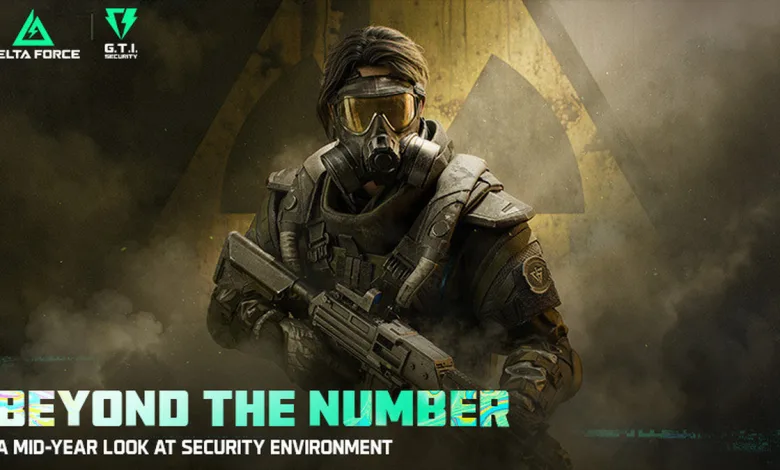
Delta Force has outlined the work behind its anti-cheat efforts during the first half of 2026, with the G.T.I. Security team pointing to earlier threat detection, deeper system protection, and more persistent enforcement. The team shared the update in a mid-year security brief on Steam.
The message was clear: weekly ban totals only tell part of the story. According to G.T.I. Security, cheat activity has been trending downward, confirmed cheat samples have become less common, and more suspicious behavior is being identified before it can affect live matches.
Detection Starts Earlier
G.T.I. Security said cheat sellers and other bad actors began using more evasive methods earlier this year. Those methods included hiding real locations and masking abnormal system environments to reduce the chance of detection.
In response, the team moved more of its detection work toward abnormal environments, suspicious execution behavior, and the connections between them. The goal is to stop more problems before they reach a match instead of relying only on bans after damage has been done.
DMA Shield Adds Deeper Protection
Software-only detection became less sufficient as DMA-based cheating grew more common. These methods use external hardware and lower-level access routes, which can make them harder to identify and disable once active.
G.T.I. Security responded with DMA Shield and began adding Secure Boot and TPM 2.0 to its protection stack.
- Secure Boot: Checks the boot chain during startup and allows authenticated critical components to load, reducing the opportunity for unauthorized drivers or abnormal programs to take hold early.
- TPM 2.0: Uses hardware-level security to help verify the runtime environment and improve the consistency of anti-cheat checks.
These layers are designed to address high-risk methods earlier in the chain. G.T.I. Security said the work should make some lower-level cheats less dependable over time.
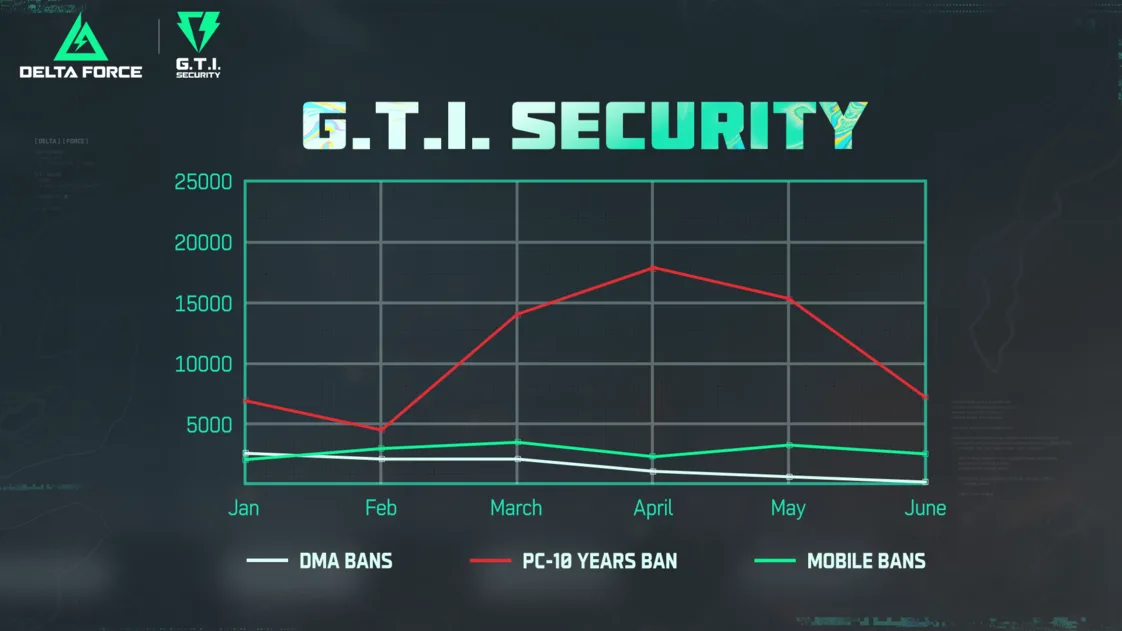
The accompanying chart tracks DMA bans, PC 10-year bans, and mobile bans from January through June 2026. PC 10-year bans reached their highest point in April before declining through June, while the DMA and mobile figures remained lower across the period.
More Attention on Hidden Cheats
By April, the security team had expanded its focus to kernel-level stealth cheats and other threats that may not be obvious from outside the game. G.T.I. Security strengthened detection for in-game Shellcode and kernel Shellcode, along with malicious code, abnormal memory execution, and unauthorized drivers.
The team also continued working on game-data protection and tamper detection. That includes protecting critical data, watching for abnormal modifications, and identifying illegal third-party changes.
These measures are aimed at finding hidden threats sooner, before they can continue affecting matches in the background.
Operation Sentinel Targets Repeat Offenders
G.T.I. Security introduced Operation Sentinel in June as an enforcement framework intended to go beyond one-time action. Rather than treating each violation as an isolated event, the system is designed to make enforcement more persistent and targeted.
The framework is meant to make it harder for violating accounts to remain active, return quickly after punishment, disrupt more matches, or profit from the same behavior. The team also said it was improving device-security identification and broader risk detection for new cheating methods and abuse tied to monetization.
What Players Should Notice
The security work is meant to produce fewer broken matches, fewer interruptions, and fewer cases where suspicious accounts remain active long enough to affect a game. G.T.I. Security acknowledged that weekly ban totals will continue to rise and fall, but said the more useful measure is whether players encounter cheating less often.
The team also stopped short of claiming that the problem has been solved. Its next priorities include earlier detection of suspicious behavior, stronger protection layers, continued work against new cheat and monetization methods, and enforcement that starts before a problem grows.
Players who encounter suspicious behavior, need an appeal reviewed, or require live support can use the customer service icon on the login screen or in-game. The official Delta Force website also provides a Support and Customer Service route. Reports and follow-ups give the security team more information to review individual cases and identify broader patterns.
Cheating remains an ongoing fight, but the first half of 2026 brought several new layers to Delta Force’s security systems. Tell us what you think about the game’s current match quality in the comments, and follow us on X, Bluesky, YouTube, and Instagram.
Delta Force
Developed by TiMi Studio Group
Delta Force is a free-to-play tactical first-person shooter developed by Team Jade and published by TiMi Studio Group. A reboot of the classic series originally created by NovaLogic, the game features large-scale multiplayer modes including a Warfare mode for massive PvP battles and Hazard Operations, an extraction-style mode. Players choose from a roster of operators with unique abilities fitting into Assault, Support, Engineer, or Recon archetypes. The game also includes a single-player and cooperative campaign inspired by the film Black Hawk Down, recreating Operation Gothic Serpent.
- Genre Shooter, Tactical
- Platforms Xbox Series X|S, Android, PC (Microsoft Windows), iOS, PlayStation 5
- Perspective First person
- Modes Single player, Multiplayer, Co-operative, Massively Multiplayer Online (MMO)
- Release December 5, 2024
- Publisher Garena, TiMi Studio Group
-
Age Rating