Correction, September 1, 2026: An earlier version listed September 3 based on an earlier report. Newer launch information from DSOGaming and a GamesRadar report from a private Gamescom demo puts DLSS 5’s release on September 4, 2026, with NBA 2K27 as its first named supported game. This article has been updated.
NVIDIA will make DLSS 5 available on September 4, 2026, giving PC players their first official look at the new version of the company’s Deep Learning Super Sampling technology. The release is tied to 3D Guided Neural Rendering, the name NVIDIA uses in its DLSS 5 announcement.

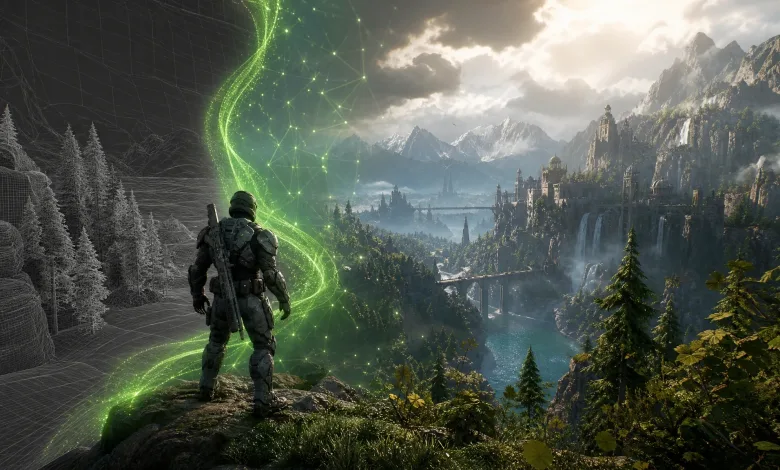
Earlier DLSS versions focused on rendering at a lower resolution and reconstructing the result with AI models. DLSS 5 takes a different route by applying a 2D generative AI layer over a game’s rendered frame. The underlying geometry remains unchanged, but the system can alter the appearance of materials, lighting, faces, clothing, and other objects.
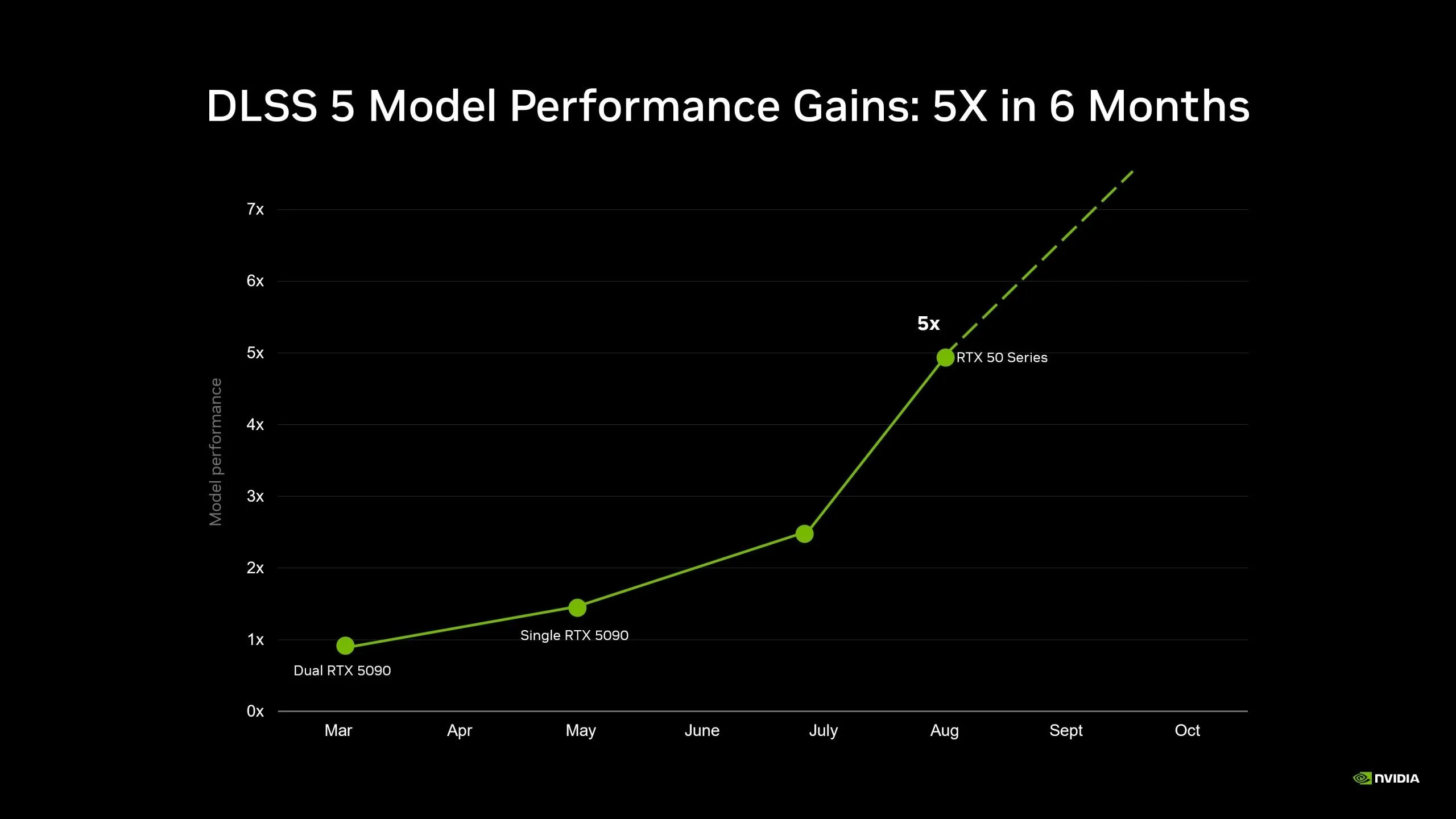
NVIDIA says the first official implementation will carry a performance cost of around 50% to 60%. The company also says DLSS 5 performance has improved by more than five times since March 2026. Work on performance and optimization is still ongoing, so results could improve after launch.
NBA 2K27 will lead the first DLSS 5 rollout
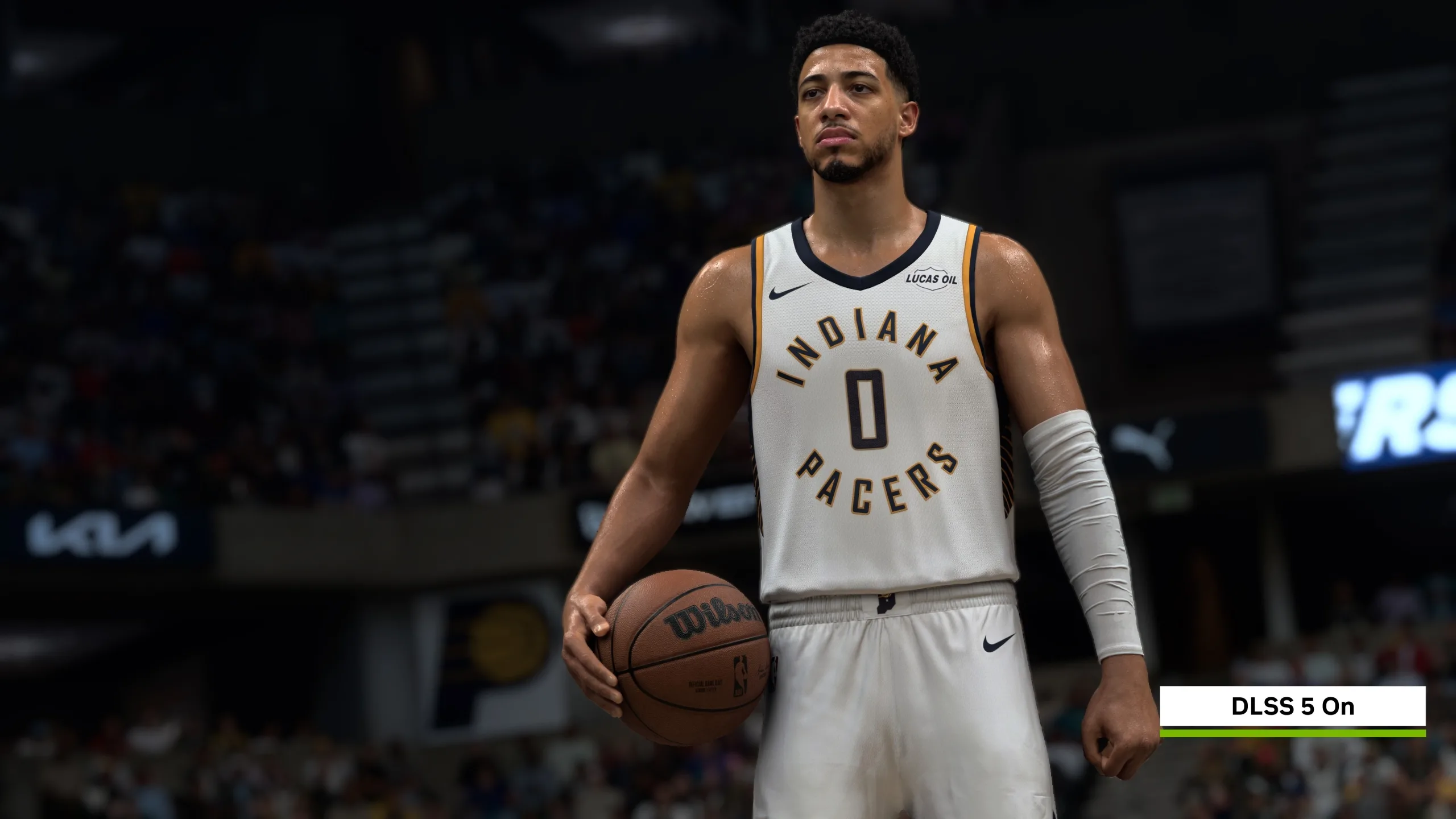
NBA 2K27 is the only game named for the September 4 launch. DLSS 5 DLL files previously leaked from the basketball game, which helps explain why it will receive native support first. NVIDIA is also positioning the technology toward photorealistic games, and NBA 2K27’s attempt to recreate the look of a real basketball broadcast makes it an obvious showcase.
A short NBA 2K27 gameplay demonstration showed DLSS 5 working, but it did not establish the feature’s effect on frame rates during normal play. NVIDIA has shared 4K benchmark results for the game, but the figures need some context. Multi-Frame Generation was enabled alongside DLSS 5, leaving the base frame rate unclear. The chart lists 370 average frames per second on an RTX 5090 and 233 FPS on an RTX 5080 with DLSS 5 enabled, ray tracing on, and the Ultra preset in use. The test system used a Ryzen 7 9800X3D, 64GB of RAM, and Windows 11.
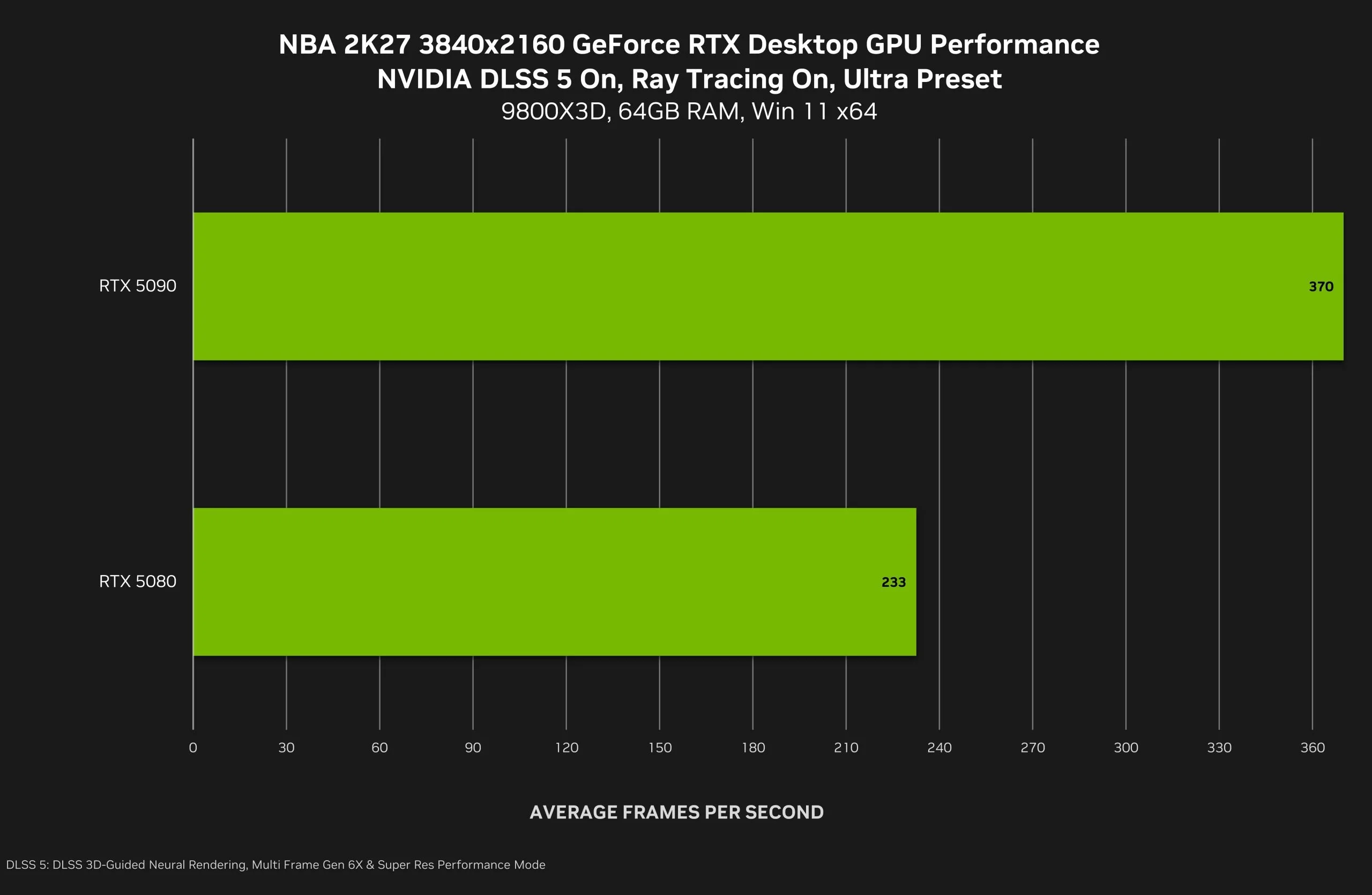
Frame generation can raise the displayed frame rate by adding generated frames, but it does not show how quickly the game runs before those frames are added. These results therefore should not be treated as a direct measure of DLSS 5’s underlying rendering performance.
Developers can tune DLSS 5 scene by scene
The most useful part of the private Gamescom demonstration was NVIDIA’s developer tooling. The company showed an NVIDIA-made program called Zorah, where artists could work with DLSS 5’s models and select which parts of a scene should receive the visual treatment.

Studios will have three AI models to choose from, and they will not have to use the same model throughout an entire game. Masking tools can identify and isolate foreground or background objects, clothing, faces, and hair. Artists can then adjust those elements without automatically applying the same settings to every other part of the scene.
Much of the tuning happens through sliders for options such as tone intensity and structure intensity. NVIDIA’s masking tools can also target objects individually, giving developers a way to direct the result toward their own art style instead of handing every decision to the system.
Zorah was shown as a standalone NVIDIA application rather than inside a live game, so the demonstration did not establish how easily the tools will distinguish objects in a production project.
DLSS 5 is opt in and earlier versions remain
DLSS 5 is a separate creative tool rather than an automatic replacement for previous versions. A game that already supports DLSS 4.5 or an earlier model will not gain DLSS 5 without the developer choosing to add it. Studios will also need to configure their own settings when they implement the feature.
Players will still be able to choose an older DLSS model when a game supports both versions. If a developer offers only DLSS 5, however, the consumer-facing control will be limited to turning the feature on or off. Scene masks and intensity sliders shown during the demonstration will remain developer tools, so players cannot separate the effect on a distant environment from its effect on a character’s face.
Stylized and indie games raise a separate question for the technology. Their visual identities can depend on deliberately artificial colors, shapes, and materials, and NVIDIA did not show how DLSS 5 would preserve those choices beyond giving developers control over the models and settings.
More games have DLSS 5 support planned
NVIDIA has named several other games for future DLSS 5 support. The list includes AION 2, Assassin’s Creed Shadows, Black State, CINDER CITY, Delta Force, Hogwarts Legacy, Justice, NARAKA: BLADEPOINT, NTE: Neverness to Everness, Resident Evil Requiem, Sea of Remnants, Starfield, The Elder Scrolls IV: Oblivion Remastered, and Where Winds Meet. None of those games has a confirmed date for its DLSS 5 update.
Unofficial mods are not native DLSS 5 support
Before the official release, modders ran the technology in Grand Theft Auto V and Control, offering an early and rough look at DLSS 5. In DSOGaming’s hands-on coverage, the mods produced major flickering and other visual artifacts during rapid camera movement. Native DLSS 5 support may produce different results, so those experiments are not a substitute for the official implementation.
DLSS 5 will require RTX 50 series hardware
DLSS 5 will officially support only NVIDIA RTX 50 series GPUs, including the company’s 50 series laptops and graphics cards. Modders may bring the technology to older cards, but playable frame rates are not guaranteed. The RTX 4090 has been singled out as a possible unofficial exception, although it will not receive official DLSS 5 support.
September 4 will provide the first proper look at how NVIDIA’s new technology performs in a native game implementation. We will be watching for compatibility and rollout details as the release approaches. What do you want DLSS 5 to improve most? Share your thoughts in the comments, and follow us on X, Bluesky, YouTube, Instagram, Steam, and Telegram.