How Hunt: Showdown 1896 Turned Military History Into Road to Hell
Crytek's designers broke down the 26th Regiment's patchwork uniforms, period weapons, hydrogen balloon, and Sgt. Riggins' descent into the occult.

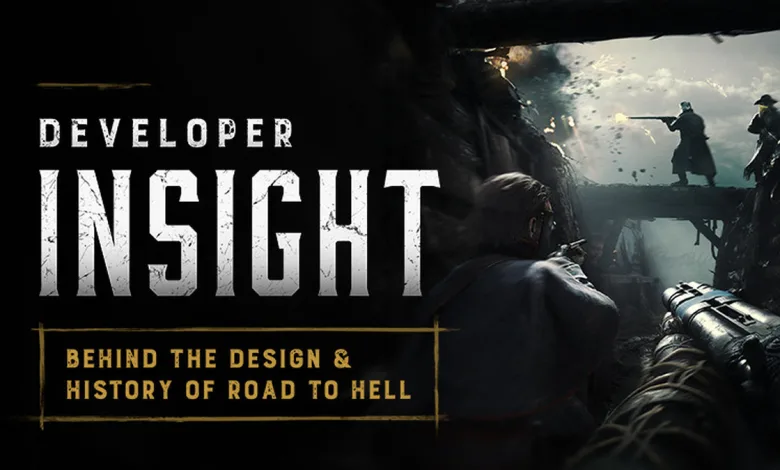
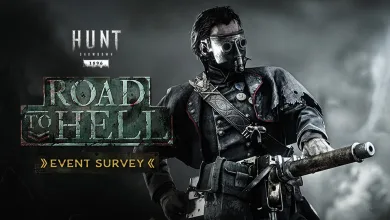
Hunt: Showdown 1896 has pulled its 19th-century military influences into the supernatural horror of Road to Hell, and Crytek has now explained how the event’s story, weapons, uniforms, and Cargo Balloon came together. The team shared the details in a new developer insight on Steam.
The timing follows Road to Hell Chapter 3 going live. While the event leans heavily into the occult, its fictional 26th Regiment was built from research into how the U.S. military looked and operated around 1896.

The 26th Regiment’s history starts with a missing number
Crytek’s designers began with the army’s organization, ranks, and weapons. The U.S. had 25 infantry regiments in 1896, so the fictional force took the name 26th Regiment—a small historical detail that also hints at how out of place the group is in the world of Hunt.
Whitlaw’s position was given similar treatment. He leads a unit but lacks the authority to make major decisions, and his superiors refused his request to investigate the disappearance of scouts Red Raven and One Who Flies, characters featured in the Devil’s Trail update.
His title adds another layer. Commander is formally associated with the U.S. Navy rather than the Army, where it would usually refer to someone commanding a smaller vessel. Crytek used the word as a plain-language description of Whitlaw’s role instead of a strict Army rank. His actual rank could have been Captain, Major, Lieutenant-Colonel, or Colonel.
The regiment’s clothing follows the same logic. Individual uniform details reflect the period, but the pieces do not form one perfectly standardized outfit. The 26th was meant to look like a force relying on spare and salvaged equipment while the U.S. Army slowly replaced blue uniforms with khaki. That transition would have happened in batches, leaving units with a rough mix of older and newer clothing.
Old rifles, trial weapons, and battlefield improvisation
The weapons tell a similar story. The newer Krag rifle was gradually replacing the aging 1873 rifles and related carbines, including the later 1890 Cavalry pattern. At the same time, Gatling guns remained in service even as other militaries tested newer Maxim-based machine guns.
The Maxim M1895 seen in Road to Hell represents one of those experimental weapons. Crytek modified it to use the same ammunition as the Krag rifle. Whitlaw also privately purchased several modern machine guns for his Rough Riders’ expedition to Cuba, while the rest of the regiment relied on Gatling guns pulled from U.S. stockpiles.
Why the Cargo Balloon carries rewards instead of Hunters
The Cargo Balloon was based on hydrogen balloons used during the 1800s. Hydrogen could be produced on-site in special barrels, allowing the balloons to rise without relying on a distant supply operation.
During the Civil War, balloons were mainly used to scout enemy positions. Cables connected to the balloons could also relay movement by telegraph directly to the President, giving the technology a surprisingly advanced role for its time.
Hunt’s version was deliberately made smaller. It transports supplies rather than people, which helps communicate its gameplay purpose: Hunters can use it to extract rewards and a Bounty Token, but the balloon cannot carry the Hunter out of the match.
History also gave Crytek a few visual ideas that did not make it into the final design. Real balloons were sometimes painted in bright colors to intimidate the enemy, but the team avoided that approach so the Cargo Balloon would fit Hunt’s darker art direction. Balloons were also named like ships. Crytek gave its balloon a name during development, but the written name looked less imposing in art tests than the large XXVI painted on its side.
Sgt. Riggins turns military routine into occult ritual
Sgt. Riggins became one of the event’s clearest examples of how Corruption changes people. After his dead comrades rise again and attack him in their torn uniforms, he searches for an explanation in the occult.
Riggins gradually loses his grip on reality. He builds rituals around the 26th Regiment’s routines and supplies, gathers followers, and begins to believe that the perfect soldier could continue fighting after death, much like the Grunts. He even force-feeds his comrades Corrupted meat in the hope that it will help them survive.
His story is grim, but it also explains why he lasts longer than many members of the regiment. Riggins is twisted by the same disaster that destroys the others, yet his obsession gives him a warped method for coping with it.
Share your thoughts on Road to Hell’s mix of military history and occult horror in the comments, and follow us on X, Bluesky, YouTube, Instagram, Steam, and Telegram.
Hunt: Showdown 1896
Developed by Crytek Frankfurt
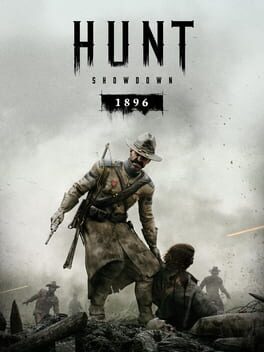
Hunt the corrupted in backwaters lost to history. Fight back against a timeless evil that pits you against twisted monsters and other desperate Hunters – solo or in a group – in a high-stakes, tactical, PvPvE, first person shooter. There are no heroes here. Risk everything as Hunt consumes you.
- Genre Shooter, Simulator
- Platforms Xbox Series X|S, PlayStation 4, PC (Microsoft Windows), PlayStation 5, Xbox One
- Perspective First person
- Modes Single player, Multiplayer, Co-operative
- Release August 27, 2019
- Publisher Crytek
-
Age Rating