VALORANT’s 2027 Open Qualifiers will pair a wider path into pro play with tougher checks for cheating, account eligibility, and online match conduct. Riot’s VCT 2027 integrity rules outline safeguards that increase as teams advance, from Vanguard compliance and post-match reports to camera and communication monitoring in later stages.
Riot’s earlier schedule places Open Qualifiers in November 2026, with the new 2027 Open Qualifiers approaching. Every competitor must be Vanguard Check compliant. Riot points players to its Vanguard overview and Vanguard Pre-Check for information on those requirements.

Checks tighten as teams advance
Riot says players need accounts in good standing, though accounts may face additional review. An account does not meet that standard if it is currently banned, has received a Game Ban, Vanguard Intervention, Ranked Restriction, or Comms Restriction within the past 30 days, or is under a Ranked queue restriction during enrollment or competition.
The eligibility answers use two different rank formulations. One says players must be Ascendant+ to compete. Another says every competing player must have reached a peak of Ascendant+ in the last 6 months. Riot says age, rank, residency, roster makeup, and account standing are governed by the applicable regional rules, so teams should check those rules before registering.
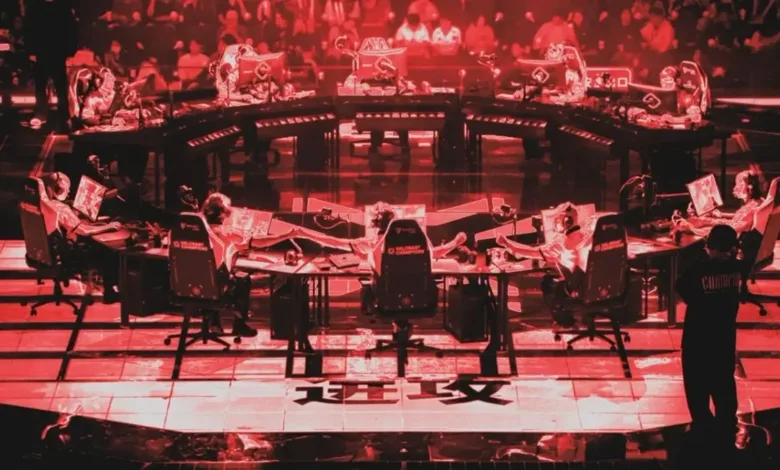
Safeguards will scale by tournament stage. Open Qualifiers will use Vanguard-led protection, post-match reporting, and retroactive enforcement. Riot is still considering additional account security requirements for that stage. Open Play-Ins may receive extra monitoring and verification at regional operators’ discretion. Open Playoffs will require the full framework, including voice monitoring, player POV recordings, cameras in match areas, and additional anti-cheat checks.
Officials can request further checks during a match, such as reviewing player setups, requesting recordings, asking a team to livestream its match area, or checking communications where the rules allow. The staged approach gives early rounds a baseline while adding closer oversight as the stakes rise.
Player streams need a delay
Players may livestream Open Qualifier matches, but each player POV stream must have at least a 2-minute broadcast delay. Teams can also arrange broadcasts combining multiple player POVs, provided every stream meets that delay. Creators may co-stream player POV matches with approval from the tournament operator.
Teams and players can publish match VODs and voice communications. Coaches may communicate with players during early online stages. In later Cup qualification tournaments, coach communications will be monitored under the rules used for the VCT today.
Online disputes and misconduct have defined procedures
Players are responsible for their internet connection, computers, and equipment. Tournament operators will follow server-selection procedures that consider player locations and available servers, but online play cannot guarantee identical ping for everyone. A disconnect may lead to a pause, a resumed match, or a requirement to continue, depending on the circumstances and the applicable rules.
Riot says officials must resolve disputes promptly because delays in one match can affect other teams in interconnected brackets. The procedures address problems that have already disrupted competition, including the 2026 Americas LCQ final’s pauses, lag, and round rollbacks.
Cheating, match manipulation, and betting-related misconduct are prohibited, as are conflicts of interest and other conduct that undermines fair competition. Confirmed violations can lead to disqualification or competitive suspensions, with officials weighing the violation, evidence, and applicable rules. Teams may also face sanctions for misconduct by owners, players, coaches, or other organization members. Riot directs players, coaches, teams, and officials to report concerns through tournament channels, and says not every allegation will be substantiated or lead to a public announcement.
Which part of Riot’s plan will matter most for keeping open brackets fair? Follow how the rules take shape as competition gets underway on X, Bluesky, YouTube, Instagram, Steam, and Telegram.
Valorant
Developed by Riot Games

Valorant is a character-based 5v5 tactical shooter set on the global stage. Outwit, outplay, and outshine your competition with tactical abilities, precise gunplay, and adaptive teamwork.
- Genre Shooter, Tactical
- Platforms Xbox Series X|S, PC (Microsoft Windows), PlayStation 5
- Perspective First person
- Modes Multiplayer
- Release June 2, 2020
- Publisher Riot Games
-
Age Rating