VALORANT Targets Boosters, Win-Traders, and Stream Snipers
Riot Games says confirmed rank manipulation can lead to suspensions, rank and MMR reversions, lost rewards, or permanent bans.

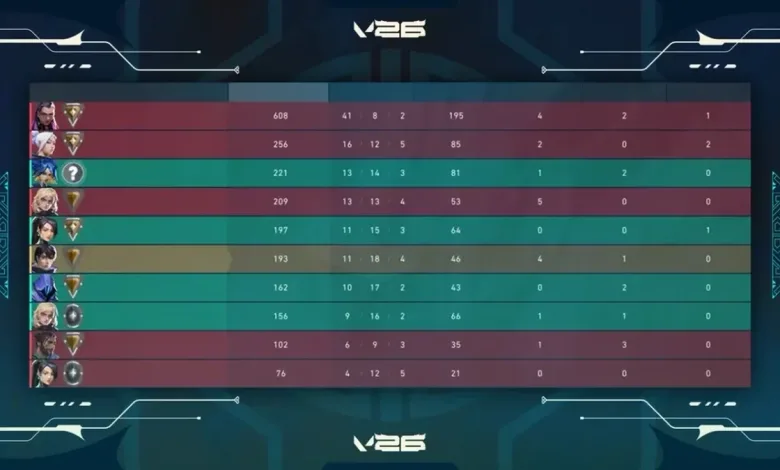
Riot Games is expanding its fight against smurfing and rank manipulation in VALORANT. The new detection tools are being introduced with Patch 13.01 and are designed to identify boosting, win-trading, stream sniping, and other behavior that damages ranked play.
Riot outlined the changes in its Playing Fair announcement, saying the initial focus will be on the worst offenders before the system expands further. Confirmed cases may affect every account involved, not only the player who arranged the manipulation.


How Riot defines boosting
Boosting involves using a lower-ranked account to raise that account’s rating or improve the rank of players in the same party. Riot is separating the people involved into three groups:
- Boosters are the players or services creating the unfair rank gain. This can include a higher-skilled player using someone else’s account or coordinating matches to move an account beyond its earned rank.
- Boostees are the accounts receiving the benefit. They may have paid for the service, shared account access, or knowingly taken part in the arrangement.
- Hitchhikers are players who queue with the boosted account and benefit from the manipulated matches without being the main account receiving the service.
Riot said the new detection system was previously used successfully in League of Legends to separate ordinary play from coordinated abuse. Playing with friends is not the target. Five-stacking with players at different ranks, helping a newer player learn, and using an alternate account that was created and leveled personally remain allowed.
Win-trading and stream sniping are also in focus
Win-trading happens when players coordinate the result of a match instead of competing normally. That can involve intentionally losing, working with players on the opposing team, or trading wins for rank, rewards, or status.
Riot said its tools can now identify win-trading with a higher level of confidence, and that it has already taken action against more cases this year.
Stream sniping is another behavior covered by the updated systems. Using a player’s live broadcast to gain information, disrupt a match, or target that player can result in penalties when Riot confirms the abuse.
Potential penalties include rank and reward reversions
Riot says it looks for repeated patterns and strong evidence before acting on ranked-integrity violations. When a case is confirmed, penalties may include:
- Account suspensions
- Rank reversions, including returning RR and MMR to the level held before the manipulation
- Rank reversions for hitchhikers who gained rating by queuing with a player involved in rank manipulation
- Reversal of rewards tied to the manipulated rank
- Permanent bans for repeated or severe abuse
The company is also updating feedback for reporters and bystanders. Players should use the Rank Manipulation category when reporting suspected boosters, giving Riot more information to review.
What remains allowed
Riot said its play policies have not changed. The detection tools are being upgraded, while normal competitive behavior remains acceptable. Players can queue with friends, help someone learn, have an unusually strong or weak match, and play on an alternate account they created and leveled themselves.
Account sharing, buying or borrowing accounts, stealing accounts, deliberately lowering a rank, and queueing with someone involved in those actions are not allowed. Riot’s central rule is simple: players should compete on their own accounts without intentionally creating easier matches or manipulating rank gains.
Riot framed the policy through its Community Pact: play to win, play fair, and play with respect. Players can share their thoughts in the comments, and follow us on X, Bluesky, YouTube, and Instagram.
Valorant
Developed by Riot Games
Valorant is a character-based 5v5 tactical shooter set on the global stage. Outwit, outplay, and outshine your competition with tactical abilities, precise gunplay, and adaptive teamwork.
- Genre Shooter, Tactical
- Platforms Xbox Series X|S, PC (Microsoft Windows), PlayStation 5
- Perspective First person
- Modes Multiplayer
- Release June 2, 2020
- Publisher Riot Games
-
Age Rating