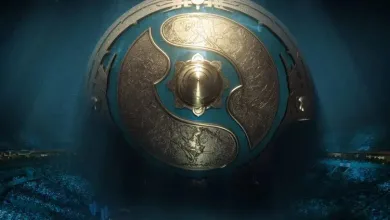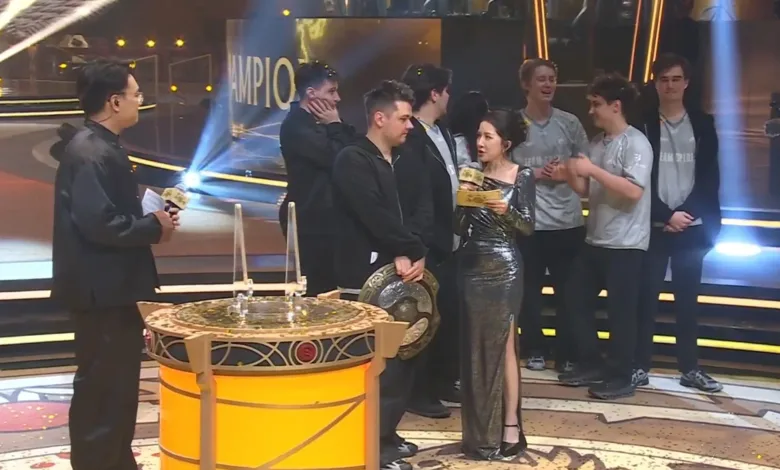
Team Spirit won its third The International championship on August 23, defeating Team Vision (Parivision) 3-2 at Shanghai’s Oriental Sports Center. The victory secured the Aegis of Champions, delivered a $1,426,422 prize, and made Spirit the first organization to win the tournament three times. Valve’s official tournament announcement documents the champions’ difficult route to the final.
For 18-year-old Alan ‘Satanic’ Gallyamov, the final offered a breakout opportunity against his parent organization. The Team Spirit loanee helped Vision turn Game 2 around, but Yatoro and his teammates held their nerve when the Aegis came down to one last map.


Spirit had to qualify the hard way
Team Spirit opened the group stage with 2-0 wins over Xtreme Gaming and Aurora Gaming, then beat Team Liquid 2-1. That result left Spirit one series win away from qualifying for the main event, but the team did not get there immediately. Team Vision beat Spirit 2-0, and Nigma Galaxy followed with another 2-0 victory to claim its own place in the arena.
Spirit instead had to survive an elimination series against Team Resilience, which had won at least one game in every previous series. Resilience took Game 2 after Spirit won the opener, forcing a deciding match. Spirit stayed close through the first half of Game 3 before pulling away and securing its spot in the main event.
Eight teams advanced from the group stage into the double-elimination main-event bracket, which ran from August 20 through August 23. Iron Wing was waiting in Spirit’s opening arena series. The team had already taken group-stage series from three teams that reached the main event, but Spirit sent Iron Wing into the lower bracket.
Team Spirit’s lower-bracket climb
Vision stopped Spirit again in the main event with a 2-1 win, sending the eventual champions into the lower bracket. Team Liquid awaited them there after losing only one group-stage series and eliminating the previous year’s champions. Spirit had won the earlier meeting, and the rematch was even more decisive: Team Spirit swept Liquid 3-0.
Spirit followed that victory with 2-0 wins over BoomBoys and Team Yandex. The run put the team back in the Grand Final against Vision, the only squad that had repeatedly blocked its path in Shanghai. Vision had reached the final without losing a series, while Spirit had already lost to it twice—2-0 in the group stage and 2-1 in the upper-bracket semifinal.
The five-game final provided a fittingly chaotic finish to the Shanghai tournament.
CHAMPIONS🏆🏆🏆 pic.twitter.com/5xgxHS8sxh
— Team Spirit Dota 2 (@TSpirit_Dota2) August 23, 2026
Yatoro and Collapse put Spirit in front
Game 1 quickly became a showcase for Illya ‘Yatoro’ Mulyarchuk and Magomed ‘Collapse’ Khalilov. Vision opened with Ember Spirit, and Spirit answered with Slark. Slark had appeared only five times at the tournament before that point, with every one of those games using the hero as an Ember Spirit lane counter. All five ended in wins, as recorded in Liquipedia’s 2026 hero statistics.
The response pushed Ember Spirit into the carry role, where the pick struggled to affect the game. Yatoro’s Shadow Fiend and Collapse’s Undying won their lanes, creating a combined gold advantage of more than 60,000. Yatoro finished with a 16/1/7 KDA as Spirit closed the opening game after 46 minutes.
Vision trailed 17-30 in kills at one point in Game 2, but the deficit did not turn into a quick 2-0 lead for Spirit. Vision slowed the game down and waited for an opening. Around the 43-minute mark, key contests involving Evgeniy ‘Noticed’ Ignatenko and Satanic helped swing the match. Vision maintained the gold lead from there and tied the series after 64 minutes.
Game 3 was far quieter for most of its 46 minutes. Gold stayed close, and the teams traded few kills during the opening 30 minutes. A decisive engagement at the 38-minute mark ended in a team wipe, giving Spirit the opening it needed to take control and move within one win of the Aegis.
⚡ @TSpirit_Dota2 takes the lead in the Grand Final, 2-1.
One win away from the Aegis.#TI2026 #Dota2 pic.twitter.com/gsTRVme9gH
— The International (@dota2ti) August 23, 2026
Team Vision forced a decider before Spirit closed the series
Vision answered in Game 4 with one of its strongest performances of the final. Support players Edgar ‘9Class’ Naltakian and Andrey ‘Dukalis’ Kuropatkin recorded 20 and 19 assists, respectively, while Vision limited Spirit to 13 kills and finished with 31 of its own. A team wipe at 43 minutes sealed the game and sent the grand final to a deciding fifth map.
Drafting stayed tightly contested in the decider. Vision had already won Games 2 and 4 with Lifestealer, so Spirit claimed the hero for Yatoro rather than letting Satanic return to it. Spirit also first-picked Bane despite using the hero only twice earlier in the tournament, giving the lineup direct tools for the carry matchup through Nightmare and Fiend’s Grip. Lifestealer won all three games in which it appeared during the final.
Yatoro’s Lifestealer gave Spirit an early lead of roughly 11,000 gold before Vision caught him in chain crowd control and used the resulting fight to swing the game back. The plan was clear: remove Spirit’s most important damage source and build every fight around that advantage.
Spirit adjusted before Vision could repeat the sequence. Rue’s perfectly timed Nightmare save kept Yatoro alive through one opening burst, allowing Spirit to turn the fight around. During another decisive engagement, Satanic’s Juggernaut began casting Omnislash, but Collapse applied Lotus Orb to Denis ‘Larl’ Sigitov at exactly the right moment. The spell was reflected, stopping one of Vision’s most important tools from cutting through Spirit’s formation.
Alexey ‘not me’ Kosmynin added one more burst of rookie aggression, landing a maximum-range Sacred Arrow on Satanic during the final teamfight. Spirit began taking the initiative, regained control of the map, and burned through Vision’s buybacks. After winning the next series of engagements, Team Spirit finally claimed the Aegis and completed the 3-2 victory. The deciding game lasted about an hour.
HISTORY HAS BEEN MADE!
Yatoro and Collapse are the first Dota 2 players to win THREE INTERNATIONALS! 🔥 pic.twitter.com/LhMS13Xre0
— ESL Dota2 (@ESLDota2) August 23, 2026
The International 2026 champions
Yatoro and Collapse now have three International titles, while Larl has two. The winning Team Spirit roster was:
- Illya “Yatoro” Mulyarchuk
- Denis “Larl” Sigitov
- Magomed “Collapse” Khalilov
- Alexey “not me” Kosmynin
- Aleksandr “rue” Filin

Yatoro won the carry battle
Yatoro arrived in Shanghai with two International titles already on his résumé. Across the grand-final stage stood Satanic, Team Vision’s young carry and one of the tournament’s biggest stories. Spirit became the only team to defeat Satanic and Vision in a series at TI 2026, doing it in the match that decided the champion.
Yatoro’s playoff numbers backed up the result. He led every carry player in average kills at 11.44, KDA at 12.83, gold per minute at 871, experience per minute at 982, and tower damage at 15,607. He also averaged just 2.31 deaths, the lowest mark among the tournament’s carries. Team Spirit’s tournament breakdown put numbers to the carry’s otherwise controlled playoff run.
Those figures were not the whole story. Yatoro repeatedly made the safe choice in fights where one greedy move could have ended Spirit’s run, and that patience proved decisive in the best-of-five final.
Larl gave Spirit stability in the middle lane
Larl did not need to turn every game into a personal highlight reel. His value came from keeping Spirit’s plans intact, finding the correct position in fights, and giving Yatoro and Collapse the room to make their own plays.
That approach mattered most in Game 5. Larl’s Pangolier took part in 31 of Spirit’s 34 kills, producing a 91% kill-participation rate and the highest total on his team. He also played 13 different heroes during TI 2026, tying him with Yandex’s Alimzhan ‘watson’ Islambekov and Ilya ‘CHIRA_JUNIOR’ Chirtsov for the tournament lead.
Collapse turned one teamfight with Lotus Orb
Collapse had taken a mid-season break, yet he still looked like one of the tournament’s most dangerous offlaners. His hero pool was a major reason why: Collapse played 12 different offlane heroes, more than any other offlaner at TI 2026. Vision could not simply prepare for one familiar answer.
The Lotus Orb play on Larl during Satanic’s Omnislash captured Collapse’s influence better than any draft statistic could. He was difficult to prepare for before the match and even harder to account for once the fight began.
Team Spirit’s official post highlighted the sequence.
not me brought rookie aggression to the final
Not me had only been playing regularly in Tier 1 tournaments for about three months before making his International debut. The rookie earned his place after moving up from Team Spirit’s Yellow Submarine roster, but he played in Shanghai as if the stage had been waiting for him.
Not me constantly searched for openings. His tournament highlights included an Aegis steal on Rubick and a play involving a stolen Sleight of Fist. Landing the maximum-range Sacred Arrow on Satanic in the grand final added the kind of moment that turns a debut into a story.
He also continued one of Team Spirit’s strangest International traditions. Yatoro had shaved his head before Spirit’s 2021 title, but he kept his hair this time. Instead, not me shaved his beard before the grand final. Trading facial hair for an Aegis on a TI debut is a pretty fair exchange.
rue handled a difficult role change
Aleksandr ‘rue’ Filin had moved from position four to position five only three months before TI 2026. The change put him beside Yatoro in lane while also asking him to learn a new set of responsibilities on the biggest stage of his career.
Spirit trusted rue with demanding support picks, including Winter Wyvern in the grand final. Team Falcons’ Andreas ‘Cr1t-‘ Nielsen later singled him out as his MVP, pointing to the recent role change and the difficulty of playing that hero at The International in his assessment of the final.
Miposhka kept the drafts simple
Yaroslav ‘Miposhka’ Naidenov had already won two Internationals as Team Spirit’s captain before stepping away from the player lineup and returning as coach. From behind the team, he helped keep the grand-final drafts focused instead of overloaded with clever ideas.
Spirit lost to Team Vision twice before the grand final, but those defeats gave the team enough information to win the meeting that mattered most. Yatoro delivered the carry performance, Larl supplied stability, Collapse found the fight-changing moments, and the younger supports played without shrinking from the pressure.
The final also created a new player milestone. Yatoro and Collapse became the first Dota 2 players to win three International titles.
Valve also points viewers toward the official Dota 2 YouTube channel for replays of the full broadcast and its biggest plays.
The final moments of the championship series can be watched in the tournament clip below.
What did you think of Team Spirit’s five-game finish? Share your thoughts in the comments, and follow us on X, Bluesky, YouTube, Instagram, Steam, Telegram.
Dota 2
Developed by Valve