Silent Hill: Townfall will launch on PS5 and PC on September 24, 2026, with a first-person view that changes far more than the camera angle. Simon Ordell will need to watch doorways, listen for threats outside his sightline, and think twice before opening a map or searching a drawer.
Townfall is the first full-length Silent Hill experience built around seeing the horror through its protagonist’s eyes. Earlier entries such as Silent Hill 4: The Room and Silent Hill: The Short Message used first-person sections, but Screen Burn’s game keeps that viewpoint at the center of Simon’s journey through St. Amelia. Earlier details about the CRTV, stealth, combat, and the Scottish setting are collected in our first-person Townfall coverage.
An official PlayStation breakdown fills in the player-facing consequences of that design. The result is a horror game where routine actions can leave Simon exposed.
A narrower view makes every doorway a gamble
Third-person games give players a wider sense of what surrounds the character. Townfall removes much of that safety net. Simon cannot see as much to his sides or behind him, so opening a door or turning a corner can reveal danger before there is time to prepare.
The 2.35:1 aspect ratio adds to the restriction. Its cinematic frame leaves less vertical space for scanning the environment, which pushes attention toward distant sounds, movement at the edge of the screen, and anything that might be waiting just outside view.
The map becomes a moment of exposure
Townfall’s map is not a detached menu that keeps Simon safe while it is open. Pressing Triangle raises it in front of him, blocking part of the world while he checks his position and plans a route.
Reading emails, opening drawers, and examining objects creates the same tension. Simon may need information from a room, but searching it also gives creatures time to move nearby. Even a quiet investigation can become dangerous when the player cannot watch every direction at once.
The CRTV turns information into a risk
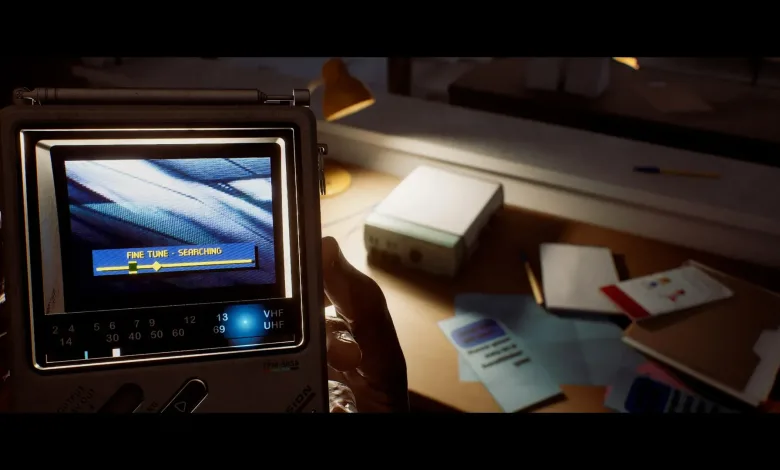
Townfall replaces Silent Hill’s familiar radio warning with the CRTV, a handheld device that can be tuned to different frequencies. Holding it with L1 lets Simon see nearby enemy positions while still keeping part of the world in view.
The device gives useful information, but it does not make the situation safe. A haptic pulse through the DualSense signals that a new enemy is close, turning the controller into another warning system. Simon can learn where danger is, yet using that knowledge means dividing his attention between the screen and the street around him.
Melee combat demands a quick response
Everyday objects remain Simon’s main answer to many threats, but first-person combat makes each encounter feel close enough to break through the screen. Monsters can throw themselves toward him, forcing him to raise a weapon or other object to block an attack.
Blocking is only the beginning. Simon must react to counterattacks and find an opening to strike back. The camera keeps the enemy close, so melee combat depends on timing and positioning rather than simply watching an animation play out from a safer distance.
Stealth asks players to read the room
Fighting is not always the best option. Simon can duck behind fences, signs, parked cars, and other cover by pressing Circle, then use R1 with the right analog stick to lean around corners or peek over an obstacle.
That peek can reveal a path past an enemy, but it can also reveal how close the threat really is. Stealth becomes a process of checking sightlines, waiting for an opening, and deciding whether moving forward is safer than trying to fight.
Hiding places can betray Simon
When stealth fails, running may be the only sensible choice. Rounding a corner or breaking an enemy’s line of sight can create enough distance for Simon to reach a cabinet, closet, or locker.
Hiding does not guarantee an escape. Simon can watch through a narrow opening or use the CRTV to track what is outside, but an enemy that sees him enter will chase him down and pull him out. A hiding place is useful only when the creature never learns where he went.
Motion aiming puts fear in the player’s hands
Motion controls can be enabled in Townfall’s settings, allowing players to tilt the DualSense when aiming a firearm or throwing an object. The extra input can help line up an attack with more control, especially when a target is moving.
It also gives panic a physical consequence. Holding a controller perfectly still is harder when a creature is closing in, so the same feature that can help with precision may become less comfortable during a tense encounter.
Puzzles keep the player exposed
First-person presentation makes searching for clues feel more direct. Notes on desks, diagrams inside drawers, and other small details can provide the information needed to move forward, but finding them often requires a close look at rooms and buildings.
Creatures continue moving while Simon investigates. The player may be reading a clue or checking an object when something starts shuffling nearby, turning puzzle solving into a choice between gathering information and staying ready to run.
Simon’s thoughts stay in the frame
Townfall also uses the first-person viewpoint to bring players closer to Simon’s mental state. Instead of having him explain every reaction aloud, the game can place brief text over the screen to show what is going through his mind.
Those moments give context to the things Simon sees and make his fear part of the immediate play space. The perspective is not only about hiding monsters from view. It also keeps the character’s reaction close to the player as St. Amelia becomes harder to understand.
Which change will affect your approach most, the exposed map, the CRTV’s warnings, or the need to keep moving during combat? Share your thoughts in the comments, and follow us on X, Bluesky, YouTube, Instagram, Steam, and Telegram.
Silent Hill: Townfall
Developed by Screen Burn
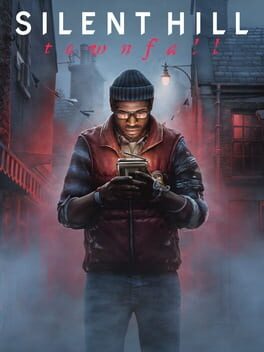
Silent Hill: Townfall is a full-length, self-contained psychological horror set against the cold, isolated backdrop of Scotland, 1996.
Players can explore St. Amelia, where fog-soaked streets, abandoned communities, and forgotten corners tell their story through atmosphere and history. Reality and delusion subtly intertwine, luring players into the depths of St. Amelia's grounded, tangible world.
- Genre Puzzle, Adventure
- Platforms PC (Microsoft Windows), PlayStation 5
- Perspective First person
- Modes Single player
- Release September 24, 2026
- Publisher Annapurna Interactive, Konami
-
Age Rating