Persona 4 Revival Will Rebuild Inaba Without Losing Its Original Heart
Kazuhisa Wada said the reimagining will preserve Persona 4's story and themes while reworking its camera, environments, character animation, cinematics, and selected dialogue.

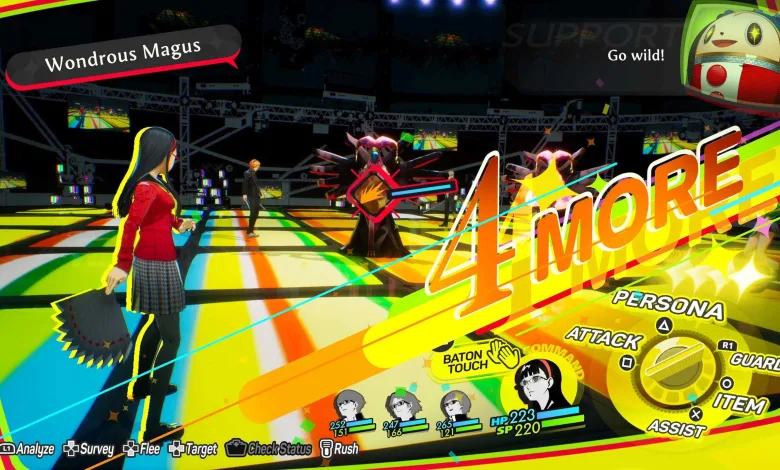
Persona 4 Revival is scheduled to launch on February 18, 2027, with a rebuilt Inaba, a player-controlled camera, and a fresh visual treatment for its familiar cast. ATLUS General Producer Kazuhisa Wada also confirmed that the story, characters, and themes at the center of Persona 4 will remain in place, even as some dialogue is clarified for modern players.
Originally released in 2008, Persona 4 follows high school students in Inaba as they investigate a deadly supernatural mystery while confronting hidden parts of their own psyches. Those plans were discussed during the August 27 Official Xbox Podcast episode, where Wada explained how the team is bringing the Persona 4 experience back for longtime fans and a new generation. Wada oversees both Persona 6 and Persona 4 Revival as general producer for the Persona franchise. The Persona series is celebrating its 30th anniversary in 2026, while Wada has worked on the franchise for more than 20 years, beginning with Persona 2 Eternal Punishment and later serving as General Producer of Persona 5 Royal.


Although the series now reaches players around the world, Wada said ATLUS has never designed Persona simply around pleasing a worldwide audience. The team instead follows its own creative instincts and focuses on stories, memorable characters, and gameplay that its developers genuinely find exciting. Wada said the series’ international response has brought ATLUS pride and gratitude, but not a reason to abandon that approach: “Our goal has never been simply to make games for the global market. Instead, we’ve always believed in creating the games that we ourselves genuinely find exciting.”
Worldwide releases have still placed more attention on localization, quality assurance, and the studio’s broader development process so the games can reach players around the world in a stronger state.
Inaba is built for a free camera
The original Persona 4 used fixed camera angles, which helped control the framing but limited how much of Inaba players could see. Revival gives players control of the camera, allowing them to look around the shopping district, residential streets, Yasogami High School, and the riverbank from new angles.
Supporting that change required the environments to be rebuilt from the ground up. Storefronts, classrooms, hallways, side streets, and the surrounding scenery were all designed to feel natural from wherever the player looks. Nearby Okina City has received the same treatment, with its busier streets and larger scale set against Inaba’s quieter atmosphere.
Lighting, environmental rendering, material textures, and atmospheric effects have also been reworked. The town will look different depending on the time of day and weather, while shops and other locations will develop their own changing atmosphere as the day goes on. The goal is to make Inaba feel like a place where people actually live, not just a backdrop for the mystery.
Familiar faces get more room to act
Wada said the character team did not want to create completely different versions of the cast. Instead, it kept the details that make each person recognizable and used newer technology to give their expressions, gestures, and mannerisms more subtlety.
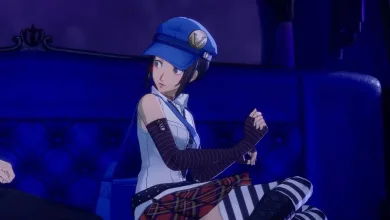
Yosuke Hanamura keeps his familiar silhouette and color palette, while the texture of his hair and school uniform has been refined. Improved lighting and facial animation should also make it easier to read the serious emotions behind his usual energetic personality.
Teddie’s playful mascot design remains intact, but his expressions and animations now show more of the delicate feelings beneath his cheerful image. Kanji Tatsumi still has his imposing physique and stance, with smaller changes to his body language and expressions bringing out his kindness, awkward sincerity, and inner conflicts.
The remake’s character work also draws on the cast’s appearances in Persona spin-offs. In a new Eurogamer interview, Wada said ATLUS looked at how those games had developed the characters and used that material to explore details that could not be fully addressed in the original. He described the broader approach this way: “In a lot of ways, there has been something more we could explore with every character.”
Yosuke and Kanji were among the characters Wada singled out for that additional attention. Their expanded characterization sits alongside revisions to some of Yosuke’s dialogue, including scenes involving Kanji, while the team’s stated aim remains to add context without changing who either character is.
Chie carries more of Inaba’s story than expected
Returning to the original RPG also gave art director Akane Kabayashi a new appreciation for Chie. Although Chie and Yukiko are presented as the story’s “double heroines,” Kabayashi said Chie is forced to wear many different hats and do more things than Yukiko.
That observation led Kabayashi to respect how much responsibility Chie carries throughout the story. Her expanded role in the remake’s character work does not require changing the foundation of her personality. It gives the team another opportunity to make the pressures and responsibilities already present in the original easier to read.
Dialogue is being clarified, not rewritten
Persona 4 Revival will also revise parts of the older script. During a Gamescom 2026 interview conducted through a translator, Kazuhisa Wada told GamesRadar+ that the team found moments where important information had been left too implicit. Developers had assumed players would understand certain details, but some of those ideas did not come across as clearly as intended.
Rephrasing those lines is meant to communicate the same ideas more directly, not to change what the characters are like or rewrite the substance of their conversations. Wada described the cast as “the same people” and said, “We haven’t changed any parts of their personalities.”
The remake will use a new English voice cast because ATLUS was unable to bring the original performers back. That is a production change rather than a new interpretation of the characters, and it follows the same boundary as the dialogue revisions. The personalities, relationships, and story the team is trying to convey remain the foundation of Revival.
Some requested romance options will not be added
Persona 4 Revival will not add gay romance options, including a romance route for Yosuke. Wada said making Yosuke romanceable would require the team to make all of the other male characters romanceable as well. ATLUS decided it could not take on that wider request within the remake’s time and schedule, so the requested route will remain out.
The decision places the dialogue updates and casting changes in a narrower context. Revival is adjusting how some scenes communicate their ideas and how the cast is presented, but it is not using those updates to expand or rewrite the characters’ identities.
The story’s poison is meant to linger
Wada also explained his use of the phrase “poison of Persona.” He was not referring to shock value or provocative content. Instead, he meant the kind of story that stays with players after the credits, leaving them to consider what an event really meant or how they might have acted in the same situation.
Persona 4 is often remembered for its warm atmosphere and the bonds between its characters, but its mystery also asks players to confront the parts of themselves they would rather hide. Its TV screens, rumors, and shifting public perceptions give the story a way to examine how people decide what is true when appearances begin to overpower facts. The game questions whether people can look beyond rumors and public perception to find the truth.
Wada believes those ideas remain especially relevant in a time when judgments can form quickly from appearances and scattered information: “We live in an age where information is everywhere. It’s easy to form judgments based only on appearances or what we just see.” Those questions also feel familiar in a social-media age, when a rumor or a single image can quickly become someone’s public identity before anyone takes time to look closer.
Revival will not make those themes louder or more sensational. The team is preserving the original ideas while using its updated presentation to deepen immersion and give them more room to breathe. Wada hopes the result will leave the same lasting impression without losing the warmth that made Persona 4 stand apart.
Cinematics are being rebuilt around emotion
Every event scene has been revisited, with the team paying close attention to facial animation, eye movement, body language, the distance between characters, and the timing of pauses. The goal is not simply to make scenes look bigger. These details are meant to communicate what characters feel even when the dialogue stays the same.
The opening sequence, in which the protagonist first arrives in Inaba, has been staged again with new camera work. Its revised presentation is designed to capture the anticipation and uncertainty of entering an unfamiliar town. The story has not changed, but players who know the original may read familiar moments differently when they see the characters’ reactions in greater detail.
A new year in Inaba begins in 2027
For Wada, the heart of Persona 4 is not only the murder mystery. It is the year spent with friends, from ordinary jokes and good times to the hardships that turn everyday moments into lasting memories. He hopes returning players feel as if the Inaba they remember has come back, while first-time players discover why the game has remained so well regarded.
Persona 4 Revival will launch on February 18, 2027. What do you think of its direction? Share your thoughts in the comments, and follow us on X, Bluesky, YouTube, Instagram, Steam, and Telegram.