NBA 2K27 Gameplay Adds Manual Dunk Timing and Smarter Defensive Reads
The gameplay report covers modular dribble animations, skill-based ankle breakers, a five-discipline Takeover system, and more responsive AI.

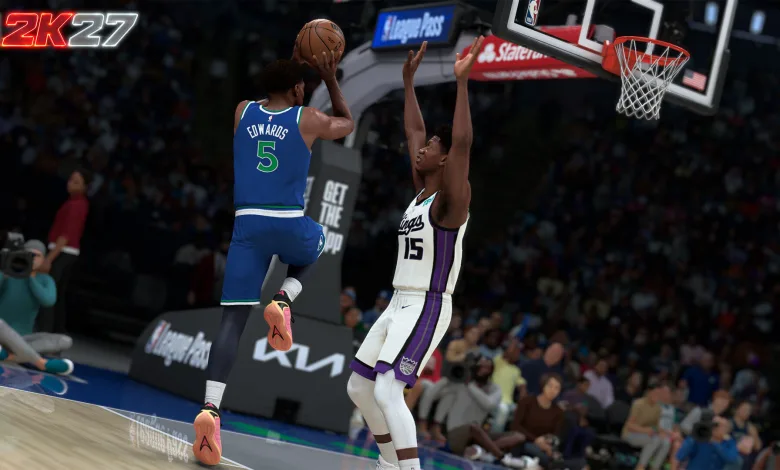
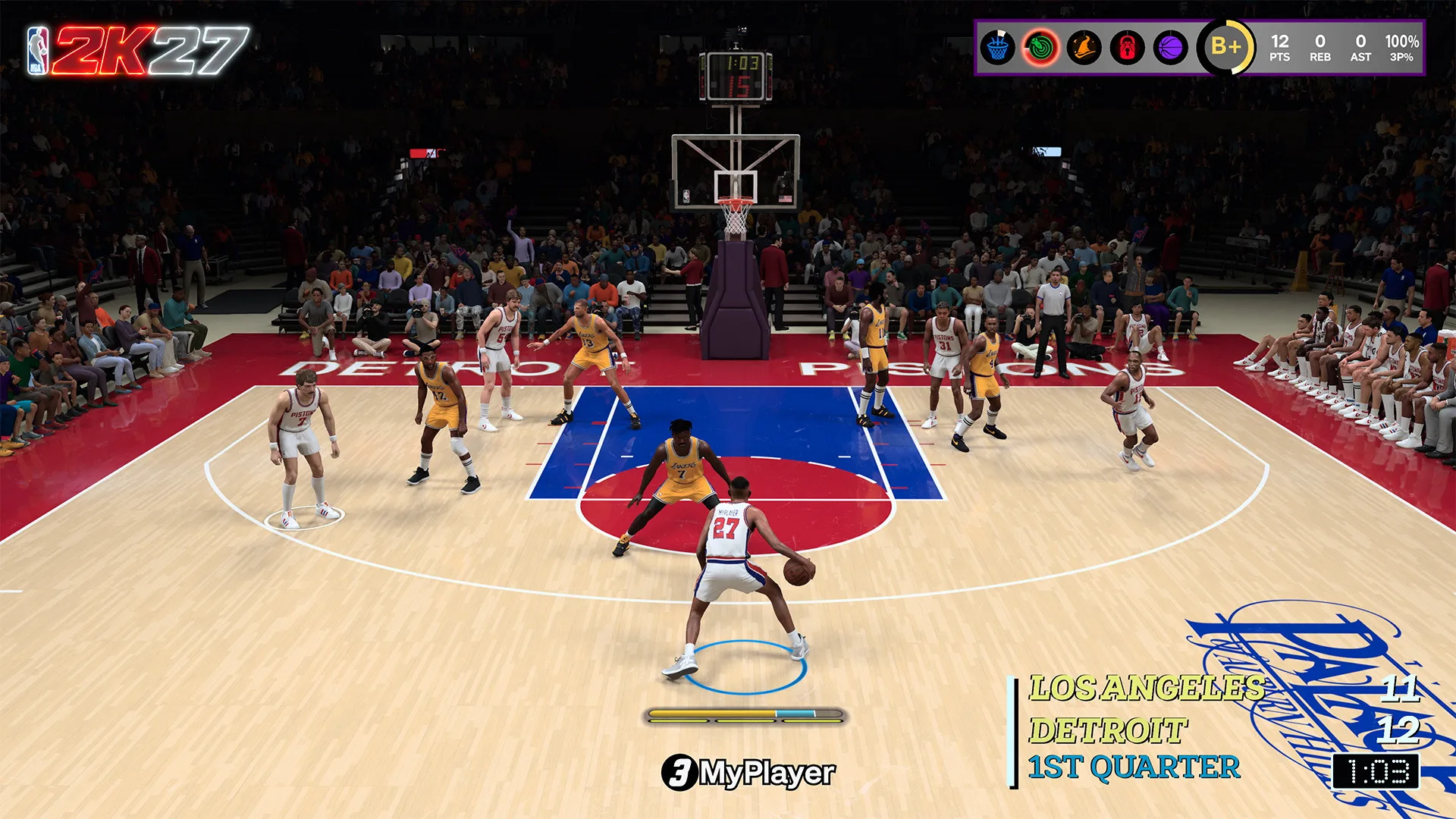
NBA 2K27 will give players more control over how possessions develop, from manually timed dunks and customizable dribble packages to defensive cutoffs that react to a ball-handler’s movement. Visual Concepts detailed the game’s planned systems in its NBA 2K27 gameplay announcement on Steam.
ProPLAY® remains at the center of the presentation, with machine learning helping shape animations and on-court adjustments. The report focuses on offense, shooting, defense, Takeover abilities, and AI decision-making, with each area receiving changes designed to make player ratings, timing, and positioning matter more.

New ways to create space at the rim
Step-through up-and-unders are coming to NBA 2K27 for the first time. The move is associated with stars such as Shai Gilgeous-Alexander, Anthony Edwards, and Luka Dončić, and players can perform it while driving, posting up, or facing a defender from the perimeter.
After starting a pump fake, pushing the Pro Stick in one of five directions will trigger a step-through layup or jumper in that direction. ProPLAY® also brings signature movements from scorers such as Donovan Mitchell into these sequences.
Dribbling customization is also being split into individual movements instead of locked signature packages. That means players can combine parts of different stars’ styles, such as Stephen Curry’s behind-the-back slide with Trae Young’s escape cross.
The available animation categories include:
- Triple-Threat Style
- Triple-Threat Breakdown
- Triple-Threat Jab-Step
- Triple-Threat Stepover
- Signature Size-Up
- Breakdown Combos
- Moving Breakdown Combos
- Combo Moves
- Crossover
- Moving Between Legs Crossover
- Behind-the-Back
- Spin
- Hesitation
- Stepback
- Hesitation Escape
- Crossover Escape
- Between Legs Escape
- Behind-the-Back Escape
- Misdirection Hesitation
- Misdirection Crossover
- Misdirection Behind-the-Back
- Hesitation Crossover Combo
- Double Crossover Combo
- Behind-the-Back Launch
- Stepback Crossover
- Lateral Stepback
- Moving Cross Spin
- In-and-Out
- Lateral Hesitation
The Dynamic Layup Engine will use the matchup and the player’s finishing ability to shape each attempt. High-rated finishers may switch the ball to the safer hand in mid-air when an elite rim protector rotates over, while the system will also reduce situations where the ball catches the underside of the rim or backboard.
Hop steps, Euro Steps, and spin gathers are now separate components rather than fixed animations. The game will pair those gathers with finishes according to the situation, so a weak defender may be beaten cleanly while a strong defender can disrupt the attempt.
Dunks are receiving one of the biggest control changes: every dunk attempt must be timed manually with the Dunk Meter. The meter will assess defensive positioning from takeoff through the finish. An open lane can produce a wider green window, while a late rotation that reaches the dunker at the rim can tighten it immediately.
Passing, alley-oops, and rhythm shooting get new inputs
New Advanced Controls add more options for players who want to direct specific actions. Holding the right trigger and flicking up on the Pro Stick while moving will start a player’s signature breakdown combo without stopping forward momentum.
No-look passes use a different input. Holding R1/RB and flicking the Pro Stick toward the intended receiver will make the passer look away from the target. Head tracking sells the misdirection, but Pass Accuracy will still determine how often the attempt succeeds.
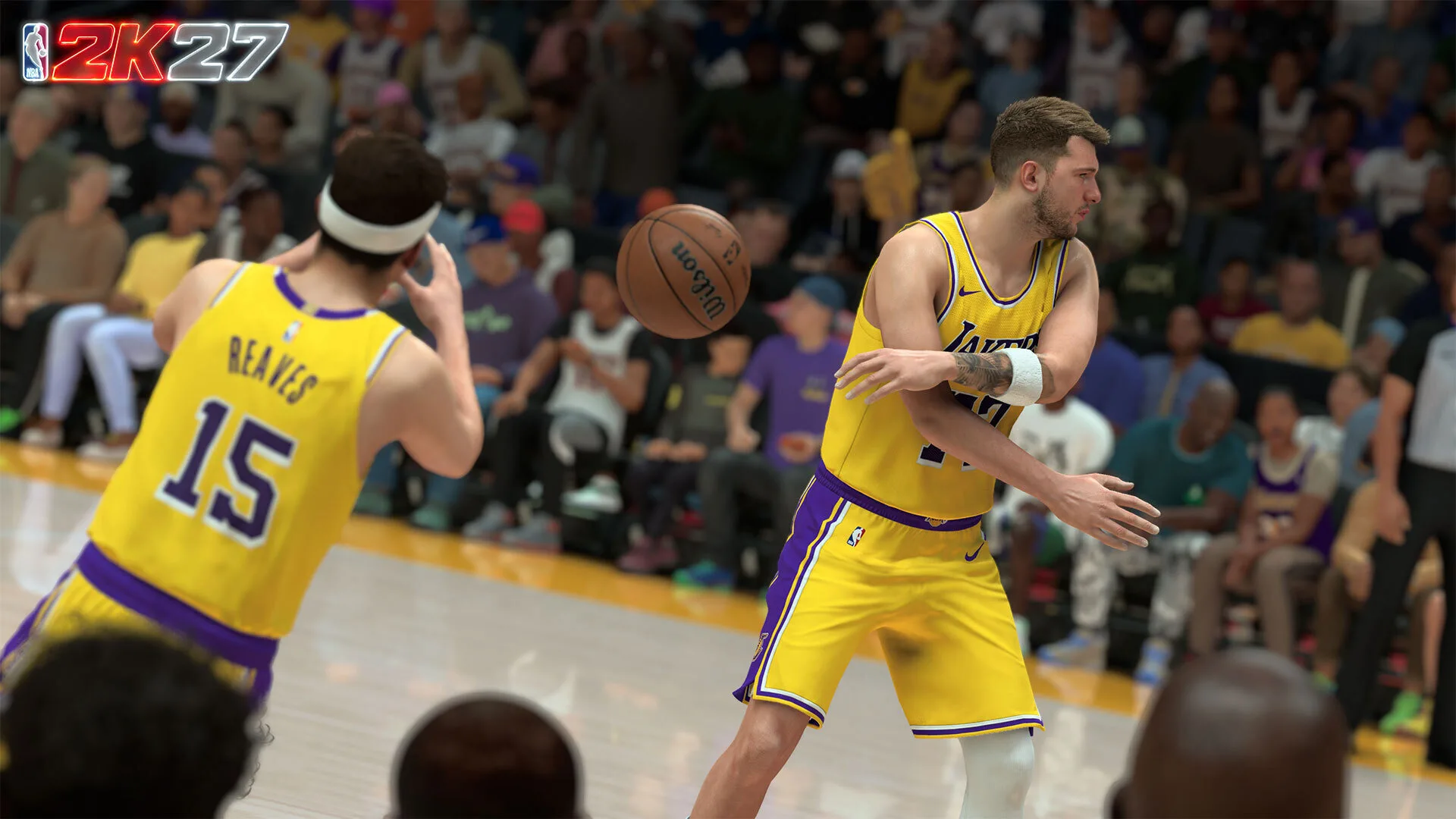
Alley-oops are being mapped to the side of the floor where the pass arrives. Square/X corresponds to the left side, while Circle/B corresponds to the right. Players can also flick the Pro Stick toward the ball and time the input to finish the play.
Rhythm Shooting returns with a Shot Meter tick mark that moves with the physical motion of the Pro Stick. Matching the jumper’s ideal tempo expands the timing green window, while a flick that is too fast or too slow makes it smaller.
Hitting a Rhythm Shooting attempt now requires a green timing release. Updated Shot Feedback will separate timing errors from tempo errors by showing whether the release was early or late and whether the stick movement was too fast or too slow. Rhythm Shooting will also work at the free-throw line.
Defense will track positioning and momentum more closely
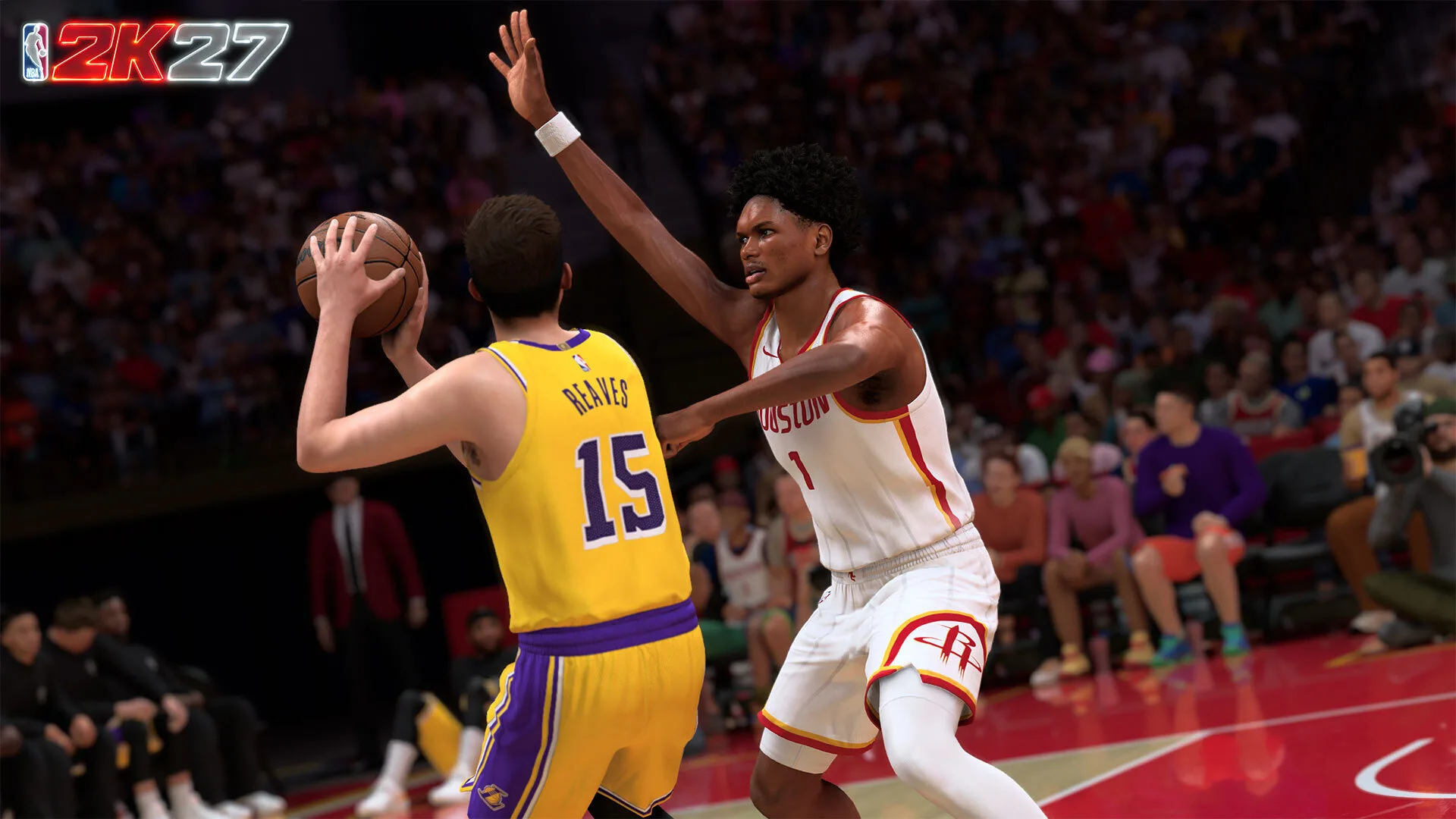
Hands-up defense is being split into two approaches. Holding up on the Pro Stick creates an aggressive contest that can challenge contact layups while staying vertical or apply pressure to jump shots. Holding down keeps the defender planted for a more conservative contest, which is useful when avoiding unnecessary fouls.
The Block button remains the main option for a forceful rejection, but it will continue to reward anticipation and timing. AI defenders will use the improved hands-up system as well, and they will hold their position more effectively against triple-threat stepovers.
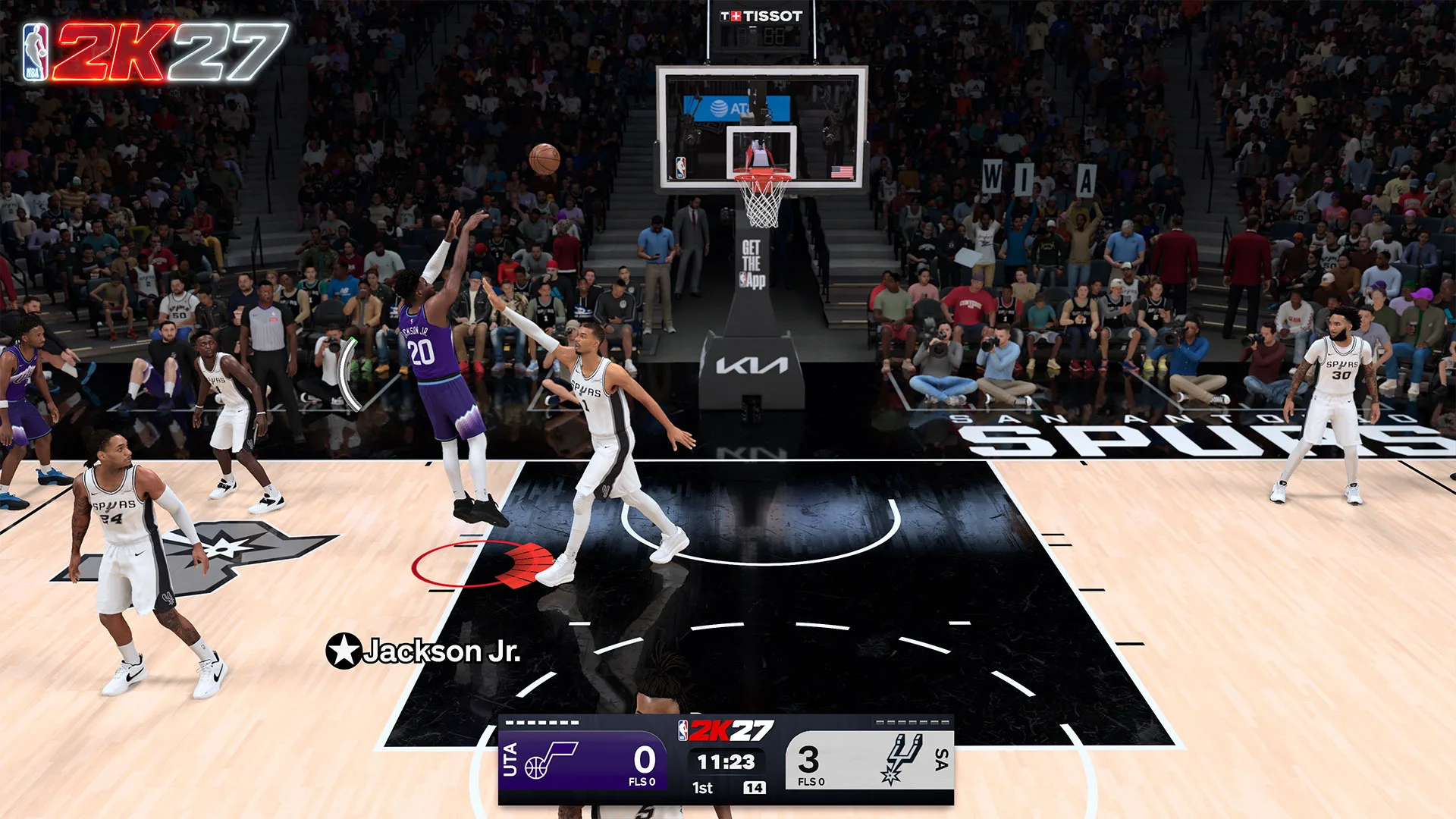
Shot contest feedback will use an eight-tier color-coded system. A separate Defensive Impact Indicator beneath the shooter will show how much each defender affected the attempt and where the pressure came from. A weak late contest produces a small white arc, while a suffocating contest can display a large crimson arc.
Ankle breakers are also moving away from chance-based results. The system will watch the defender’s momentum and compare it with the ball-handler’s change of direction. A hard crossover against a defender who is reaching or moving the wrong way will create a much better chance of a true ankle breaker, while ratings will affect how tightly the defender must mirror the move and how quickly they can recover.
Defensive cutoffs provide two ways to stop lateral dribble moves and escape combos. A right-stick flick performs a quick one-step cutoff. Holding R2/RT while flicking the right stick produces a larger lunging step, with Speed and Agility affecting how much ground the defender can cover.
When timed correctly, a cutoff can force a body-up collision, drain the ball-handler’s Adrenaline, and possibly cause a fumble or picked-up dribble.
A new collision system will also affect steals and ball security. Steal targeting is being adjusted to prevent awkward reaches, and larger defenders with low Steal ratings will no longer receive easy bump steals. Ball-handlers can lose control and recover the ball, giving positioning and disciplined defense more room to decide the result.
Takeover now tracks five parts of a player’s game
The Takeover system is being rebuilt around Shooting, Finishing, Playmaking, Defense, and Rebounding. Each discipline has its own meter, and those meters will rise or fall during a game according to what the player is doing.
The six stages are Frozen, Cold, Neutral, Warm, Hot, and Takeover. Multiple disciplines can be active at once, so a player who creates ankle breakers, sets up teammates, and scores in the paint could activate both Playmaking and Finishing effects.
When a meter reaches its final stage, the equipped ability activates automatically. An on-screen timer will show how long it remains active, and each ability has its own duration.
Shooting abilities:
- Shot Artist improves off-dribble shots.
- Calibrated improves set shots.
- Zip Code extends the ability to make shots from deep.
- Default provides a broad Shooting attribute boost.
Finishing abilities:
- Inside Touch improves standing layups.
- Navigator improves driving and advanced layups, including euros, hops, and spins.
- Detonator improves standing dunks.
- Airspace improves driving dunks.
- Paint Surgeon improves post hooks, fades, and post matchups.
- Default provides a broad Finishing attribute boost.
Playmaking abilities:
- Blur helps players get past defenders and win body-up matchups.
- Cook raises the chance of successful ankle breakers.
- Dishmaster increases the Finishing and Shooting boosts given to pass recipients.
- Default provides a broad Playmaking attribute boost.
Defense abilities:
- Glue improves the ability to force ball pickups and fumbles.
- Hawk activates on-ball steal attempts that can cause turnovers or fumbles.
- Rim Guardian improves post and off-ball post defense while activating elite rim protection.
- Default provides a broad Defense attribute boost.
Rebounding abilities:
- Demolition improves screen-setting.
- Muscle improves boxouts and rebounds.
- Second Chance displays shot feedback and improves putbacks.
- See the Future shows where missed shots will land.
- Default provides a broad Rebounding attribute boost.
The universal option is Hydration Hero, which temporarily prevents Adrenaline and energy/turbo loss. It can be assigned to any of the five discipline slots.
AI teammates will react to the game situation
AI players will use new spacing lane logic after made baskets, moving into their lanes while the inbounder and ball-handler push up the floor. Open rim runners should receive more attention, and high-tempo teams can attack earlier instead of waiting for a traditional half-court setup. Some teams may take a shot with 17 seconds still on the shot clock.
Set AI is designed to make star players the center of specific offensive actions rather than having the game call random plays. Scorers can move into different roles within a set, and teams will choose actions based on situations such as the start or end of a quarter, a close game, or a scoring drought. More Set AI adjustments are planned throughout the year.
New play art will show what AI teammates are doing with notifications for cuts, post-ups, mismatches, and open looks. Team-level gameplans will also track efficiency in real time, allowing the offense to focus on a star, attack a weak matchup, or move to another plan when the defense finds an answer.
Pick-and-roll logic is receiving attention as well. AI ball-handlers will use improved pocket passes, more thoughtful alley-oops, and better movement after screens. Players with a favorable matchup can enter a “hunt behavior,” isolating that defender or repeatedly calling for screens to target smaller players, weak hedge coverage, or poor defenders.
On defense, rotations will evaluate moving matchups instead of sending players to fixed spots. The switching system now recognizes twice as many defender types and considers attributes, tendencies, and badges when choosing coverage. The goal is for AI defenders to read passing lanes and adjust their off-ball pressure as the possession develops.
NBA 2K27‘s gameplay changes put timing, ratings, momentum, and decision-making at the center of more possessions. Which new system would most affect the way you play? Share your thoughts in the comments, and follow us on X, Bluesky, YouTube, Instagram, Steam, and Telegram.