id Software Veteran Says Xbox Doesn’t Understand How Games Are Made After Layoffs
Lead services programmer Chris Hays said 136 roles were cut at id Software and argued that quarterly goals and repeated layoffs can strip studios of the shared experience and long-term commitment needed to build successful games.

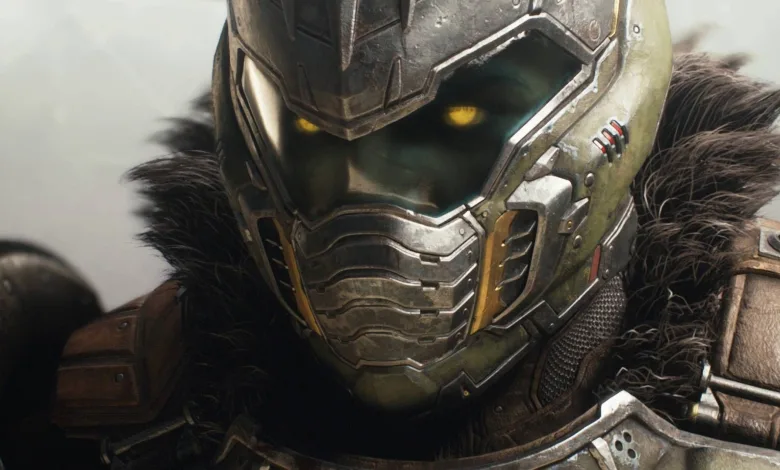
Chris Hays, a lead services programmer at id Software who has spent 16 years at the studio, criticized Xbox management after layoffs affected a large portion of the team behind Doom, Quake, and Wolfenstein.
Speaking with the Auf ein Bier YouTube channel in a late-July interview, Hays argued that Xbox’s corporate priorities do not fit the way major games are created. “They fundamentally don’t understand art. They don’t understand games. They don’t understand that business model,” he said. Hays also said layoffs had weakened and devalued Xbox’s studios: “When they do layoffs, they weaken and devalue their studios – but they don’t understand that.”


Hays said 136 roles were cut at id Software after the team had pushed through an unusually difficult crunch to finish downloadable content for DOOM: The Dark Ages. The layoffs came one day before the team’s launch, when employees had expected to watch players and streamers react to their work. Instead, many staff members were left unsure about what would happen next.
Hays described the post-layoff atmosphere as the lowest morale he had seen, calling the cuts “so inhumane” and “demoralizing.” He praised the employees who were affected for handling the situation with grace and continuing to support the work that remained.
Hays specifically pointed to the pressure of reporting results by fiscal quarter or year. Projects such as DOOM: The Dark Ages can take years to develop, while short-term financial targets reward decisions that may not support a game’s long-term production.
Hays questions who will maintain id Tech
Xbox’s latest gaming cuts affected 1,600 people, with another 1,600 job losses still pending. Reports that id Software had lost about half its staff raised concerns about whether the studio could continue making games on the same scale as its recent releases.
In Microsoft’s latest results, Xbox content and services revenue fell 10% year over year, while hardware revenue declined 13%. The figures provide additional context for the short-term financial pressure Hays described.
Hays said the issue goes beyond the number of people remaining. If entire departments have been removed, he questioned who will handle work such as skyboxes, infrastructure, and engine maintenance.
“Who will do that work now?” Hays asked. “How are we going to maintain infrastructure when we get rid of our infrastructure team? How are we going to maintain our engine when so much of our engine team is let go?”
Hays also described the challenge of continuing at the same scale with fewer people as effectively impossible. “It is hard to make a game that is AAA, that is like we’ve done before, with half the people,” he said.
He summarized the situation by saying, “we’re not the same iD, we’re half the same iD.”
Hays says studios need room to fail
Hays argued that a studio’s quality depends on more than its headcount. “It is our experience together, our working together, and our past experiences that make the studio good,” he said. Teams need time to understand one another’s strengths, build shared processes, and learn from mistakes. Replacing a large part of a team whenever a company needs more people may fill staffing requirements on paper, he argued, but can leave behind a mediocre game and no lasting foundation.
According to Hays, the acquisition of id Software by ZeniMax, followed by Microsoft’s purchase of ZeniMax, had once been presented as a way for studios to take creative risks. A larger organization could theoretically absorb an individual failure instead of treating it as the end of a team’s work.
He now believes that tolerance has faded. “If you make a mistake, that’s the last mistake you make as a team. That team is done,” Hays said during the interview. When developers know that one unsuccessful project can end a studio, they have less reason to invest in a game’s long-term future or try ideas that might need time to mature.
Hays pointed to Tango Gameworks and Hi-Fi Rush as an example of a successful launch not guaranteeing a studio’s survival.
He said people increasingly assume they will be cut once a game ships, leaving them to wonder whether the extra effort they put into a project will ever be rewarded or even remembered. Hays acknowledged that publishers are also dealing with macroeconomic problems and competition for players’ attention, but argued that the central issue is a lack of long-term decision-making from the companies running major studios. When teams are repeatedly broken apart, studios lose accumulated knowledge and creative risks become harder to justify.
id Software leadership has disputed the worst reports
Earlier in July, id Software’s response to the layoffs offered a different picture. Co-studio director and DOOM: The Dark Ages director Hugo Martin rejected claims that the studio had been gutted, saying its remaining team was comparable in size to the group that made DOOM (2016) and that id Tech remained in good shape.
Hays’ comments show that the layoffs still look very different from inside the studio. While Martin has defended id Software’s ability to continue its work, Hays is questioning how the team can cover every discipline needed for a game of The Dark Ages‘ scope after so many roles were removed.
Hays also said workers had once been told the company would “hire to retire,” but argued that repeated cuts now leave developers expecting they may be gone once a game ships. He said that uncertainty weakens the incentive to invest extra effort in a project when employees are unsure whether that work will be rewarded or remembered. Hays said assurances from studio management carry little weight when major decisions are made above the studio level, and warned that Microsoft had “burned a lot of bridges” with its employees and the wider industry.
Share your thoughts on Hays’ criticism of Xbox and the future of id Software in the comments, and follow us on X, Bluesky, YouTube, Instagram, Steam, Telegram.