Hell Let Loose: Vietnam receives an 8/10 verdict for turning communication, patience, and careful movement into the foundation of a rewarding tactical shooter. With the game’s August 13, 2026 launch approaching, its identity is already clear: this is a battlefield where rushing in alone usually ends badly.
Expression Games carries several ideas over from the World War II-era Hell Let Loose, including slow movement, lethal gunfights, and a strong focus on squad coordination. The change of setting makes those systems feel different, though. Southeast Asia’s thick vegetation, difficult weather, and close-range encounters leave players with far less certainty about what waits ahead.
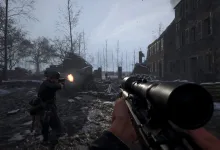

Communication decides the fight
Warfare is the main mode, with both teams contesting a central sector and trying to push the battle toward the opposing base. A successful attack can open the next stage of the fight, but an overextended push may leave friendly territory exposed. Losing ground can also send the entire team backward, turning every advance into a decision with consequences.
The shooter leans heavily toward military simulation. A single shot can be fatal, movement is deliberate, and solo play rarely produces lasting success. Players are organized into squads beneath a commander, making voice communication nearly as important as marksmanship.
Infantry forms the largest part of each force, while armor crews, mortar teams, recon pairs, and pilots provide more specialized ways to support an attack. Squad leaders have access to the wider team channel, so they must pass orders from command down to their units while reporting enemy activity in the other direction.
That structure produces some of the game’s best moments when everyone understands their role. A squad leader who gives clear directions can turn a confusing assault into a focused push. When the commander lacks experience or a leader refuses to communicate, the same chain of command becomes a source of frustration.
Individual squad behavior also affects the outcome. A few players charging off in different directions can weaken the whole unit, while a group that stays together has a much better chance of reaching its objective. New players may understandably hesitate to follow instructions from strangers, but lone-wolf play tends to deliver only a few isolated kills rather than a match victory.
The jungle hides almost everything
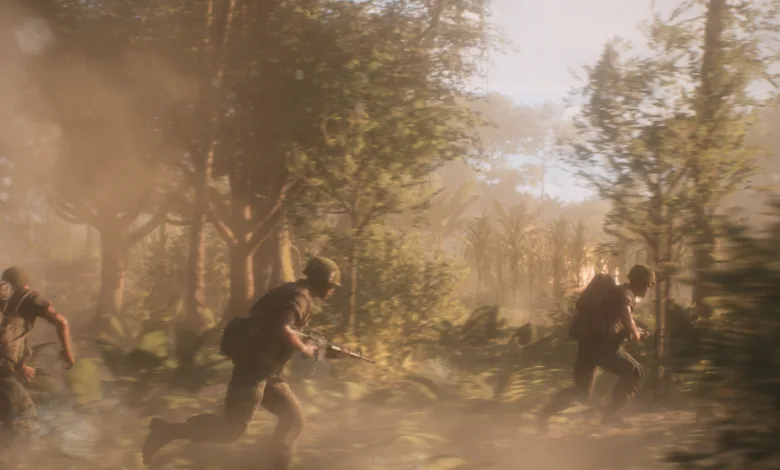
Moving the series away from Europe’s more recognizable front lines gives Hell Let Loose: Vietnam a harsher sense of uncertainty. Dense foliage can reduce visibility to almost nothing, and an enemy may be only a few meters away without being seen. The absence of obvious landmarks also makes it harder to tell where the battle is developing or which route is safe.
That confusion is central to the atmosphere. Branches snap nearby, insects fill the gaps between distant bursts of gunfire, and thick brush makes even a short crawl feel dangerous. Helicopters crossing above the trees can bring relief or dread depending on which side controls the skies at that moment.
The environment is not merely a backdrop for the firefights. It changes how players read the battlefield. Open ground can expose a squad that was hidden moments earlier, while dense plants may conceal both an attacker and the route toward an objective. The visual and audio work reinforce the feeling that danger can come from almost anywhere.
A steep learning curve with a clear payoff
The biggest barrier is also the game’s defining feature. Players unfamiliar with the series can spend early matches unsure of where to go, what their squad needs, or why an apparently successful attack suddenly collapses. The design offers little room for someone who wants to ignore the team and make progress alone.
Once the basic routines settle in, the experience changes. Finding the right place in a squad and carrying out a shared plan can make even a modest advance feel earned. The payoff comes from understanding the battlefield rather than simply reacting faster than everyone else.
That high skill ceiling will not suit every player. Some will find the lack of direction and dependence on other people exhausting, especially when a match has poor leadership or little communication. For those willing to commit to the teamwork, though, the slow pace gives every successful maneuver more weight.
Verdict: 8/10
Hell Let Loose: Vietnam is a demanding FPS that asks players to communicate before it rewards them with control. Its jungle setting creates a tense, hard-to-read battlefield, while the squad structure makes cooperation essential rather than optional. The learning curve is steep, but the game has plenty to offer once players accept that a personal highlight reel is not the goal.
Expression Games’ Vietnam setting gives the series a distinct mood without abandoning the deliberate combat that defines Hell Let Loose. It can be brutal, confusing, and occasionally frustrating, but coordinated teams will find a deeply satisfying tactical experience waiting beneath that initial difficulty.
If you plan to join the fight on August 13, share your thoughts on Hell Let Loose: Vietnam in the comments, and follow us on X, Bluesky, YouTube, Instagram, Steam, Telegram.
Hell Let Loose: Vietnam
Developed by Expression Games
Step into the explosive fury of war with Hell Let Loose: Vietnam. Play a decisive role in one of the most iconic conflicts in history with expansive 50v50 player battles, where teamwork, tactics and an arsenal of destructive weapons combine to shape the battlefield in your favour.
- Genre Shooter, Simulator, Strategy
- Platforms Xbox Series X|S, PC (Microsoft Windows), PlayStation 5
- Perspective First person
- Modes Multiplayer
- Release August 13, 2026
- Publisher Team17
-
Age Rating