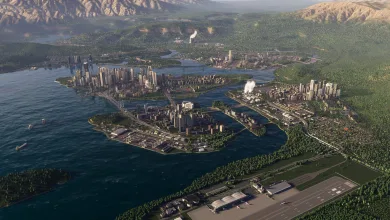
Cities: Skylines II’s Park Adventures Will Rework Leisure for All Players
The leisure overhaul will also reach the base game for free, and parks can combine four distinct styles.

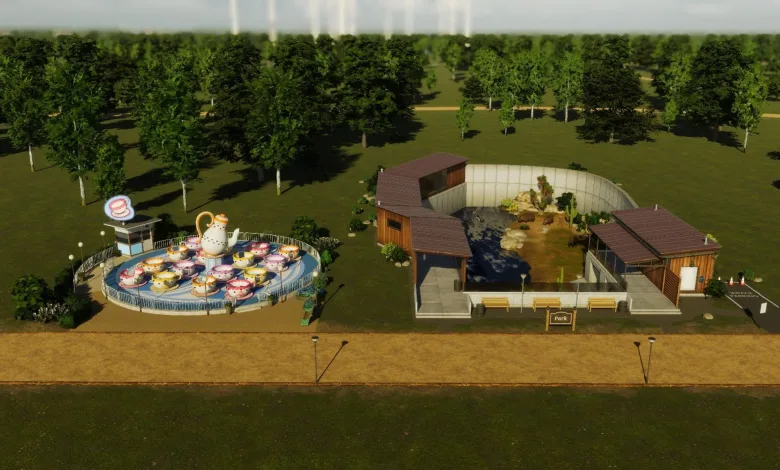
Park Adventures will add a deeper leisure simulation to Cities: Skylines II, and the overhaul will not be locked behind the expansion. All players will get the new leisure systems in the base game for free, while the DLC lets mayors build flexible districts mixing amusement parks, zoos, nature reserves, and city parks. The City Corner #13 dev diary explains how those systems are designed to work.
Park Adventures was announced for Q4 2026 alongside a separate free update for all players, as outlined in the earlier Expansion Pass 2 plan. The free update will also bring visual and other improvements that extend beyond parks.


Park districts leave room for custom layouts
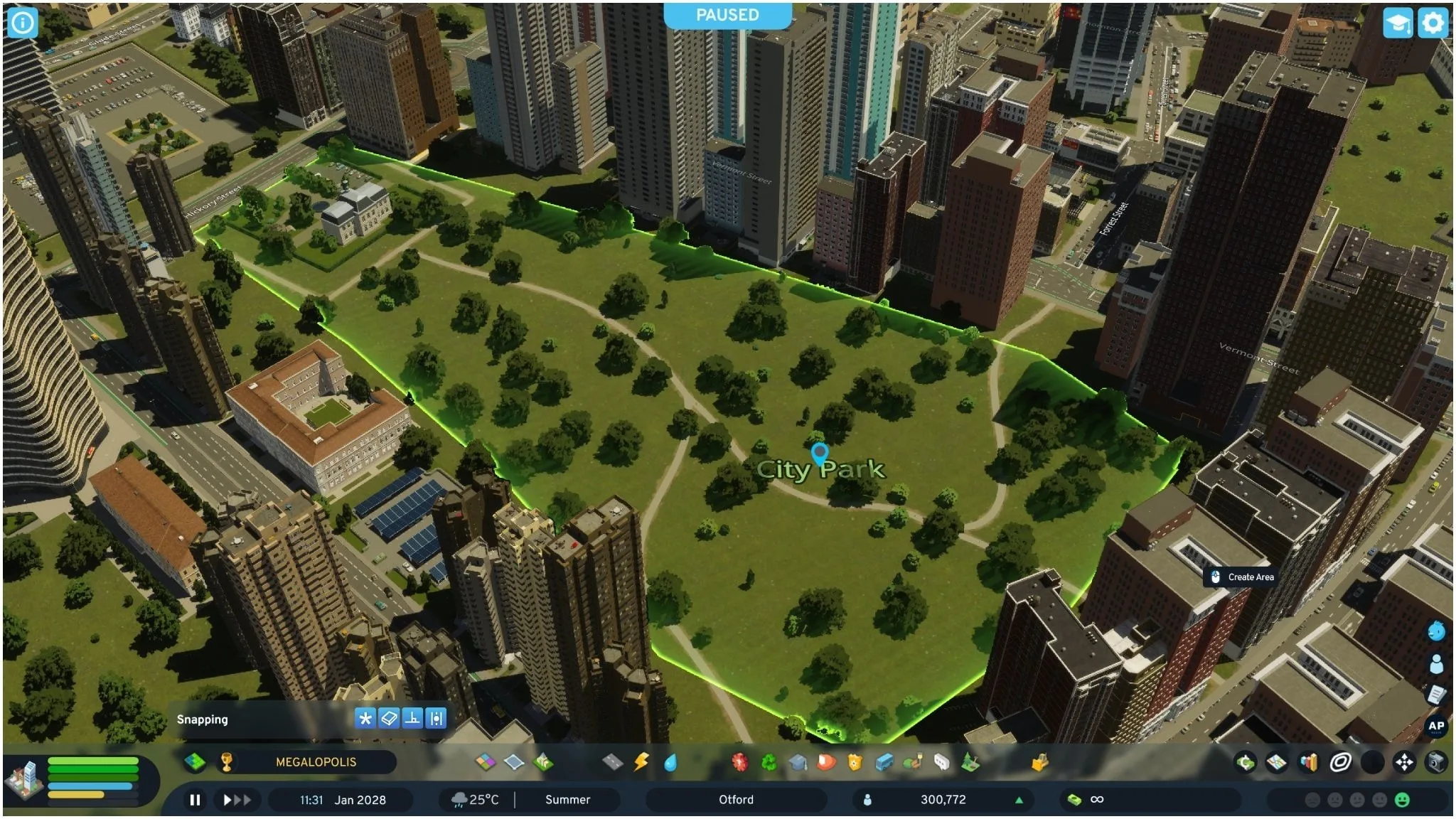
Rather than making a single building or entrance define a park, players will draw a district to set its boundaries and then place the contents themselves. Different park styles can share the same area, with players choosing their own mix of buildings, paths, and roads. Public transport can run through a park, too, instead of stopping at a fixed entrance.
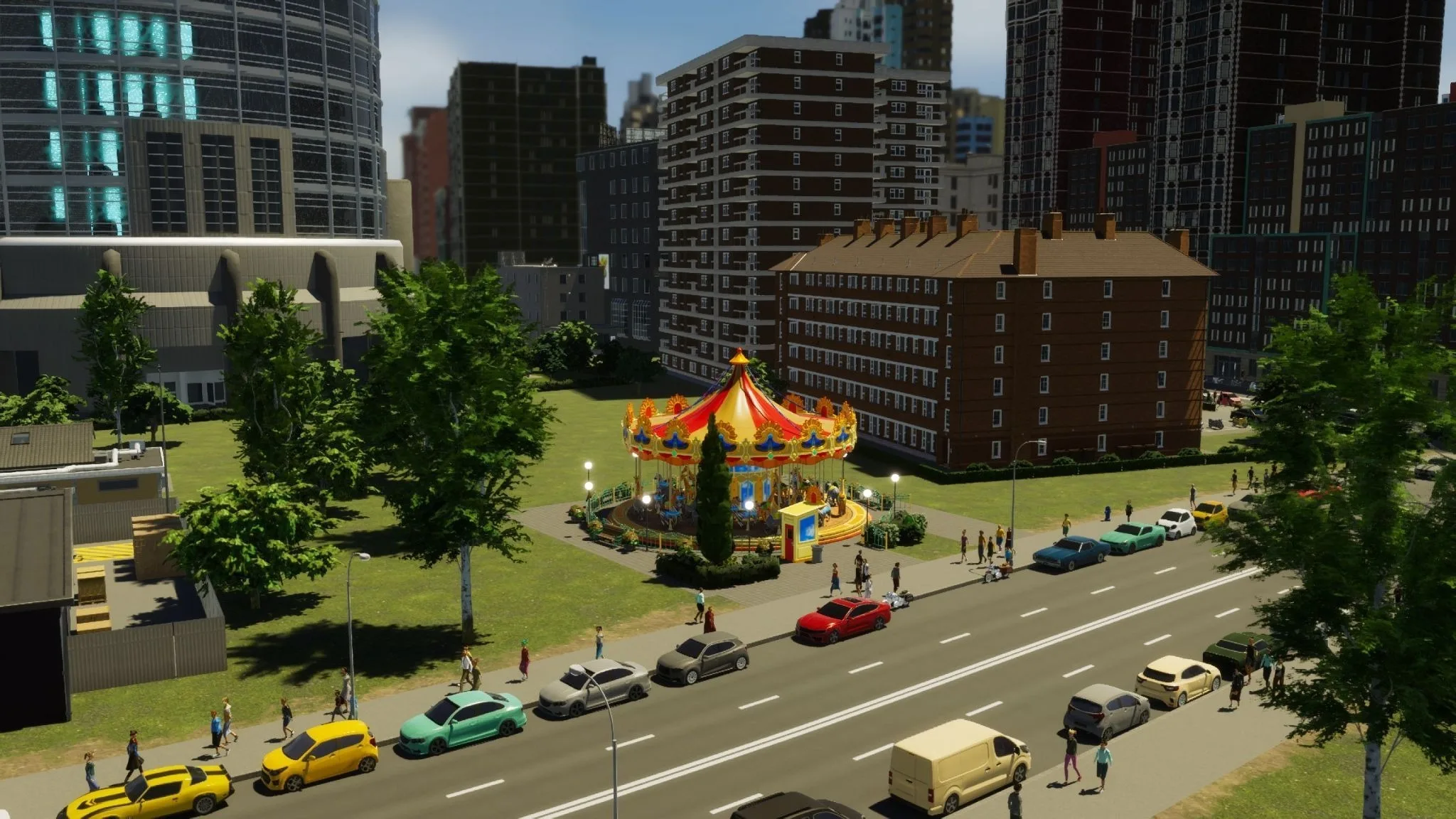
Many of the assets will also work outside park districts. A carousel can sit beside an office building, for example, and individual props such as benches can be placed separately and still used by citizens. That flexibility gives players room to build around an existing neighborhood rather than fitting every attraction into a preset layout.
Visitor choices will shape park ratings
Amusement parks center on rides and attractions, zoos on animal exhibits, nature reserves on the surrounding landscape, and city parks on green space within built-up areas. Visitors add experience to the type of park they use, unlocking more buildings for that style. Because park types can mix, players can develop a district in a new direction without starting over.
Iceflake initially tested individual visitor preferences for excitement, socialization, and relaxation, with age and social groups affecting what people wanted to do. The approach risked leaving visitors disappointed when a park did not offer their specific preferred activity, and it added more micromanagement than the team wanted. Adults make up roughly 60% to 70% of a typical city’s population, which also skewed the system toward that group. The redesigned simulation looks at the park as a whole while still giving residents room to respond to what they encounter.
Distance still counts, but it will no longer carry as much weight on its own. A crowded destination could send a resident to another park, even if it is farther away, while the condition and quality of leisure sites will affect the visit. Queues, nearby alternatives, and walking distances can also prompt visitors to reconsider their plans as they move through a park.
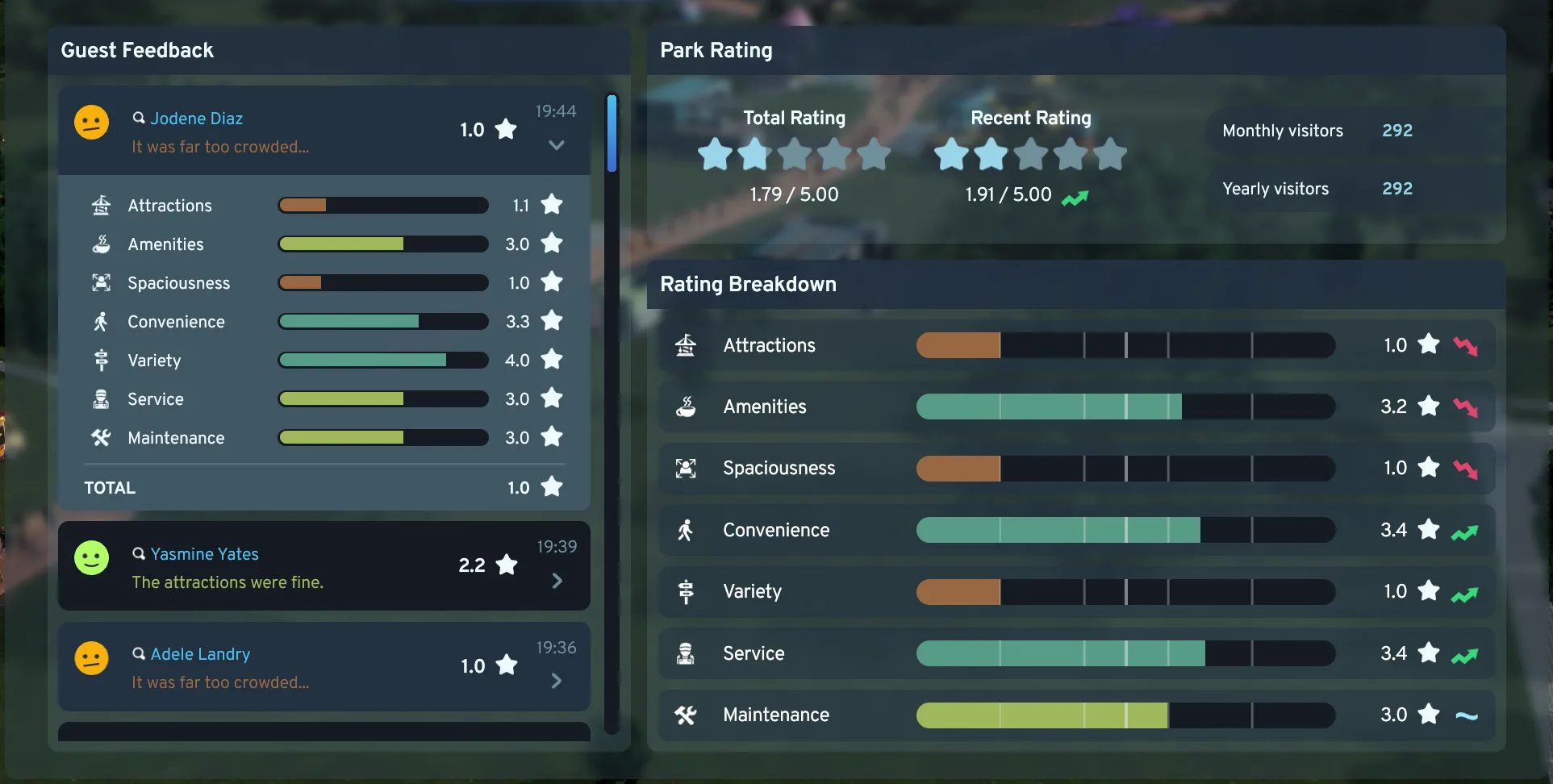
Keeping a park running will involve staff, maintenance budgets, entry fees, and policies. Visitors will judge the experience as they move through the area. A long queue may lead someone to try another attraction, while poor access or a shortage of services can hurt the overall rating.
Restaurants can draw visitors like attractions, while amenities such as toilets, food, and information points meet needs that come up during a visit. Guest feedback and park ratings are intended to help players spot problems such as crowding or long walking distances, though the way this information is presented is still in development.
Citizens will interact with attractions and props
The developers also want everyday city life to be more visible, with residents stopping to interact with their surroundings and spend time in public spaces. Park visitors will visibly queue for attractions, sit on rides, and watch animal exhibits.
A system the developers call “Divert” can let citizens stop to use an interactive prop they encounter while traveling, then continue toward their original destination. They do not need to set out for a particular bench in advance. The system remains in progress, and the diary does not promise interactions for every prop.
Would a park-wide approach give you more useful control than managing individual visitor preferences? Follow us for more on the leisure systems and the free changes coming to Cities: Skylines II on X, Bluesky, YouTube, Instagram, Steam, and Telegram.
Cities: Skylines II
Developed by Colossal Order, Iceflake Studios
Create and manage your own city without restrictions. Offering a deep simulation and a living economy, Cities: Skylines II will challenge your decision-making skills and allow you to build the cities of your dreams. Get ready for a new epic scale in the most realistic city builder - ever.
- Genre Simulator, Strategy
- Platforms Xbox Series X|S, PC (Microsoft Windows), PlayStation 5
- Perspective Bird view / Isometric
- Modes Single player
- Release October 24, 2023
- Publisher Paradox Interactive
-
Age Rating