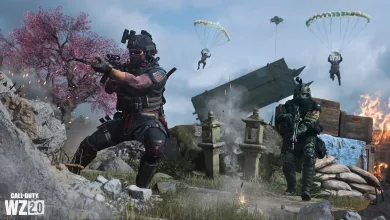
Activision now has the difficult job of rebuilding trust in Halo without turning the franchise into another version of Call of Duty. Microsoft’s September 22, 2026 restructuring placed the next Halo game under a new purpose-built team, while widespread cuts at Halo Studios left a smaller group to support the games already in the market.
The new Activision-led Halo structure is still at an early stage. Microsoft has not announced a release window, gameplay, story, or platform plans for the next title, so the immediate story is about direction rather than a finished product.


Halo needs to remain Halo
Halo does not need to borrow an identity from another shooter. Its best multiplayer features are already clear, from the slower combat pace and hip-fire gunplay to mirrored loadouts, power weapons, vehicles, and vertical maps built around arena-style movement.
Halo Infinite showed how much room that foundation still gives the series. Four-versus-four arena matches, Big Team Battle, asymmetrical maps, Forge, social lobbies, and custom games let the community create experiences that do not feel like copies of the year’s other military shooters. Split-screen co-op, Firefight, Theater, Infection, Grifball, Invasion, and playable Elites belong in the same conversation. They are not interchangeable parts from another military shooter. They are the kinds of features that tell players whether the series still understands itself.
The recently released Halo: Campaign Evolved gave the outgoing team a chance to revisit the original campaign while adding three new missions, four-player co-op, sprinting, hijacking, and new Skulls. Its July 28, 2026 release was the first Halo launch on PlayStation 5, but it arrived without PvP multiplayer and did not provide the major new step forward some players expected from a remake.
Halo has already endured a difficult transition from Bungie to 343 Industries, which later became Halo Studios. Halo 4, Halo 5, Halo Infinite, and Halo: The Master Chief Collection each drew criticism for different reasons, ranging from multiplayer direction and story decisions to launch problems and limited post-launch support.
Call of Duty experience can become a trap
Activision brings real first-person shooter experience to the arrangement. The company has overseen every Call of Duty release since 2003 and has kept that series moving through annual launches, even when individual entries received heavy criticism. That production history could help a new Halo team avoid the long gaps that have frustrated players. Halo had a six-year wait between Halo 5 and Halo Infinite, followed by another five years before Campaign Evolved.
Speed alone will not solve Halo’s identity problem. Call of Duty can change its setting, tone, characters, and mechanics from one release to the next because players have grown used to that rotation. Halo has experimented with class systems, loot boxes, battle passes, and MOBA-style modes, but those detours often made the series feel less certain of itself.
Activision’s main advantage could also become its biggest risk. A team built from the company’s shooter expertise may understand weapons, progression, and online operations, but Halo needs its own pacing and sandbox rules. Reusing familiar systems would be easy. Giving players a reason to believe that this is Halo again will be harder.
No announced plan says that Activision will copy Call of Duty’s design or monetization. Still, the concern is reasonable after recent Halo games faced backlash over multiplayer progression and microtransactions. A new title that places aggressive purchases ahead of the series’ core modes could lose the audience it is supposed to bring back.
A purpose-built team needs room to build
Microsoft’s decision to separate the Halo group from ongoing Call of Duty development gives the project its own structure. The remaining Halo Studios staff will continue supporting current games and their communities, while Activision assembles a team for the next main project. That division should let the new group develop its own plan instead of treating Halo as a side assignment.
The outgoing Halo Studios team also spent years improving The Master Chief Collection, supporting community preservation work around an unfinished Halo 2 E3 demo, and retaining older Halo: Reach code under the hood of Campaign Evolved to preserve familiar jump physics and grenade behavior. That recent work raises the bar for the new group. Halo’s next game can change its campaign, multiplayer systems, and presentation, but it will need a clear reason for every major decision.
Activision president Rob Kostich said in a statement provided to Game File that the company’s goal is to make a Halo game worthy of the franchise’s legacy while staying true to what players love about it. The statement sets a useful standard, but the team will eventually have to prove it through systems, modes, and gameplay rather than broad promises.
For now, Activision has a chance to give Halo a clean start, not a guaranteed recovery. The next public look at the project will show whether the company is building a distinct Halo shooter or simply applying its familiar FPS playbook to a different universe.
Would you rather see Activision preserve Halo’s classic campaign and multiplayer structure or take the series in a new direction? Share your view in the comments, then follow us on X, Bluesky, YouTube, Instagram, Steam, and Telegram.