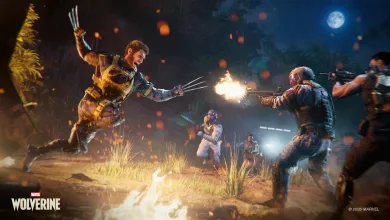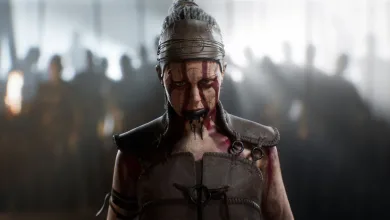
Base PS5 owners can now try Sony’s Quick Spectral Super Resolution, or QSSR, in Marvel’s Wolverine and Ghost of Yōtei. Updates for both games arrived on Oct. 1, 2026, and the two titles are currently the only games using Sony’s new AI upscaler. Sony introduced the support through its PlayStation Blog announcement.
Upscaling lets developers render a game at a lower resolution, then reconstruct the image at a higher resolution to reduce processing demands while preserving detail. QSSR is separate from PSSR, the upscaler used on PS5 Pro, although Sony describes it as an evolution of that technology and calls PSSR its gold standard. Sony says PSSR’s computing demands previously kept similar image processing off the standard PS5. QSSR instead pairs a streamlined neural network with an implementation tuned for the base console, with the goal of improving fine detail and keeping images more stable.


Sony developed QSSR through Project Amethyst, its AI graphics collaboration with AMD. QSSR is also upscaling rather than generative AI. It clarifies the image a game already renders instead of altering its assets, lighting, or character designs. PS5 Pro still has an advantage because it includes dedicated machine-learning hardware rated at 300 TOPS. QSSR does not simply bring the full PS5 Pro version of PSSR to the base console. Sony updated PSSR to PSSR2 earlier in 2026, while QSSR is designed to bring similar image-quality improvements to compatible games on standard PS5 hardware. Sony says its QSSR developer tools will be offered broadly to studios that choose to use them.
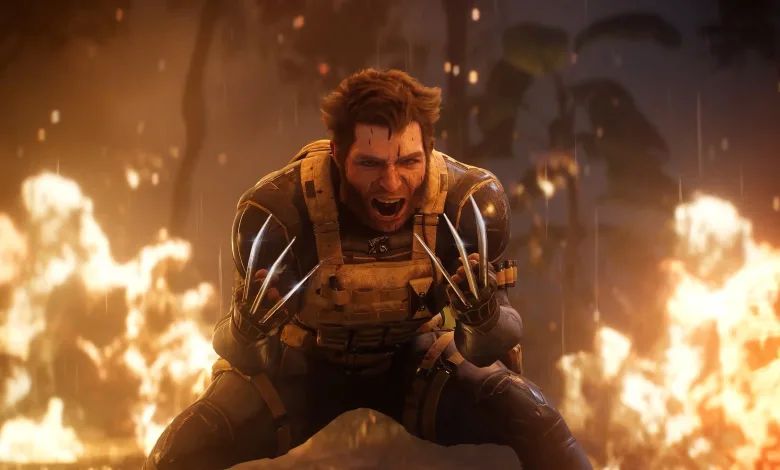
Marvel’s Wolverine update 1.002 is now available on base PS5 with QSSR enabled by default. The upscaler joins the console’s previously confirmed ray-traced 60 FPS default setup, as Insomniac had outlined earlier. Sony’s comparison footage shows the game in Fidelity Mode with and without QSSR.
Marvel’s Wolverine Update 1.002 Patch Notes
- Uses QSSR on PS5, on by default
- Fixes various UI, Photo Mode, Out-of-Bounds, and Visual polish issues
- Addresses some progression issues and crashes experienced by a small percentage of players
- Fixes Accessibility issues with Navigation Assist, Lock-On, High Contrast, and Screen Reader behavior
- Addresses several localisation issues across supported languages
Its full list of progression, crash, accessibility, localization, interface, Photo Mode, out-of-bounds, and visual polish changes appears in Insomniac’s official update notes.
Ghost of Yōtei also includes QSSR as a graphics option on standard PS5, with footage focused on the effect on character models and environments. Sucker Punch lead rendering engineer Jasmin Patry said QSSR handles fine detail in characters and environments while improving temporal stability, so small details can remain more consistent as the camera moves rather than appearing unstable. The feature is separate from the game’s earlier Patch 1.1 performance changes, which added VRR support and an uncapped frame-rate toggle.
Digital Foundry’s hands-on comparison found QSSR’s image-quality gains in Marvel’s Wolverine exceptional. The analysis recorded better temporal stability, more fine detail and sub-pixel integrity, and fewer artifacts in moving foliage. Gains were smaller in Ghost of Yōtei, partly because the game already delivers strong image quality on base PS5. Digital Foundry also noted that QSSR may be able to approach the speed of FSR 3, which could create room for larger image-quality improvements, although more testing is needed.
Sony graphics engineer Daniel Craig said, “It’s great to be improving the PS5 this far into the generation, enabling developers to make even better-looking games.” Insomniac head of tech Mike Fitzgerald said QSSR should bring added clarity and stability to scenes in Madripoor and Shinjuku. Patry said the technology can resolve fine details in characters and environments with a level of temporal stability not previously possible on PS5, bringing standard PS5 image quality closer to the PS5 Pro experience.
Which kind of PS5 game would you most like to see use QSSR next? Sony is making the technology available more broadly to developers, so stay connected with us on X, Bluesky, YouTube, Instagram, Steam, and Telegram as the broader rollout develops.