Hearts of Iron IV’s Proposed Energy System Would Let Coal-Free Nations Generate Power
Power Plants would generate electricity based on local terrain, while industry and coal could help meet the demands of production.

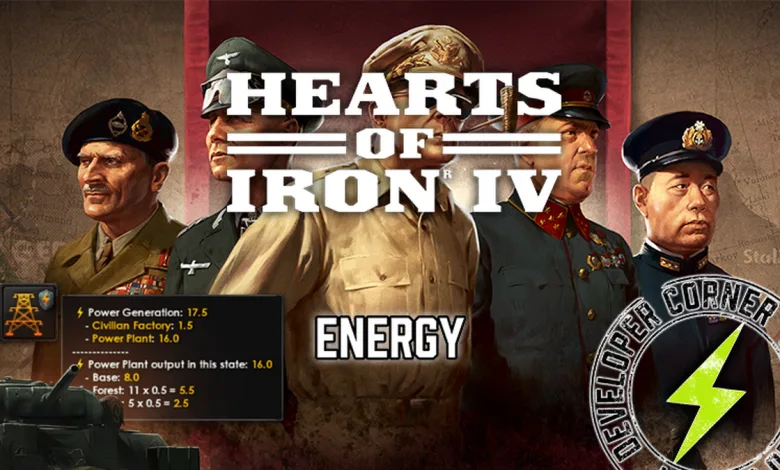
Hearts of Iron IV‘s proposed energy system would give every nation a way to generate local electricity, even without coal. Power Plants would draw output from a state’s terrain, regular industry would contribute power, and coal could fuel extra generation when production demands more. The developers outlined the idea in a new Steam Dev Corner on energy, describing it as something not planned for an expansion but perhaps suited to a future war effort.
The proposal addresses a weakness in the current approach. Coal arrived in the free update accompanying No Compromise, No Surrender, but its effects were later reduced until the resource had little impact. More broadly, using coal to represent energy did not give the game actual energy production. Dams and experimental power plants, including Nuclear Reactors in Götterdämmerung, lowered a state’s power use instead of generating electricity.
Local generation would not depend on coal
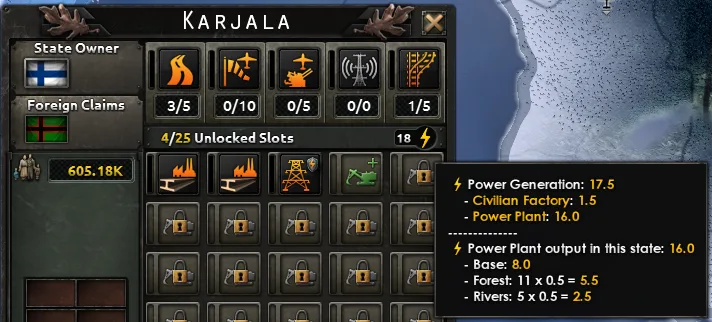
Under the new concept, a Power Plant would be a state building whose electricity output depends on local terrain. It would represent several smaller sources of power, rather than one large facility. That distinction would let countries without coal expand their energy networks, while regular industry would also produce enough electricity for basic equipment. The developers said this is meant to avoid the especially harsh effect the old system had on minor nations.
Dams would generate a fixed amount of energy and keep their existing statewide bonuses. Research could improve their output somewhat, but dams would not grow much more powerful over the course of a campaign.
Coal would remain useful as fuel for additional Power Plant output, especially when producing costly equipment. A country would only register a coal deficit when it needed coal to meet its energy requirements, rather than simply because it had a shortfall in the resource.
The idea follows the September 8, 2026, Industrial Parks proposal, which also connected production to local state conditions. Both concepts are still works in progress, not confirmed additions to a scheduled update.
Equipment and buildings would draw different amounts
Production lines would consume power based largely on the resources used to make their equipment. Aluminum-heavy production would require more energy than steel-based production, leaving basic Infantry Equipment relatively inexpensive to power while large-scale airframe production could make heavier demands.
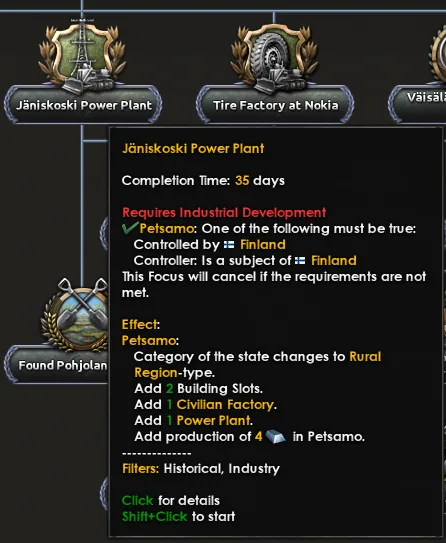
Buildings would also draw electricity. The example given for a Synthetic Refinery is a constant energy cost of 5, and the updated content would treat Power Plants as buildings in their own right.
Energy would still work through a ratio, much like the current system. Falling short would carry penalties, but the developers described them as generally mild, so players would not need to keep meeting every unit of demand at all times. A May 1936 example using AI-controlled Italy shows an energy ratio of 85.7%, with 203.0 generated against 236.8 demand. The interface lists 96.0 for naval equipment, 53.0 for air equipment, and 40.5 for army equipment.
How would local power generation and coal use affect the way you plan a campaign? Follow us for more Hearts of Iron IV coverage on X, Bluesky, YouTube, Instagram, Steam, and Telegram.