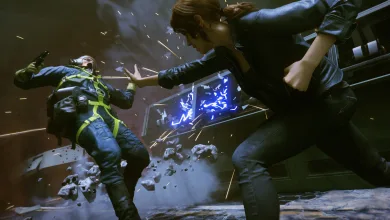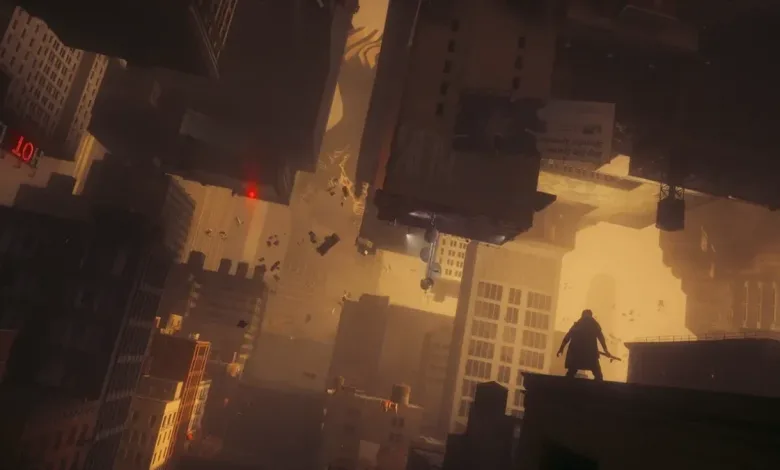
Control Resonant does not treat Dylan Faden’s powers as effortless spectacle. Remedy built his movement around awkward landings, costly abilities, and disorientation, then carried that same philosophy into a Manhattan that reacts to every slam, shockwave, and change in gravity.
Following the game’s September 24 release, Lead Level Designer Anne-Marie Grönroos, Art Director Elmeri Raitanen, and Lead Gameplay Designer Sergey Mohov explained that approach in a PlayStation Blog interview published September 29. Their comments offer a closer look at how the sequel connects character animation, environmental reactions, boss design, and PlayStation 5 hardware.
Dylan’s powers keep a human cost
Remedy wanted Dylan to feel powerful without losing the awkwardness of someone still learning how to handle impossible abilities. His animations communicate that tension. Using Elevate takes visible effort, Reach can sweep him off his feet, and changes in gravity leave him disoriented instead of making him look perfectly adapted to every situation.
That physicality also supports one of the game’s central ideas. Dylan may be able to rise above the streets and fight paranatural threats, but he still wants human connection and has difficulty understanding how to interact with other people. His clumsy movement gives those emotional details a physical presence rather than leaving them entirely to dialogue.
Strange York makes the impossible stand out
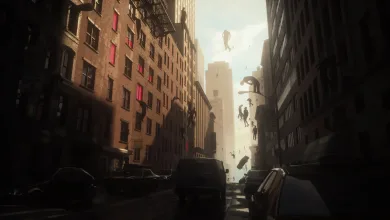
Control Resonant expands beyond the original game’s office setting, but its Manhattan is not meant to copy the real city one-to-one. Remedy calls its version Strange York, a retro, movie-like interpretation where familiar streets can give way to warped architecture and supernatural threats.
The sequel’s focused Manhattan sandboxes use normal spaces as a baseline. The Central, the most ordinary zone, sits in the middle of the game world so that players have a familiar reference point before the Patterning turns the surrounding environment into something far less predictable. Even details such as phone booths remain part of this fictional New York, despite the last real New York phone booth being removed around 2022.
Everyday objects also serve practical purposes. FBC satellite dishes can draw attention to Fast Travel doors, while deflated FBC balloons help mark map towers. Their gameplay roles can come first, with the art team then finding an in-world explanation that makes the object feel like part of the city instead of a sign placed only for the player’s benefit.
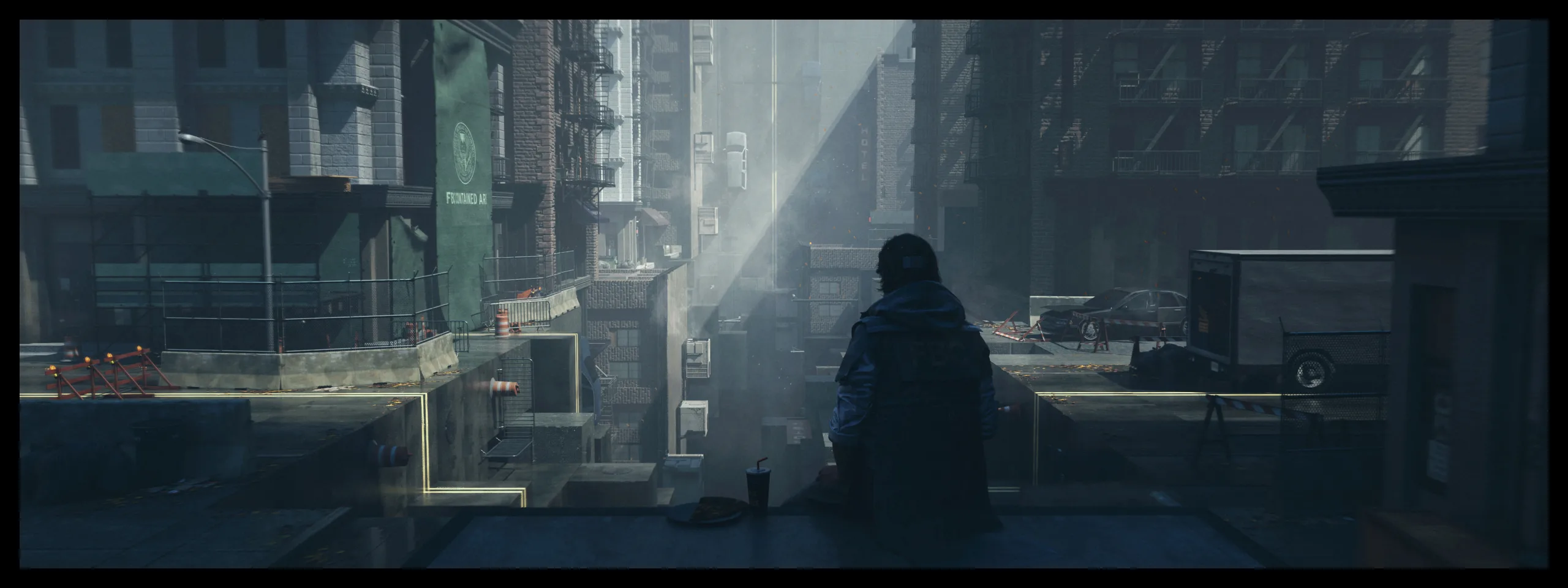
Gravity turns rooms into traversal puzzles
The Sinkhole mission began as a prototype for testing what it might feel like to move beneath the city through increasingly strange spaces. Deep-sea exploration, cave diving, and subway tunnels all fed into its visual direction, eventually producing a gravity-warped apartment building where floors, walls, and ceilings can all become part of the route.
A simple rule changed how those spaces worked. If a surface looks walkable, it should be walkable. Once Remedy established that rule, gravity changes affected both traversal and combat, forcing the team to build encounters around whatever direction the player could treat as the ground. The result is disorienting by design, but it also keeps the player focused on the space directly ahead.
Boss fights begin with behavior and space
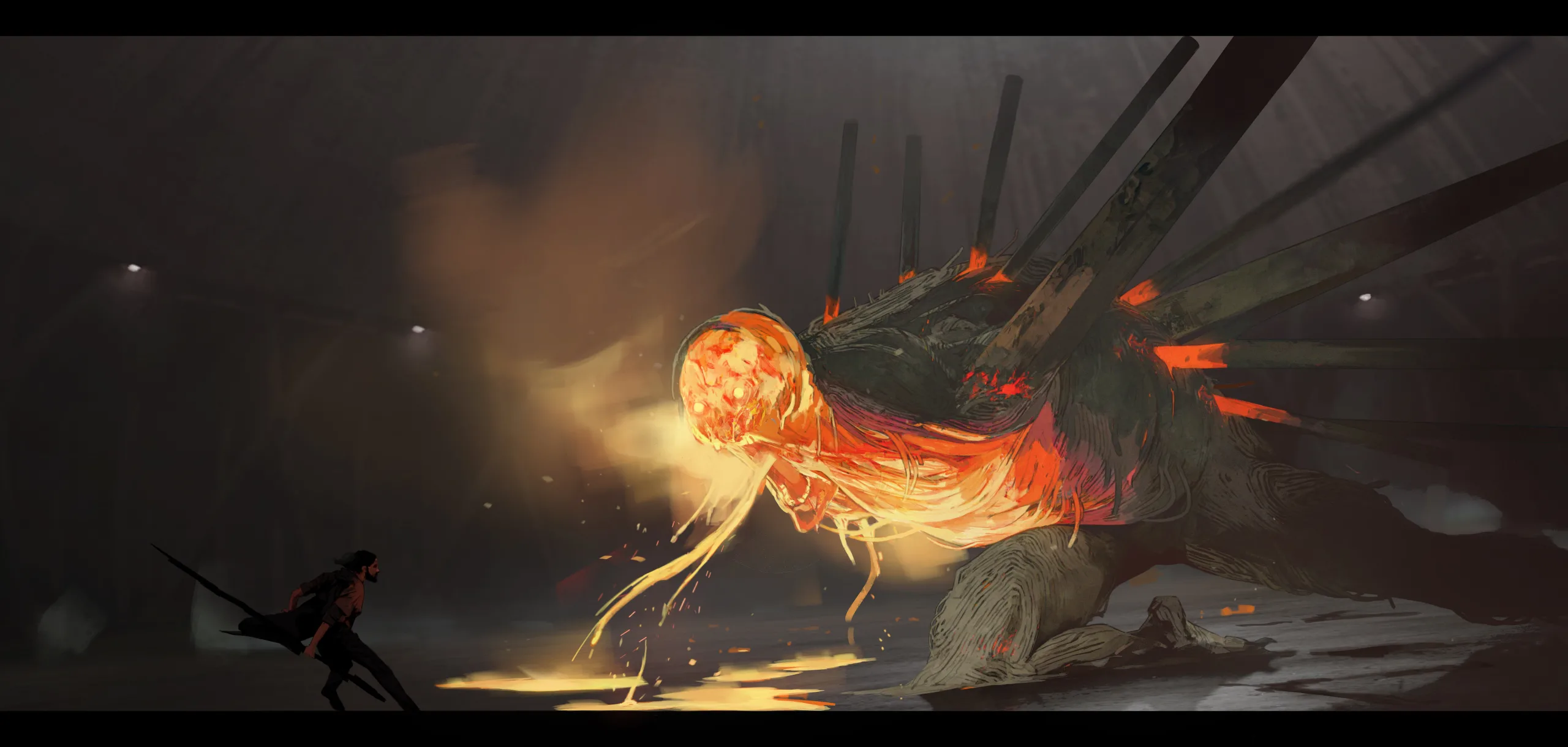
Resonant bosses were designed as skill checks, but their creation started long before the final creatures received their visual identities. The team collected ideas from across Remedy, chose concepts that matched the intended player experience, and built prototypes to determine how much room each encounter required. Designers then documented the behavior before concept artists and writers worked out how the boss should fit its zone, theme, and identity.
Each Resonant boss follows a central idea, including forms of control inspired by mycelium or a hive mind. Medieval iconography and church architecture helped the team pursue a sense of awe and something almost divine, while the surrounding arena gave each encounter a specific visual home. The Deserter, for example, occupies a transformed factory built around its encounter.
PlayStation 5 carries more of the world at once
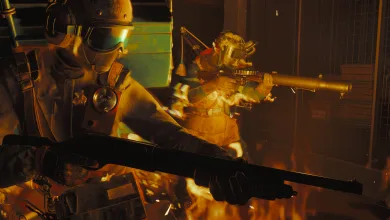
PlayStation 5 hardware allowed Remedy to push the sequel beyond the tighter spaces of the original game. The team aimed for longer draw distances, more physics objects, and more enemies on screen. Mohov also said one zone in Control Resonant is larger than any zone in the studio’s previous games.
The DualSense controller adds another layer to that design. Radio calls can come through the controller’s built-in speaker, while Adaptive Trigger resistance and an extra click give abilities a physical response. Those signals let players feel the force of an action without constantly checking Dylan’s interface during combat.
Tell us which detail stands out most to you, from Dylan’s awkward movement to the boss arenas built around specific spaces. Follow us on X, Bluesky, YouTube, Instagram, Steam, and Telegram.
Control Resonant
Developed by Remedy Entertainment
Explore a warped Manhattan on the brink of paranatural annihilation in this thrilling action-adventure RPG. Unleash the extraordinary powers of Dylan Faden as he fights for his humanity and survival against a reality-bending cosmic threat.
- Genre Role-playing (RPG), Hack and slash/Beat 'em up, Adventure
- Platforms Xbox Series X|S, PC (Microsoft Windows), PlayStation 5, Mac
- Perspective Third person
- Modes Single player
- Release September 24, 2026
- Publisher Remedy Entertainment
-
Age Rating