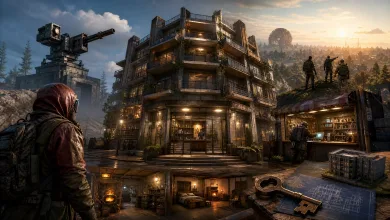
Rust’s Breach and Clear Update Will Add Monument Blockers and a Group Upkeep Tax
The update will also rework vehicle handling, expose damaged Attack Helicopter armor, add a Medical Honey Bandage, and target server performance.


Rust’s Breach and Clear update will make early-wipe monument runs harder to rush while giving large groups a new upkeep problem to manage. Facepunch has also detailed changes to helicopters, armored HABs, modular cars, drones, server events, memory use, and several everyday items.
Monument blockers will slow early access
Red keycard puzzle rooms at monuments will receive new blockers designed to delay the first players reaching their loot. The tougher versions will require heavy damage to destroy and will stay gone once removed. Some weaker blockers can be broken with melee attacks.

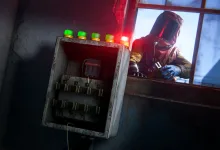
Facepunch does not expect the change to greatly slow overall progression. However, blockers that survive the first 24 hours will begin to decay, giving early joiners a reason to deal with them before they disappear on their own.
Large bases will pay more for upkeep
Tool Cupboards will begin applying an extra upkeep tax based on the number of players connected to a base. The count includes players directly authorized on the cupboard, players deauthorized within the previous 24 hours, anyone authorized on a code lock including guest access, and players recently removed from a code lock.
The first 4 players are exempt. Players 5 through 10 add 2% upkeep per player, while every player after that adds 4%. A cupboard with 6 players will have 4% extra upkeep, while 12 players will add 20%. The tax can reach a maximum of 300%, and the current rate will appear when players hover over the upkeep cost in the cupboard interface.
Facepunch says the system is meant to give large groups another problem to solve without making group play impossible. Server owners will be able to adjust or disable the behavior through new ConVars in the Decay class.
Power systems, resources, and healing get new uses
High quality metal nodes and collectables will become extremely scarce finds across the island, with the Jungle offering better odds for the ore node. The Drone marketplace will also depend on the Power Plant system introduced in the earlier Power Trip update.
At least 4 active fuses will slowly charge the marketplace battery. Purchases become possible at 50% charge, and keeping at least one fuse in the Power Plant will stop the battery from losing power. If it falls below 50%, drone deliveries will shut down again. The marketplace map will show the current charge.
Workbench Level 1 will gain the Medical Honey Bandage, which sits between the regular Bandage and Medical Syringe as a healing option. It also gives players with active bee farms another use for extra honey.
Helicopter armor will fall away under fire
Attack Helicopter cockpit armor will now detach in stages as it takes damage, exposing the pilot and gunner. The left panel reaches its condition threshold at 80% and 680 HP, the right panel at 70% and 595 HP, and the front panel at 60% and 510 HP.
Armored HABs will use a similar system. Their left panel reaches its threshold at 90% and 2,250 HP, followed by the right panel at 80% and 2,000 HP, the back panel at 70% and 1,750 HP, and the front panel at 60% and 1,500 HP.
Modular cars will receive steering, turning, and suspension adjustments, along with changes intended to improve driving for players with higher latency. Pressing CTRL will activate a handbrake, allowing tighter turns, hairpins, drifts, and doughnuts.
Radwater will pass through more armor types when used in sprinklers, causing heavy radiation buildup for players wearing full kits or weaker radiation protection. Hazmats will remain a useful counter. SAM Sites will also fire faster missiles with a larger detonation area against hostile drones.
Small balance changes and visual refreshes
The Heavy Plate Helmet will suppress noise when worn, but its crafting cost will increase. Heavy Plate Jackets and Pants will now make audible movement noise. Swamp trees will provide more wood, while the Semi-Pistol will lose damage more quickly over distance and cost more to craft.
Pies will receive longer durations and recipe changes, with the Hunters pie gaining stronger bleed reduction. F1 Grenades, Bee Grenades, Molotovs, Flashbangs, and Beancans will have smaller stack sizes. The Homing Launcher will lock on for less time before it can fire.
SMG bodies will become slightly more common, while rifle bodies will appear slightly less often. Large Medkits will remove radiation in the same way as Medical Syringes, and the Composter will show how long materials need to turn into fertilizer.
The flashlight will receive a new model, higher-resolution textures, and new animations. Right-clicking will toggle it like a torch, with separate admire animations depending on whether it is on or off. Wooden arrows will also receive new fletching and updated visuals.
All 4 Wood Armor pieces will become workshop-skinnable, including the Wood Chestplate, Wood Armor Pants, Wood Armor Helmet, and Wood Armor Gloves. The Crystal Assault Rifle will arrive in 5 color variations and will show ammunition in its magazine along with parts of its internal mechanism during use. It will be available in-game and through the Rust Steam item store.
More than 70 world models will replace the burlap sack visuals used for dropped items such as electrical components and clothing. Facepunch says the replacements were built to use no more performance than the old models.
Server systems are getting a broad cleanup
Facepunch has adjusted network ranges for around 300 entities, including signs, mushrooms, and driftwood. Those objects will send network data at closer ranges, reducing client and server overhead without reducing how far away they can be rendered.
A new navmesh will be enabled on some servers for monitoring after performance, save-size, and bug fixes. Server owners can still launch with -useNewNavmesh while testing it. Players may see animals enter bases or monuments more often, while server owners should get navmesh data that saves to disk and loads during restarts. NPC navigation will use less main-thread time but more background threads.
Server event state will also survive restarts more consistently. Oil Rigs, Cargo Ship, the Patrol Helicopter, Bradley, and Satellite Crash Sites will preserve their progress, including loot and hackable locked crates that previously could vanish if a scheduled restart interrupted the event.
The painting interface will gain a brush preview that projects the current size and texture onto the object. Water Treatment Plant’s maintenance system will also be simplified. Each fully turned gearbox provides 3 hours of water flow, with both gearboxes supplying up to 6 hours. Water output will scale with tank pressure, and pipes will begin losing water across the map when that pressure runs out. More pipes will appear, while adjusted IO output should make one pipe roughly comparable to 2 pumps.
Performance work targets stutters and memory use
Facepunch has changed Rust’s PhysX setup with a new broadphase mode and BVH structures for physics queries. The new approach scales more with world changes and active players than with the total number of colliders. On one server used for comparison, the developer recorded twice the performance after the physics changes, with clients expected to see some benefit as well.
Server occlusion generation for a 4.5k world went from 44 seconds to 22 seconds in the development comparison. After accounting for other changes that saved 8 seconds, the async task work reduced the measured time from 37 seconds to 22 seconds. Facepunch plans to apply the same approach gradually because Unity’s internal synchronization can limit the gains.
Memory work includes roughly 15,000 fewer objects and about 10 MB less memory use, smaller ambient occlusion textures that save around 630 MB of VRAM, and reduced texture sizes for distant objects. Early measurements show more than 0.5 GB in total memory savings, although the result will vary by machine.
Vehicles will also use pooling rather than being destroyed and recreated whenever they leave a player’s network range. That process previously caused stutters of roughly 20 to 30 milliseconds. Player boats still need more work, but the change should reduce similar interruptions from other vehicles.
Rust’s demo tools will receive more interface fixes, including a working undo option for the dolly camera and a preview inside dolly edit mode. The sandbox panel has been redesigned and can now parent lights to players, while a curve editor allows more control over keyframes for camera speed ramps and slow passes. Players can test the new interface with demo.newui 1 in the console.
Facepunch adjusts its official server lineup
Facepunch will retire EU Primitive 2, CAN Primitive 1, and US West Primitive 1 to consolidate players. Primitive servers will still be available in those regions. EU Hardcore 1 and US East Hardcore 1 will also move from 4,250-size maps to 3,750.
Rust’s Breach and Clear update covers everything from the first locked monument room players reach after a wipe to the server systems running underneath it. Share your thoughts in the comments, and follow us on X, Bluesky, YouTube, Instagram, Steam, and Telegram.
Source: Steam
Rust
Developed by Facepunch Studios

Rust is a multiplayer survival game set on a procedurally generated island where players must manage hunger, thirst, and health while contending with hostile wildlife and other players. Starting with only a rock and torch, players gather resources, craft tools, weapons, and structures, and form or fight against clans in a persistent open world that resets on a regular wipe cycle. Originally developed as a clone of DayZ with Minecraft-style crafting elements, the game spent over four years in early access before its full release in 2018.
- Genre Shooter, Role-playing (RPG), Adventure, Indie
- Platforms PC (Microsoft Windows), Mac
- Perspective First person
- Modes Multiplayer, Co-operative, Massively Multiplayer Online (MMO)
- Release February 8, 2018
- Publisher Facepunch Studios
-
Age Rating