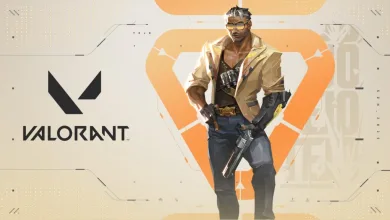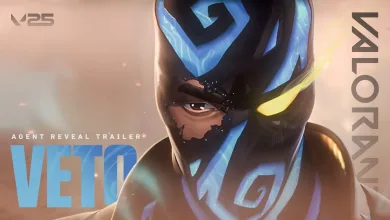
Six years after launch, Valorant is not being treated like a finished formula. Riot is still adding agents, maps, modes, and occasional weapons while trying to keep the tactical shooter and hero abilities in balance. Its developers also say the appetite for risk is stronger than it was five years ago.
That approach helps explain how Valorant held onto its place while other online shooters struggled to maintain momentum. Riot has not published player statistics, but matches remain quick to find, and the London Masters became the game’s most-watched esports event to date. Its viewership even surpassed Counter-Strike’s Cologne Major, which ran at the same time.
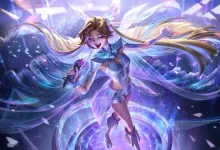
Valorant found its opening in 2020
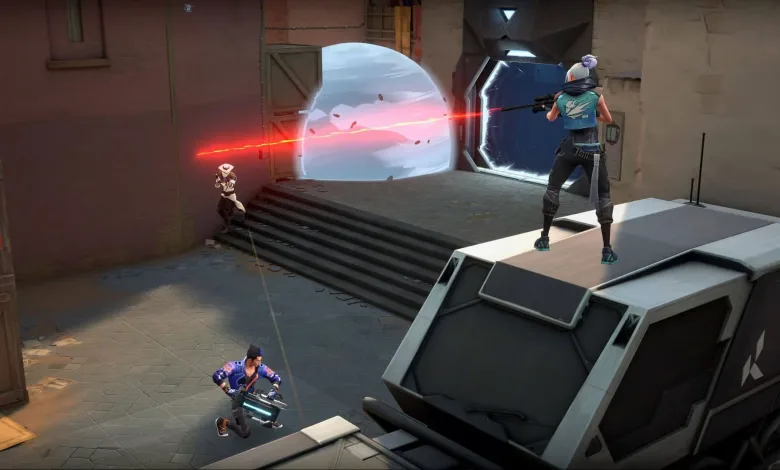
Valorant launched in 2020 with a clear blend of two familiar ideas. Its buy phase, weapon economy, and site attacks came from Counter-Strike, while selectable Agents and their abilities brought the structure of a hero shooter. Five-player teams still have to plant or defuse the Spike, but every round also asks players to account for smokes, flashes, traps, movement tools, and other character abilities.
The timing helped. Counter-Strike 2 and Overwatch 2 were not yet competing for attention in their current forms, giving Riot room to establish a new tactical shooter with a strong visual identity and a format that was easy to follow as a spectator. The game did not invent either half of its formula, but the combination gave it a lane of its own.
Riot then kept the flow of new content measured. The roster grew from 10 original Agents, or 11 when Reyna is counted, to 29. That means 18 additions across six years, roughly three Agents per year. Maps and modes have joined that cadence, while new weapons have remained much less common.
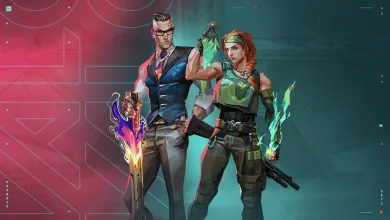
A slower cadence gives Riot time to make each Agent feel distinct, even when familiar mechanics repeat. Viper’s toxic clouds, Skye’s hawk-shaped flashes, Reyna’s life-stealing abilities, and Clove’s fairy-like presentation all occupy different spaces in the game’s identity. The art direction does its share of the work too, using bright comic-book styling to make the roster recognizable beyond its abilities.
Riot is still trying to keep the rules understandable
Keeping a character-driven shooter balanced is a constant problem. Neon dominated parts of 2025 and 2026, while Chamber’s launch state remains a painful memory for many players. The game also had a rough stretch in 2026, including Cypher cameras firing darts again, Omen smokes failing to work correctly, and Waylay and Neon being disabled more than once.
Riot’s response is built around giving each character a clear role rather than allowing every Agent to do everything. In an interview published by PCGamesN, Lead Agent Designer Dan ‘penguin’ Hardison said the team gives each character a defined place in the game’s ecosystem so players can learn what to expect. He also described frustration as a normal part of play, with Riot focused on adapting over time.
That does not promise perfect balance. It does give players a framework for understanding why a character is useful, where an ability belongs, and when a problem has gone too far. For a game with hundreds of small interactions between Agents, weapons, and maps, keeping those rules legible may be more important than making every round feel perfectly fair.
Esports keeps Valorant connected to its everyday matches
Competitive play is not an accessory attached to Valorant after the fact. Bill Pan, Valorant Esports’ Head of Product Strategy, told PCGamesN that esports had always been central to what the game was meant to be. The professional scene gives the game’s mechanics a stage, while ordinary matches let players chase a smaller version of the same pressure.
That competitive reach extends below the biggest international events. Early 2026 results in Valorant’s Tier 2 scene have tested the gap between Challengers and VCT, showing how much attention the wider competitive pipeline now receives.
Riot’s long-term pitch is simple enough. Hardison said Valorant should be a game players can spend hundreds of hours with, and the studio intends to support it over the long term, much as it has supported League of Legends. Tsay put the more adventurous part of that plan plainly: “We still have the same appetite for risk and innovation that we did five years ago – in fact, we probably have even more.”
There is no guarantee that every experiment will work. New Agents can create balance headaches, technical bugs can damage confidence, and even a strong competitive circuit cannot force players to stay forever. Valorant has lasted because Riot keeps adding reasons to return without abandoning the tactical foundation that made the game recognizable in the first place.
Tell us what you think about Riot’s approach in the comments, and follow us on X, Bluesky, YouTube, Instagram, Steam, and Telegram.
Valorant
Developed by Riot Games
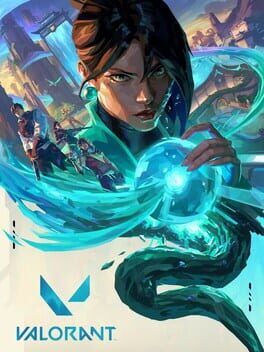
Valorant is a character-based 5v5 tactical shooter set on the global stage. Outwit, outplay, and outshine your competition with tactical abilities, precise gunplay, and adaptive teamwork.
- Genre Shooter, Tactical
- Platforms Xbox Series X|S, PC (Microsoft Windows), PlayStation 5
- Perspective First person
- Modes Multiplayer
- Release June 2, 2020
- Publisher Riot Games
-
Age Rating