Game Freak Built Pokémon Champions to Keep Classic Battles Going
A Game Freak development video details the roles of Game Freak and Pokémon Works, faster team preparation, visible battle probabilities, automatic team building, and the goal of preserving classic battles.

Pokémon Champions was created to give the series’ familiar battle system a long-term home, even as future mainline Pokémon games continue trying different ideas. Game Freak explained that goal in a new development video featuring Shigeki Morimoto and co-director Kazumasa Iwao.
The discussion was released during the temporary return of Game Freak’s official YouTube channel for the company’s 30th anniversary. Alongside the game’s origins, the developers discussed faster battles, ready-to-use Pokémon, clearer probability information, and the work involved in making competitive battling easier to enter.
Pokémon Champions gives classic battles their own home
Pokémon battles have followed variations of the same core rules since Pokémon Red and Green. For players who have spent years building teams and battling under that system, replacing it outright would mean leaving a familiar part of the series behind.
Recent games showed Game Freak why a separate home for that format could be useful. Pokémon Legends: Arceus and Pokémon Legends: Z-A moved away from the familiar battle structure, but telling longtime fans to simply accept a new system did not feel right to the developers. Iwao said one goal was to give players who had been enjoying the existing style of Pokémon battle for decades a place where it would remain available.
Game Freak also wanted the mainline games to keep changing without being forced to preserve every part of the older battle structure. Iwao described the tension behind that decision: “There has always been a concern at Game Freak, and we want to try new challenges in the series, but at the same time, we don’t want to abandon the battle system that has been around until now.”
Its answer was a separate game built around the established system, allowing it to continue for players who want that style of Pokémon battle. The explanation comes as Champions’ battle restrictions have drawn criticism at launch, making the game’s available rules and options a major part of the conversation.
Game Freak’s next mainline Pokémon games, Pokémon Winds and Pokémon Waves, are scheduled for sometime in 2027 on Nintendo Switch 2. Neither game has an exact release date, and Game Freak has not confirmed whether it will use traditional turn-based battles or another approach. Pokémon Champions may remain the clearest place for players who want the older battle format.
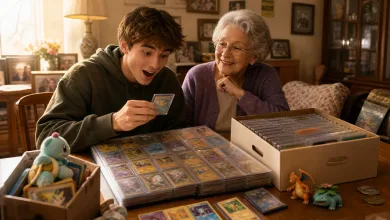
Morimoto added a more personal reason with a joke about needing somewhere to battle in old age. The original proposal reportedly included photos of Morimoto and Hoshino to represent the kind of players the game was meant to serve. Morimoto said he wanted to make something he could keep playing himself, and his habit of putting thousands of battles into Pokémon games suggests he found the right project.
Game Freak set the direction while Pokémon Works made the game
Game Freak began with the concept for Pokémon Champions and defined the type of experience it wanted to create. Its work included documentation and direction covering areas such as balance, battle programming, and presentation.
Pokémon Works handled the game’s development as the project moved into production. Game Freak then took on a wider supervisory role, helping guide the implementation while Pokémon Works built the experience itself.
That arrangement helps explain why Pokémon Champions can feel closely connected to the main series while being developed outside Game Freak’s own studio.
Champions is becoming the competitive standard
Pokémon Champions arrived on Nintendo Switch in April and on mobile in June. Players can bring Pokémon from the main series into battles against other players, then adjust their Pokémon’s stats through the game’s own systems.
The Pokémon Company has said Pokémon Champions will be used for competitive Pokémon play going forward, even after newer games in the series release. The 2026 Pokémon World Championships in San Francisco are scheduled to use Champions as the official game for the Pokémon Video Game Championships.
Ready-to-battle Pokémon cut out the long setup
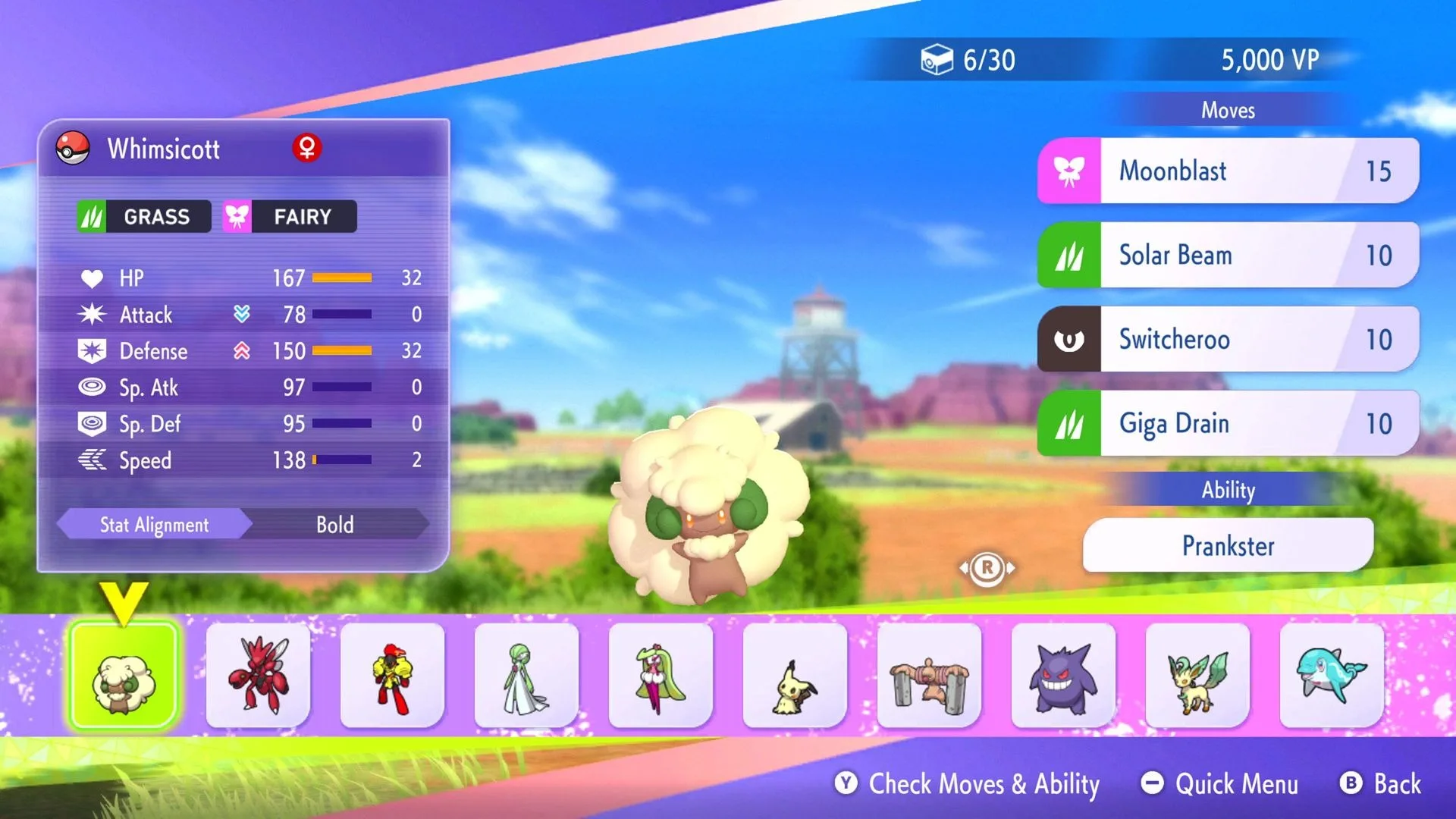
In a regular Pokémon adventure, training, leveling, and raising a team are part of the journey. Champions treats battling as the main event, so the developers did not want preparation to become a wall between players and their next match.
Players can scout Pokémon that are already prepared for battle instead of spending a long time raising every team member from the beginning. Removing much of that training loop created another challenge: Game Freak had to find a new reason for players to keep coming back when traditional team progression was no longer the center of the experience.
Morimoto described working out that cycle as one of the hardest parts of the project. The payoff is a much shorter route from seeing an interesting strategy to trying it in a battle. He said he can sometimes play 40 to 50 battles in a day, examine the moves other players use, and quickly build a team around a new idea.
Shorter animations keep matches moving
The push toward faster battles reaches beyond team preparation. The developers reviewed attack effects, battle messages, and the user interface to reduce the time players spend waiting between decisions.
Champions can show animations and information at the same time instead of presenting each part one after another. The result is a battle flow built around making choices and reacting to the opponent, rather than watching long pauses between actions.
Battle odds are shown as numbers
Game Freak also wanted Champions to be more direct about information that older Pokémon games often describe with vague wording. Instead of relying on phrases such as an attack being “likely” to hit, the game displays numerical probabilities.
That choice fits the game’s competitive focus. Players can see the odds behind a situation and make decisions with a clearer understanding of what may happen, rather than having to interpret broad descriptions.
Champions takes its arena style from real tournaments
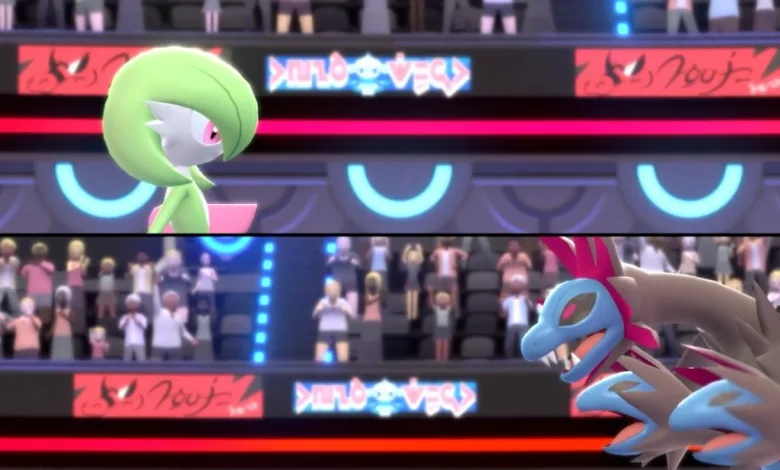
The game’s presentation was shaped by the Pokémon Japan Championships and Pokémon World Championships. Game Freak imagined a world where battling is a sport that people regularly play and watch, which led the team toward a more dramatic event-style setting.
That direction separates Champions from Pokémon Sword and Shield, where matches were presented as bright stadium spectacles. Champions uses darker arenas, strong lighting, and the atmosphere of an entertainment fighting event.
Actual Pokémon tournaments were part of the reference point. Matches at PJCS and WCS are shown on large screens in dark venues, and the team wanted Champions to remain visually clear when viewed in a similar environment.
Game Freak has a team dedicated to Pokémon battle design
Morimoto also discussed how Game Freak decides what individual Pokémon can do. An internal team handles abilities, learnable moves, and other battle-related settings, including choices such as the Ability given to a Mega-Evolved Pokémon.
Team members often take responsibility for Pokémon they know particularly well. More than one developer may want to work on the same Pokémon, leading to arguments over who understands it best before the group compares its ideas and reaches a decision.
Automatic teams give new players a starting point
Competitive Pokémon can be intimidating at first. There are hundreds of possible team members, countless move choices, and plenty of details that are difficult to understand before playing a single match.
Pokémon Champions includes an automatic team-building feature for players who do not know where to begin. It can get a new player into battle first, leaving room to learn through testing, losses, adjustments, and rematches.
If an opposing Pokémon causes trouble, players can change their team or moves without repeating a long training process. Iwao described the intended focus as spending time on team building and battling, rather than preparing a team before the real game begins.
Pokémon HOME is not required for high-level teams
Morimoto said he has not connected Pokémon HOME to his copy of Champions. Instead, he has built teams using Pokémon obtained through the game’s scouting system.
He also said players can reach high ranks with Pokémon found this way. That gives Champions a lower barrier between having a team idea and putting it into practice, while also giving players a reason to try Pokémon they might otherwise overlook.
Game Freak’s explanation makes Pokémon Champions sound less like a side battle mode and more like a permanent competitive home for the series’ core battle rules. Tell us what you think in the comments, and keep up with CPG on X, Bluesky, YouTube, Instagram, Steam, and Telegram.
Pokémon Champions
Developed by The Pokémon Works
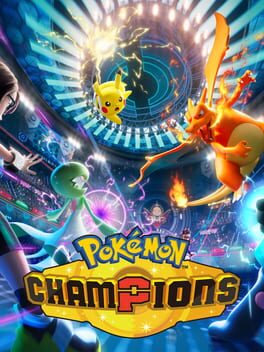
Get ready to experience everything you love about Pokémon battles all in one place—in Pokémon Champions. This new, battle-focused game will feature familiar mechanics such as Pokémon types, Abilities, and moves, creating an environment conducive to rich and varied strategies for new and experienced Trainers alike. It’s not just familiar mechanics—you’ll be able to bring in classic Pokémon from Pokémon HOME, too! Look forward to cross-platform battles alongside your favorite Pokémon on Nintendo Switch and mobile, with a variety of different modes available for your desired experience.
- Genre Fighting, Role-playing (RPG), Strategy
- Platforms Nintendo Switch 2, Android, iOS, Nintendo Switch
- Perspective Third person
- Modes Single player, Multiplayer
- Release April 8, 2026
- Publisher The Pokémon Company, Nintendo
-
Age Rating