War Thunder’s Next Dev Server Will Test 3 Tank Steering Systems
Double differential and dual transmission are planned for testing, while planetary steering may reach the Eagle's Shadow update and turboshaft tanks will get revised torque curves.

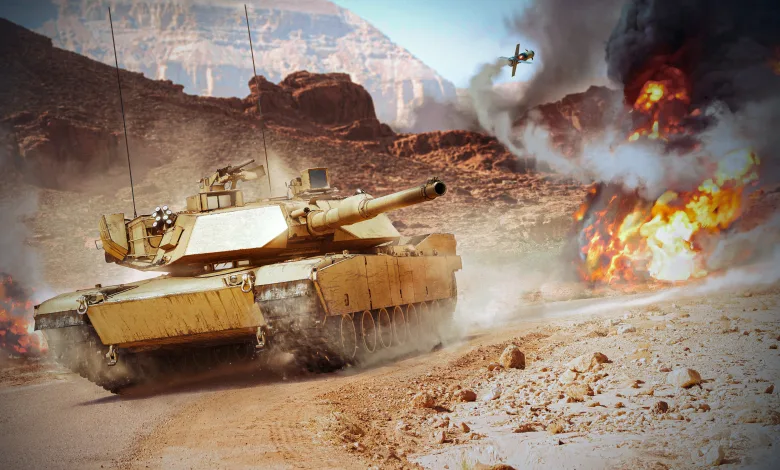
War Thunder’s next Eagle’s Shadow dev server will test 3 tracked-vehicle steering systems, each with different trade-offs in turning radius, speed, and control. Gaijin’s Steam announcement also outlines revised turboshaft engine behavior planned for the major update. Gaijin had said more ground-vehicle turning and mobility details would follow when it outlined damageable modules, manual autoloader reloading and APUs in its ground-vehicle systems announcement.
Double differential steering and dual transmission will be tested but are not planned for the Eagle’s Shadow update. Planetary steering may be included if testing goes well. The engine changes, which are intended to improve vehicle performance across situations, are planned for the update.
Steering systems change the cost of a turn
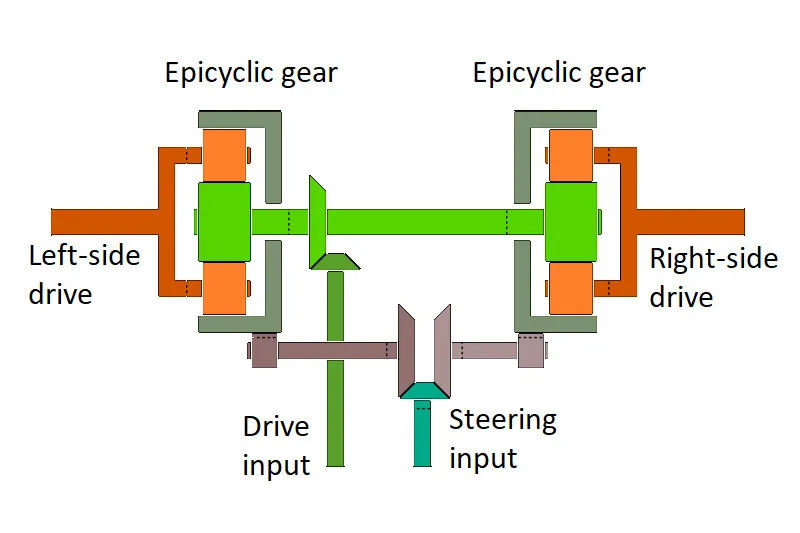
With double differential steering, engine power reaches the tracks through both the gearbox and a steering differential. The system changes the relative speeds of the two tracks, helping tanks retain speed through turns. The trade-off is a larger minimum turning radius than with side gearboxes or planetary steering, and some tanks may take longer to pivot in place. For the M1A1, the stated turning radius grows from 5.8 meters in first gear to 26.9 meters in fourth.
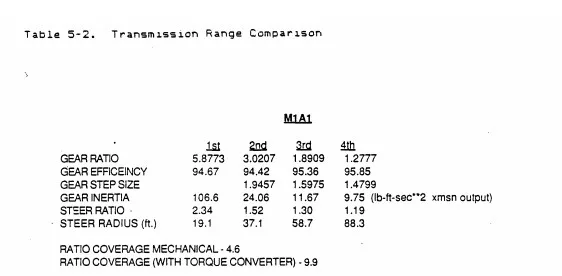
Double differential systems do not allow a driver to brake each track independently. Gaijin has added a different way to tighten a turn: pressing the brake or reverse key while turning triggers a downshift. Players can test the mechanic on M1 Abrams variants, TKX, Type 10, Type 90, AMX-32, and vehicles based on the AMX-30 and Leopard 2 platforms. The Leopard 2K is excluded so players can compare its handling with other vehicles in the family.
Dual transmission steering gives each track its own gearbox. During a turn, the gearbox on the inner track shifts down, at most one gear below the outer track. Slipping clutches can engage neighboring gears partially, producing a smoother turn. Turning radius varies by gear: the short ratios on the T-64 and T-72 can produce wider turns in third and fourth gear than in higher gears, while the T-80’s longer ratios do not follow that pattern. The cited figures are theoretical and may not account for track slip or vehicle inertia. The downshift feature will also apply to this system, which is planned for testing across T-64, T-72, T-80, T-90, and related vehicles.
Planetary steering responds to how sharply a player turns. A brief key tap or small controller movement engages a reduction gear on the inner track for a wide turn. Holding the turn key or making a larger controller input applies the clutch and brake for a tighter turn. A pivot always turns around the stopped track. This system permits independent braking of each track, and its reduction gear keeps the turning radius consistent across selected gears, but it does not prevent speed loss during a turn. Gaijin points to the T-54 and T-44 as examples for comparing vehicles with and without the mechanic.
Turboshaft tanks will use revised torque curves
Gaijin plans to model turboshaft engines with a more accurate full-throttle torque curve. These engines produce high torque at low engine speeds, then lose torque as speed rises. The revised curve will remove intermediate gears that had been used to approximate engine and transmission behavior.
The change will affect tanks equipped with turboshaft engines and torque converters. Gaijin says the torque converter mechanic itself is planned for a later update.
Which steering trade-off sounds most useful to you, speed through a wide turn, a tighter turn under braking, or smoother steering? For more on the handling changes planned for Eagle’s Shadow, follow the updates on X, Bluesky, YouTube, Instagram, Steam, and Telegram.
War Thunder
Developed by Gaijin Entertainment
War Thunder is a free-to-play vehicular combat MMO featuring aircraft, ground vehicles, and naval craft spanning from the early 20th century to the modern era. Players progress through technology trees across multiple nations, unlocking increasingly advanced military vehicles. The game offers three realism tiers for each vehicle type: arcade, realistic, and simulator modes. Originally developed as a flight simulator under the name "World of Planes," the game expanded to include tanks in 2014 and naval forces later, becoming a combined-arms experience. A mobile version was released in 2023.
- Genre Shooter, Simulator, Tactical
- Platforms Xbox Series X|S, PlayStation 4, Linux, PC (Microsoft Windows), PlayStation 5, Mac, Xbox One
- Perspective First person, Third person, Virtual Reality
- Modes Single player, Multiplayer, Co-operative, Massively Multiplayer Online (MMO)
- Release January 28, 2013
- Publisher Gaijin Entertainment
-
Age Rating