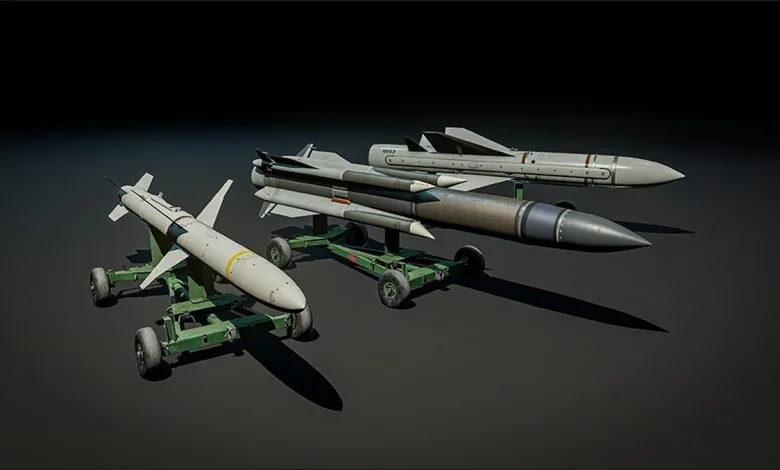
Gaijin Entertainment has outlined the next tools coming to War Thunder in the Heavy Cavalry major update, and the big additions are anti-radiation missiles, or ARMs, plus electronic support measures, known as ESM. The two systems are meant to give aircraft a way to pressure radar-based defenses instead of relying on a straight missile trade.
ARMs work differently from the missiles most players are used to. Rather than chasing reflected radar energy, they home in on the radar emission itself, which means they are built to track the source of a beam from SPAA units, ships, and, in rarer cases, aircraft. Gaijin said the new in-game missiles will be tuned to specific radar bands, with stat cards listing the wavelengths and the hover tooltip showing which vehicles emit in that range.
The studio also said these missiles are not a simple fire-and-forget answer. Many of them will use a proximity fuze to make up for the fact that radar signals can be intermittent and their reflections can be messy, but that can also make it harder to hurt armored targets. Players will also be able to switch the proximity fuze off, which restores precision concerns.
Heavy Cavalry will bring a wide set of ARM options across several nations. The list includes the US AGM-88 HARM A and C, the AGM-122 based on the AIM-9C, the Anglo-French AS-37 ARMAT, the British ALARM, the Chinese YJ-91, CM-120, and LD-10, and the Soviet Kh-27PS, several Kh-58 variants, and the Kh-31 family. Gaijin said the Kh-31 series will be the first missiles in the game with a ramjet engine.
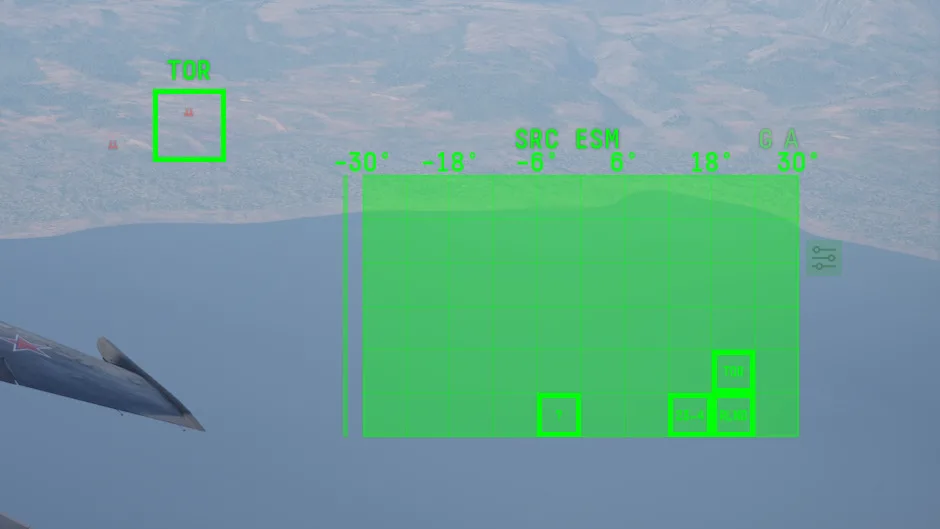
ESM will serve as the other half of the system. Instead of the usual radar indicator, players will get a sector-based display that shows detected emitters, their signal strength, and coordinates, while some systems can also identify the type of threat. Gaijin said ESM can come in pod form, be tied directly to anti-radiation missiles, or be built into an aircraft’s own systems.
The studio is already thinking ahead, too. It said it will focus first on more advanced missiles that can be guided by ESM and, where possible, seekers with wider coverage, but it left the door open for older weapons like the AGM-45 Shrike if the new additions perform well in-game. Some missiles can use lock-on-after-launch modes in real life, but Gaijin said in-game use will stay limited to known signal sources because allied and enemy emitters often sit close together in combined battles.
War Thunder players should have a lot to test once Heavy Cavalry lands, especially if they enjoy hunting radar systems from a distance. Tell us what you think in the comments, and follow us on X, Bluesky, YouTube, Instagram.
Source: Steam Community