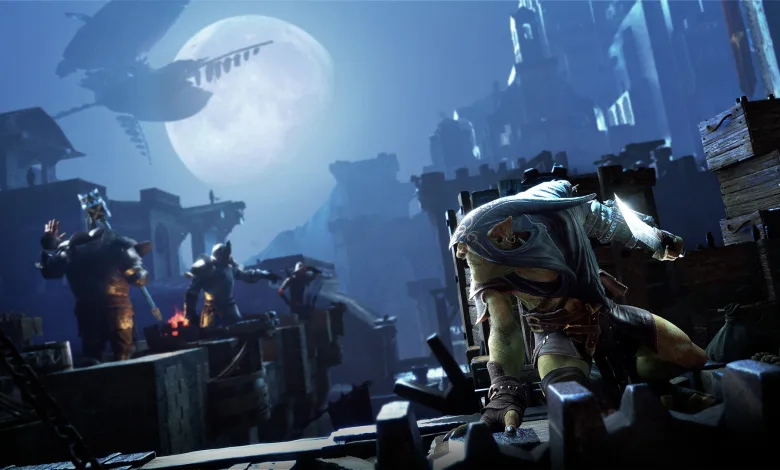
Styx: Blades of Greed is developed by Cyanide Studio and published by Nacon. The game released on February 19, 2026 and carries an ESRB rating of Mature 17+ for Blood, Drug Reference, Strong Language, and Violence.
Blades of Greed continues the goblin Styx saga. It moves away from mission-based levels into a mostly open-world structure split across three main regions named The Wall, Turquoise Dawn, and Akenash Ruins. Styx gains a new resource called Quartz that grants fresh abilities including mind control and speed boosts, expanding how players approach stealth encounters.


World and traversal
The three locations offer distinct layouts and traversal options. Many structures are climbable and verticality plays a large role. Fast travel exists but individual fast travel points must be unlocked. Exploration is dense with secrets, side missions, and collectible materials that reward revisiting areas once new tools become available.
Abilities and progression
Players get a broad toolkit of gadgets and powers for distraction and takedowns. Typical examples include throwable bottles for diversion and Quartz abilities that can manipulate enemies. New innate movement tools appear near the end of each act. For example, the glider is obtained at the end of Act II. These act-end gifts change traversal options in subsequent sections but mean many of the most versatile tools are gated until later in the story.
Story and context
The narrative picks up directly from the previous game. Returning players will recognize plot threads, while newcomers get little recap. The story largely exists to frame missions and the Quartz threat. There is a recurring mysterious voice tied to Quartz pickups, but overall the campaign functions mainly as motive to explore and steal.
Visuals
Overall presentation is a step up from earlier entries. Environments are detailed and enemy models are generally clear, which helps stealth gameplay. A specific weakness appears during the airship and glider sequences where visual quality notably drops and distant sky objects can render oddly. That degradation is most apparent during an air combat segment introduced in Act II.
Difficulty and replayability
Styx leans into challenging stealth. Even normal difficulty produces frequent deaths that encourage rethinking approaches rather than punishing the player unfairly. Enemy AI will check hiding spots and coordinate searches in some cases. On the airship hub players can freely reset ability points to experiment with different builds without penalty, supporting multiple playthroughs and varied strategies.
Bottom line Styx: Blades of Greed offers a strong stealth playground for players who enjoy vertical level design and tool-based approaches. The story and some late gating of abilities hold it back from being flawless, but the core stealth systems, variety of paths through encounters, and the ability to respec on the airship give it replay value.
Share which Styx ability you want to see tested first in the comments and follow for updates on X, Bluesky, YouTube, and Instagram.
Styx: Blades of Greed
Developed by Cyanide Studio
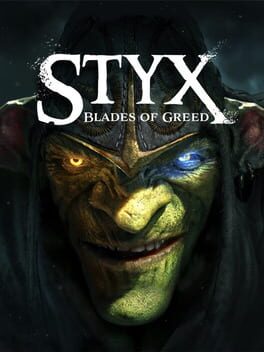
The master of stealth is back! Explore the dizzying heights of the Iserian Continent and cunningly eliminate your enemies. Thanks to your Quartz powers, you are freer than ever. Be creative: Never has it felt so good to be greedy.
- Genre: Adventure
- Platforms: Xbox Series X|S, PC (Microsoft Windows), PlayStation 5
- Modes: Single player
- Release: 2026-02-19
- Publisher: Nacon
-
Age Rating:
 ESRB M