Microsoft Flight Simulator Adds the Heinkel He 70 Blitz for $14.99
Local Legend 25 is available in the in-sim marketplaces for Microsoft Flight Simulator (2020) and Microsoft Flight Simulator 2024 with licensed Lufthansa liveries.

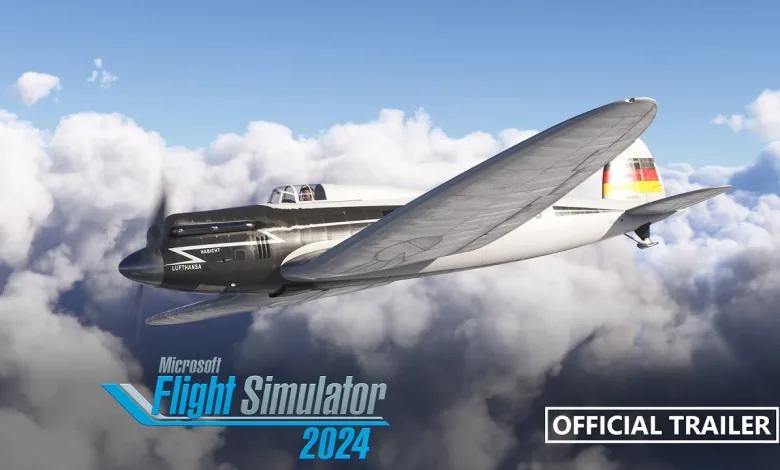
Microsoft Flight Simulator has added the Heinkel He 70 Blitz as Local Legend 25. The aircraft is available now for $14.99 in the in-sim marketplaces for both Microsoft Flight Simulator (2020) and Microsoft Flight Simulator 2024, with several historically precise liveries included. The Microsoft Flight Simulator team detailed the release in its release announcement.
The He 70 was built around one simple idea, speed. Its sleek shape helped it earn the nickname “Blitz,” which means lightning in German, and the aircraft became one of the better-known designs from aviation’s Golden Age.


The He 70 was built for fast European routes
Deutsche Luft Hansa approached Heinkel Flugzeugwerke in 1931 while looking for a faster passenger and mail aircraft for routes across Europe. Led by aviation pioneer Ernst Heinkel, the company developed a single-engine, low-wing monoplane with an elliptical wing. The project began under the He 65 designation in February 1932 before becoming the He 70.
The first He 70 took flight on December 1, 1932, and Heinkel introduced the aircraft in 1933. The He 70a V1 prototype reached 234 miles per hour during testing. Alongside the second prototype, the He 70a V2, it went on to establish eight world speed records.
Deutsche Luft Hansa used the aircraft on domestic connections between Berlin, Frankfurt, Hamburg, and Cologne, as well as on its Stuttgart to Seville route. More than 20 variants served civilian and military roles over a period of two decades. The design also formed the basis for the Heinkel He 111, which later served as both an airliner and a World War II bomber.
What made the Heinkel He 70 so quick
Heinkel used a cantilever monoplane layout, meaning the wings did not need external bracing. Trailing-edge flaps helped the elliptical wing produce aerodynamic efficiency, while a monocoque fuselage combined duralumin and steel with stressed metal skin and countersunk rivets. The retractable undercarriage was a first for German commercial aviation.
A single BMW VI V-12 piston engine produced up to 740 horsepower and drove a two-blade metal propeller. The engine used a retractable radiator filled with ethylene glycol, which was more efficient than water as a coolant. The aircraft could carry one or two crew members and up to six people in total.
The He 70 measured 38 feet, 5 inches long, stood 10 feet, 2 inches tall, and had a 48-foot, 7-inch wingspan. It had a range of 1,130 miles, a service ceiling of 20,000 feet, and a climb rate of 1,320 feet per minute. Its cruising speed reached 183 miles per hour, while the top speed was 220 miles per hour.
Local Legend 25 brings the Blitz back to the simulator
No He 70 airframes remain today. Most were destroyed during World War II, and the Spanish Air Force scrapped the last surviving aircraft in 1954. To recreate the model, the Microsoft Flight Simulator team and its partners researched original references and contacted the U.S. National Archives to digitize the aircraft’s plans.
The virtual Heinkel He 70 Blitz includes liveries tied to its historical service, including officially licensed Lufthansa designs. It gives pilots a chance to fly an aircraft that connected early commercial aviation with military reconnaissance, surveillance, and light-bombing duties.
Tell us what you think of Local Legend 25 in the comments, and follow us on X, Bluesky, YouTube, Instagram, Steam, and Telegram.
Microsoft Flight Simulator 2024
Developed by Asobo Studio

Pursue your dream of an aviation career with Microsoft Flight Simulator 2024. This brand-new simulator is designed to take advantage of the latest technologies in simulation, cloud, machine learning, graphics and gaming to create the most sophisticated, immersive and awe-inspiring flight simulator of all time. To achieve this unprecedented level of accuracy, Microsoft Flight Simulator 2024 is powered by the significantly evolved Asobo Studio engine.
- Genre Simulator
- Platforms Xbox Series X|S, PlayStation VR2, PC (Microsoft Windows), PlayStation 5
- Perspective First person, Third person, Virtual Reality
- Modes Single player, Multiplayer
- Release November 19, 2024
- Publisher Xbox Game Studios
-
Age Rating