Blade Runner 2099 Finale Saved Olwen, but Left Cora’s Fate Open
Clotilde used the memory's genetic knowledge to turn Olwen into a Nexus One, while Cora's failed test and Ray's recovery of Julius leave the finale's questions open without promising another season.

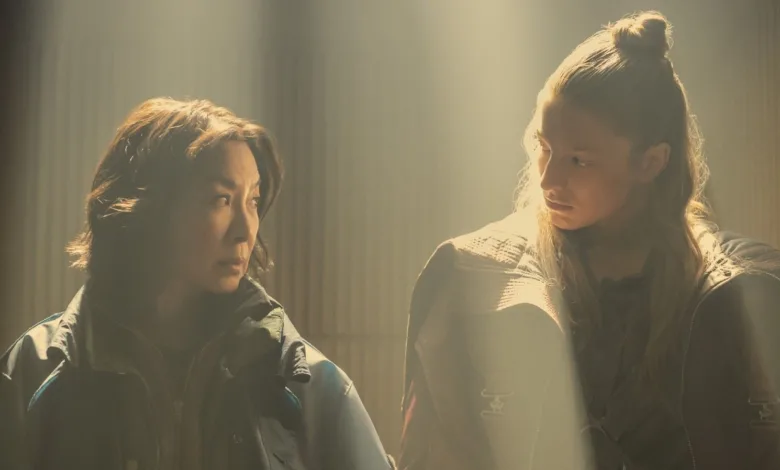
Spoilers for the Blade Runner 2099 finale.
Blade Runner 2099 ends with Olwen alive and heading off-world, while Cora’s final appearance suggests she may have become a Nexus One. Ray’s recovery of Julius’s body leaves another question hanging, but showrunner Silka Luisa says the ambiguity was intended as a conclusion in the tradition of the films, not a promise of another season.
How Olwen survived
Cora and Olwen went to the Replicant birthing center to find a memory containing the genetic origins of the Nexus One. Cora had left it there after seeing Julius push her mother, Helena, to her death. The memory held the knowledge needed to extend a Replicant’s life, and anyone who had seen it could learn how to perform the procedure.
Julius struck Cora down, crushed the memory, and claimed he was the only one who could save Olwen because he had seen it. Olwen killed him anyway. Clotilde had also seen the memory, so destroying the object did not erase what she knew. She used that knowledge to turn Olwen into a Nexus One. The finale later showed Olwen looking healthy aboard a spaceship, heading for the stars in a callback to Marek.
Tyrell’s first Nexus One pair
The memory’s genetic knowledge traces back to Eldon Tyrell’s first Replicants. On November 1, 2000, Tyrell created Julius and Helena as an Adam-and-Eve pair. They had no artificial lifespan, making them immortal, and were stronger than later models. Clotilde was already a Nexus One when she confronted Olwen at the birthing center, after Julius had rebuilt her using the memory’s procedure. Olwen joined them after Clotilde used that same knowledge to save her.
The generations put the reveal in context. Roy Batty and his fellow Replicants were Nexus-4s in the 2019-set Blade Runner, while most Replicants in 2099 are Nexus-9s. At a London press event, showrunner Silka Luisa told GamesRadar+ that the unanswered history had long interested her, describing it as “a mystery that had been intentionally left there because it hadn’t been answered.” She tied the first pair to Tyrell’s ambition, saying his expansive vision meant he would not have made “something small.”
The memory is more than a way to prolong a Replicant’s life. It contains the means to unlock restrictions meant to keep Replicants from surpassing humanity. Ray wanted it to create more Nexus Ones and make it possible to alter humans into Replicants. By 2099, Replicants are already in charge, giving that old limit a different meaning.
Did Cora become a Replicant?
The finale does not confirm Cora’s transformation outright, but its closing scene points strongly in that direction. After Julius struck her down, Cora appeared later for a Voight-Kampff empathy test with Greta. Her bright blue eyes and colder manner made her seem different, and she failed the test. Instead of letting Greta send the result to the LAPD, Cora persuaded her to restart it.
Earlier, Cora had posed as a Replicant using a serial-number tattoo. Her changed appearance and failed test suggest she may have become a Nexus One herself. The episode skips the time and procedure between Julius’s attack and her return, leaving the details unresolved.
What the finale leaves open
Ray wanted the memory to create more Nexus Ones and make it possible to turn humans into them. Near the end, he recovers Julius’s body. The scene leaves open whether Ray can repeat the procedure or what he intends to do with Julius. Elias then broadcast a false claim that the birthing center had been destroyed and urged Los Angeles residents to rise up against Replicants. Bebeto’s response to Ray’s job offer was never shown.
Luisa had described the series as a story with a clear beginning, middle, and end. In an interview with GamesRadar+, she said the writers disagreed about what happened after the films’ endings, and that the open-ended debate was part of what she wanted viewers to carry away. “The ending is meant to be a Blade Runner ending in that sense,” she said. Luisa did not commit to returning for another story, though she said that as a fan she is curious about other time periods and parts of the universe, including what is happening off-world.
Which unanswered part of the finale stayed with you most, from Cora’s final empathy test to Ray finding Julius? Follow our coverage of the series’ Replicant origins and its questions about memory and identity on X, Bluesky, YouTube, Instagram, Steam, Telegram, and Facebook.
