Call of Duty’s RICOCHET Team Details Its Fight Against an $8.5 Billion Cheat Economy
The anti-cheat team says it has disrupted more than 375 reseller operations, issued over 80 cease-and-desist demands, and helped shut down 31 primary vendors.

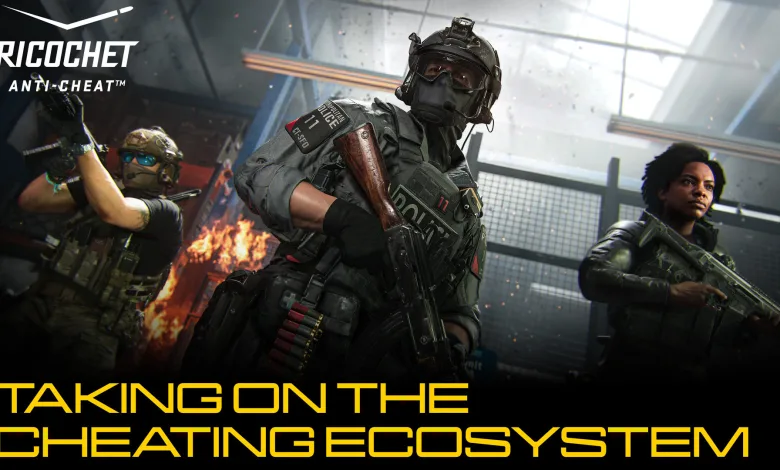
Call of Duty’s cheating problem extends far beyond someone loading an aimbot before a match. Cheat subscriptions, stolen accounts, spoofing tools, resellers, and support networks have formed a global business, and the RICOCHET Anti-Cheat team is now explaining how it plans to attack that structure. Its official breakdown of the cheating ecosystem frames enforcement as a fight against an entire supply chain rather than individual accounts.
Threat intelligence platform Intorqa estimated that subscriptions across 15 games generate roughly $3.5 billion each year. When account sales, boosting, spoofing, and related services are included, the broader cheating economy could reach about $8.5 billion annually. That figure covers the wider gaming market, not Call of Duty alone, but it shows why ordinary account bans cannot solve the problem by themselves.


RICOCHET is targeting the businesses behind the cheats
RICOCHET says it has disrupted more than 375 reseller operations, issued more than 80 cease-and-desist demands, and helped shut down 31 primary cheat vendors. The updated vendor figure is one higher than the 30 shutdowns previously reported.
Legal action puts pressure on the money, payment channels, and relationships that keep these services operating. Developers often stay away from direct customers and rely on primary vendors, resellers, and support teams to distribute their products. That structure can make the market look larger and more varied than it really is, since the same cheat may appear under several names or storefronts.
RICOCHET combines technical detections, behavioral analysis, account security, TPM 2.0 enforcement, device checks, investigations, and legal pressure. Each layer targets a different part of the operation, including the software itself, replacement accounts, hardware-based evasion, and the people selling access.
Cheats, accounts, and evasion form a connected market
Cheats remain the most visible part of the system. Aimbots, wallhacks, rage cheats, unlock tools, DMA hardware, and external devices such as Cronus, XIM, and Titan are sold through weekly, monthly, and premium subscriptions. Technical systems look for unauthorized software interacting with the game, while behavioral systems study patterns over time that can point to automated assistance.
Account sellers keep the market moving after enforcement removes a player. Stolen accounts, aged accounts, Ranked Play-ready accounts, and boosting services all exist to provide another way back into the game. RICOCHET says two-factor authentication helps protect legitimate players while reducing the supply of disposable or compromised accounts.
Device security adds another barrier. TPM 2.0, Secure Boot, and Remote Attestation can verify the integrity of a PC before a match starts, forcing repeat offenders toward more expensive hardware and services. The team also said it issued more than 70,000 new hardware bans in August, while updated protections such as Microsoft Azure Attestation are aimed at spoofers and other evasion tools.
Account theft also affects players outside the cheating market. Research cited by the Consumer Financial Protection Bureau surveyed 10,000 gamers globally and found that one in three said their gaming account had been hacked within the previous two years.
Resellers create false variety and added risk
Many cheat storefronts do not represent separate products. Resellers can reuse, modify, or steal code and sell it under a new brand, which fragments discussions about detections and gives failed services a chance to reappear under another name. Some vendors also disappear after collecting payments, then return later with a new identity.
Customers face risks beyond losing access to a game. Cheat communities may require account verification before granting access to downloads or private forums, exposing IP addresses, linked Discord accounts, hardware information, email addresses, and payment details. Some sellers even request photo identification, while malicious software can be hidden inside the products themselves.
Cheating can cost more than $1,000 per year
RICOCHET says cheat subscriptions cost around $40 per month on average and can exceed $100 at the higher end. Spoofers, replacement accounts, and DMA-related hardware add their own fees, meaning one player can spend more than $1,000 over a year just to keep cheating.
That cost is part of the strategy. By combining account restrictions, device checks, detections, and legal action, RICOCHET is trying to make the entire cycle harder to maintain. A provider going offline or a repeat offender failing to return is not always an isolated outage. It can indicate pressure moving through several connected parts of the business.
Do you think attacking cheat sellers and resellers will have a bigger impact than account bans alone? Share your view in the comments, and follow us on X, Bluesky, YouTube, Instagram, Steam, and Telegram.