Escape from Tarkov’s Best Beginner Lesson Is Knowing When Not to Fight
A veteran player with roughly 3,000 hours in Tarkov argues that planning, restraint, and deliberate practice matter more than chasing every fight.

Escape from Tarkov teaches new players to worry about guns, ammo, and loot, but a veteran player’s central lesson is less flashy. Decide what the raid is for, then make every fight serve that plan. Sometimes the smartest play is to hold position, leave a squad alone, or extract with less loot than you hoped to find. The guidance is not presented as a rulebook. It focuses on the decision-making that sits underneath every raid.
Give every raid a purpose
Loading into a map without a plan makes every sound and sightline feel like an invitation. A better approach is to decide what the raid needs to accomplish before the countdown ends, then prepare a fallback for when the first plan collapses.
- Primary objective: Choose the quest, item, extraction, or activity that gives the raid its purpose.
- Fallback: Decide what you will do if the route is blocked, the item is gone, or an early fight changes the situation.
- Fight conditions: Know what would make a fight worth taking and what would make leaving the better choice.
- Exit threshold: Decide when the loot or progress already secured is enough to justify extracting.
Raid success is not measured by how much noise happened. A 40-minute raid with one shot fired can be a good run if it completes the objective. An eight-minute raid with five kills can also be good. The result depends on what you entered the raid to do.
Make combat a choice
Every fight costs time, position, ammunition, health, and attention. If you are carrying quest items and hear a squad approaching, letting them pass can be the correct play. A body, an airdrop, or a nearby firefight is not automatically worth the risk attached to it.
Patience does not mean hiding until the raid ends. You might wait 15 minutes for a situation to develop, then push hard for the next 30 seconds when the opening appears. Holding a position can be active decision-making, provided you are waiting for a reason rather than hoping the problem disappears.
There is also no need to copy the pace of streamers. Their job often rewards constant action and dramatic fights. A player trying to finish a task or bring gear home has different incentives. Tarkov does not require one high-level playstyle, so a careful route and a fast assault can both be correct when they fit the objective.
Build knowledge instead of relying on gear
A stronger kit improves your odds, but it cannot replace experience. The player with the better weapon may still lose to someone who knows the spawn locations, timings, rotations, sightlines, audio cues, extracts, quest areas, ammunition, boss behavior, and common routes.
That difference can be difficult to see after a death. New players notice the bullet that killed them, while an experienced player may have made several decisions in the previous two minutes that created the shot. Learning those decisions is more useful than deciding that a new scope or armor vest would have solved everything.
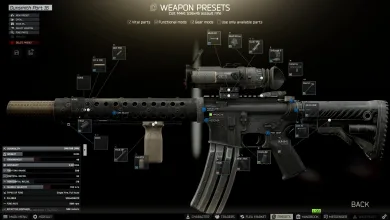
Good gear should be used when it is available, but it should remain a tool. A bad kit does not make a raid pointless, and an expensive kit does not make a player invincible.
Use Arena and Scavs with a purpose
Arena can provide focused gunfight practice. If close-quarters combat is the weak point, seek out that kind of fight. If fighting another player still feels like a rare event, more player encounters can make the situation feel less unusual. Aim is one skill, though, while Tarkov decision-making is another.
Scav runs also have a clear place, especially when money is tight or a specific found-in-raid item is needed. They should solve a problem rather than become an automatic safety net after every PMC death. Every 30 minutes spent on a Scav is 30 minutes your PMC is not gaining experience, skills, quest progress, or other progression.
That does not make Scav runs bad. It means they should support the PMC instead of replacing it. Use the free opportunity when it fills a need, then return to the character whose progression carries the larger share of your goals.
Let failed raids stay in the past
Three failed attempts at one quest are a good point to change direction. Loot another map, work on a different task, look for PvP, or help a friend. Tarkov becomes exhausting when one objective is allowed to consume an entire session.
Not every death needs a villain, either. Start by asking what could have been done differently, then accept that the other player may simply have made the better decision. Bad audio, server problems, an unlucky Scav, an extract camper, or a cheater can all be part of a raid’s outcome. Reporting a suspected cheater and moving on protects more of your time than investigating the player’s profile for another hour.
Time invested in a raid does not guarantee an extraction. Thirty-five minutes, three PMC kills, and a GPU still amount to nothing in the stash until the character gets home. Tarkov can take the reward at the last moment, so the safest decision may come after the most successful part of the run.
Progress means becoming the player you fear
Eventually, map knowledge and repeated decisions become automatic. The level 50 player who seemed to know your position before you did may have recognized a spawn, timing, or route you had not learned yet. Keep playing and those same patterns become part of your own judgment.
One day, a newer player may wonder how you knew they were there. That is a clearer sign of progress than simply owning a better weapon. Tarkov is a long series of decisions about risk, time, position, and objectives. You do not need to win every fight, take every fight, or make every raid action-packed. You need to understand why you are choosing one path over another.
Which Tarkov rule has helped you survive the most raids? Share your thoughts in the comments, and follow us on X, Bluesky, YouTube, Instagram, Steam, and Telegram for more coverage.
Escape from Tarkov
Developed by Battlestate Games