Halloween: The Game Earns an 8.5/10 Before Its September 8 Launch
The 1-vs.-4 matches give survivors a second mission, rescuing Haddonfield residents, but rough NPC behavior and long post-death minigames interrupt the tension.

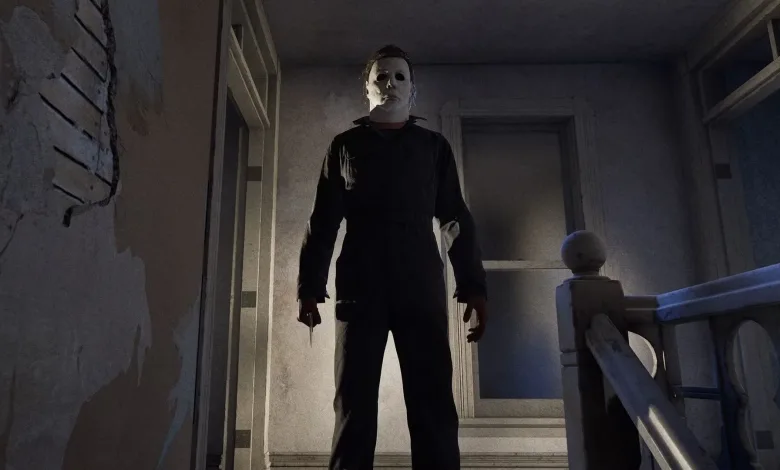
Michael Myers has more to do in Halloween: The Game than simply chase four survivors around Haddonfield. IllFonic’s asymmetrical horror game asks survivors to rescue local residents, manage several escape routes, and survive a killer who gains access to special executions by taking his time. It earned an 8.5/10 in a PC review, giving the upcoming release a promising foundation despite bugs and rough edges.
Early access is scheduled to begin Friday, September 4, at 10:00 a.m. PT, with the full release following Tuesday, September 8, at the same time. The four-day head start is limited to Digital Deluxe Edition buyers, while Standard Edition owners will wait for launch, as outlined in our early access schedule. The reviewed copy was supplied by IllFonic and evaluated on PC.

Rescuing Haddonfield’s residents gives survivors a second objective
The familiar one-killer-versus-four-survivors setup takes place in a version of 1970s Haddonfield built around the 1978 film. Homes, shops, and other locations feel lived in, and the maps offer distinct spaces for both sides to use. Survivors still need to find weapons, gather supplies, and open an escape route, but they also have to convince frightened residents that Michael Myers is hunting them.
Getting those civilians to listen requires skill checks. Failures can lead to funny exchanges in which a survivor tries to explain the masked killer’s presence and gets asked to leave instead. Success lets players direct residents to hide, call the police, or follow them while carrying random household weapons.
Every match includes three special NPCs whose survival carries more weight than that of ordinary residents. Moving them toward safety is usually the priority, although less important civilians can still call the police or serve as distractions. Bringing law enforcement into the match can put extra pressure on Myers while the team searches for a way out.
Escape routes include a car, a cellar, a trapdoor, and a garden gate. Each option has its own requirements, such as finding keys, repairing an engine, or filling a gas tank. Cars can fill up and cellars can reach capacity, so a team has to keep looking for another exit when the first plan stops working. The generous supply of loot often makes it possible to open at least one route quickly, though it can also make preparation feel a little too easy.
NPC behavior is less dependable. Residents told to follow may grab a weapon and then lock the door behind the player, leaving them stranded inside. Getting civilians from their homes to an escape point can become a slow process of repeated instructions, but saving them gives the match a purpose beyond simply reaching the exit.
Michael Myers rewards patience
Playing as Myers is built around stalking instead of sprinting directly toward every target. He can turn into a shadow and cross the map quickly, while time spent watching survivors unlocks special kills and extends the match. The killer must decide when to keep tracking prey and when to end the chase.
Myers feels powerful without making the survivor side irrelevant. His weapons allow him to execute civilians immediately or use brutal grabs, and the environment provides plenty of options. A refrigerator door, a toilet, and other parts of Haddonfield can all become tools for an execution. Some animations lean toward cartoonish brutality, but finally catching a target after a long pursuit still gives the killer role a clear payoff.
Dr. Loomis also stands out as a late-game addition during matches, giving Myers and the survivors another presence to account for as the action develops.
Bugs interrupt the escape plan
Death does not remove a player from the match completely, but the replacement activity is not especially satisfying. Eliminated survivors complete repetitive skill-check minigames to fill a meter and unlock tarot cards that grant bonuses to living civilians. Those minigames continue even after every survivor is dead and only Myers remains with the NPCs, which makes the wait feel longer than it needs to be.
Several bugs can also disrupt a match. NPCs may spawn on a roof, forcing Myers to find a pitchfork and attack them from a distance. Other glitches can block movement through a fence or window. Between matches, players cannot leave immediately and must wait for another match to load, while voice chat stops working at that point.
A promising foundation for asymmetrical horror
Halloween: The Game benefits from giving both sides more to consider. Survivors are not only repairing an escape route and hiding from Myers, since every rescued civilian can change how the team approaches the map. Myers, meanwhile, has a reason to stalk and control the pace instead of rushing from one target to the next.
Haddonfield is a strong part of that formula. Its homes and streets support the escape systems, the NPC objectives, and the game’s location-based executions. Residents also react to the danger around them, which helps the town feel like a place under attack rather than a collection of empty arenas.
The bugs and awkward match transitions need attention, and the death-state minigames become tedious quickly. Even so, the 8.5/10 assessment reflects a game with a more layered structure than several earlier IllFonic releases. Its balance between survivor rescues and Myers’ hunt gives Halloween: The Game a credible chance to build a lasting audience after its September 8 release.
Will you be rescuing Haddonfield’s residents or taking control of Myers? Share your thoughts in the comments, and follow us on X, Bluesky, YouTube, Instagram, Steam, and Telegram.
Halloween: The Game
Developed by Illfonic

On Halloween night, 1978, no one is safe from Michael Myers. Become the Boogeyman or fight back against the face of evil itself in Halloween.
- Platforms Xbox Series X|S, PC (Microsoft Windows), PlayStation 5
- Perspective Third person
- Modes Single player, Multiplayer, Co-operative
- Release September 8, 2026
- Publisher Illfonic, Gun Interactive
-
Age Rating